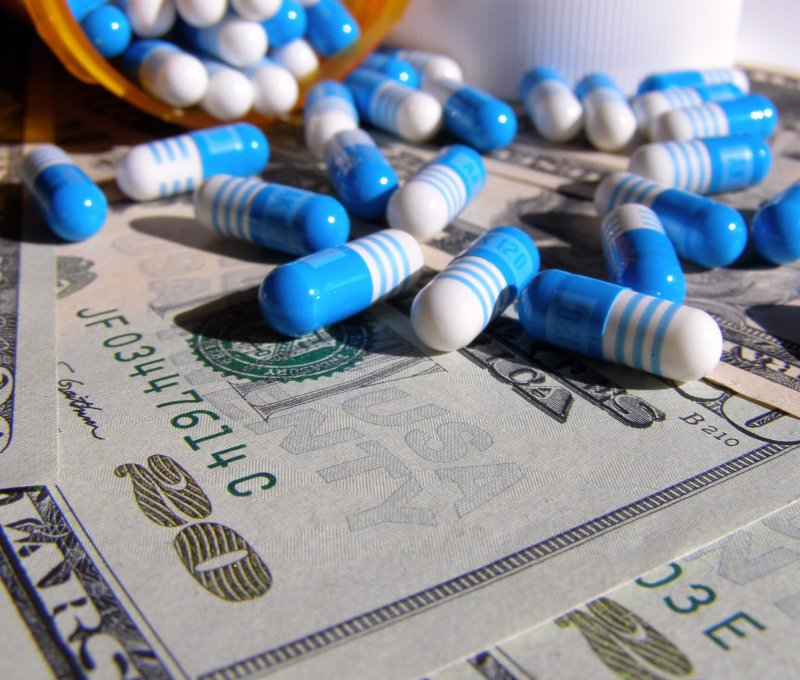
Why so many biotechnology start-ups, like Theranos, fail

MA pills

Two years after the $9 billion start-up “unicorn” Theranos crumbled, Silicon Valley still appears to be struggling to learn its lesson when it comes to health and medical start-ups. Improbable-sounding companies continue to turn up with tens of millions of dollars in funding, no published research to back them up, and nothing but criticism from scientists.


Venture-capital firms insist that the standard that needs to be met for investment is much higher for medical start-ups, which must prove that their technology works with data, not just a pitch. And yet somehow, when these start-ups finally surface to public consciousness, they don’t appear to pass even the most basic smell test with literally any experienced researcher in the field.

There is a pervasive sense in Silicon Valley, bolstered by ten years of world-conquering success, that any sufficiently intelligent, sufficiently driven person can will what they want.

But the “move fast and break things” mantra that has helped Silicon Valley disrupt countless industries over the last two decades is more dangerous when applied to medical science…The “things” being broken by health start-ups are laws of science and ironclad guidelines for research. When a health start-up “moves fast and breaks things,” it can directly result in the death, dismemberment, and injury of real people.

The GLP aggregated and excerpted this blog/article to reflect the diversity of news, opinion, and analysis. Read full, original post: Why Silicon Valley Keeps Getting Biotechnology Wrong

For more background on the Genetic Literacy Project, read GLP on Wikipedia

{{ reviewsTotal }}{{ options.labels.singularReviewCountLabel }}
{{ reviewsTotal }}{{ options.labels.pluralReviewCountLabel }}
{{ options.labels.newReviewButton }}
{{ userData.canReview.message }}

Related Articles

Infographic: Global regulatory and health research agencies on whether glyphosate causes cancer

Infographic: Global regulatory and health research agencies on whether glyphosate causes cancer

Does glyphosate—the world's most heavily-used herbicide—pose serious harm to humans? Is it carcinogenic? Those issues are of both legal and ...

Most Popular

ChatGPT-Image-Jun-11-2026-01_15_03-PM
Selective Pressure, Selective Silence
ChatGPT Image Jun 3, 2026, 03_54_37 PM
Viewpoint: “Turn on, tune in, drop out”—Kennedy embraces the Timothy Leary psychedelic revolution
Screenshot 2026-05-26 at 10.15
Viewpoint: Double standard—Why does the wellness industry get a free pass while Big Healthcare is treated as morally suspect?
Screenshot-2026-06-05-at-1.44.09-PM
Viewpoint: Scientists have scrapped the worst-case climate scenario. Is that proof that climate change is a hoax, as Trump claims?
Screenshot-2026-06-11-at-3.40.06-PM
'Toxin' detox: A gastroenterologist weighs in on $71 billion health trend
Screenshot-2026-06-11-at-4.00.17-PM
Gen Z burned by sunscreen misinformation and tanning myths
Screenshot-2026-06-05-at-2.12.30-PM
Some plants can poison you. So how did humans figure out what is safe to eat?
ChatGPT-Image-Jun-11-2026-10_34_44-AM-2
Will hi-tech genetic fortune-telling really help parents make healthier children?
Screenshot-2026-06-03-at-3.33.44-PM
Viewpoint: Vaccine deniers are attacking a life-saving Vitamin K shot for newborns that isn’t even a vaccine
Screenshot-2026-06-08-at-1.35.30-PM
Viewpoint: Social media and fake natural health propaganda fuel surge in use of mostly useless supplements
ChatGPT Image Jun 3, 2026, 03_14_43 PM
Viewpoint: How Earthjustice became the poster child for the abuse of special interest activist funding
ChatGPT-Image-Jun-10-2026-12_57_24-PM
Viewpoint: Why gene-editing babies is moral and certain to happen
Credit: ACSH
Viewpoint: Who and what’s to blame for the surge in vaccine-preventable diseases?
glp menu logo outlined

Get news on human & agricultural genetics and biotechnology delivered to your inbox.