


Live Science
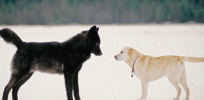
Despite the vast diversity of the size, shape and behavior of dogs, they share a deep evolutionary history
The oldest fossil that scientists agree came from a dog, rather than a wolf, comes from a site in Germany ...

Age of anti-vaxxers: Polio rears its ugly head in the US after nearly a decade with no reported cases
After nearly a decade with no reported polio cases in the U.S., a resident of Rockland County, New York has ...
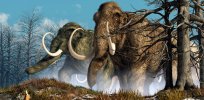
How did ancient animals evolve to be so giant?
Prehistoric giants used to populate the Earth. These behemoths included mighty dinosaurs, airplane-size pterosaurs, massive crocodiles and snakes, and even ...

Can foods boost your immune system?
It’s easy to fall prey to marketing gimmicks deployed by food brands. After all, it’s comforting to think that there ...
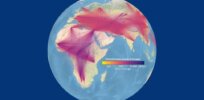
Video and infographic: Most comprehensive family tree ever retraces history of humanity
A new, enormous family tree for all of humanity attempts to summarize how all humans alive today relate both to ...

Did humans leave (or try to leave) Africa in waves? A 1.5-million-year-old vertebrae found in Israel is challenging evolutionary canon
Scientists had debated whether ancient humans dispersed from Africa in a one-time event or in multiple waves. Now, researchers have ...
If humans go extinct, what ‘smart’ animals might evolve to ‘rule the world’?
What if humans suddenly went extinct? What other animals might evolve to have the smarts and skills to create large, ...
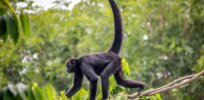
Why don’t humans have tails?
Why did some primates keep their tails, while humans and apes didn't? Tail loss is thought to be part of ...

Evolutionary thinking: What would a world without humans look like?
Humanity's fingerprint can be seen across the planet today, from the towering skyscrapers that define our modern metropolises to the ...

HPV vaccine cuts cervical cancer rate by 87% in UK study
The human papillomavirus (HPV) vaccine reduced cervical cancer cases by 87% among women in the U.K. who received the vaccine ...
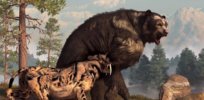
Polar bears are the largest surviving predator in North America. How do they measure up to what used to roam the continent?
North America's largest predatory mammal was probably the massive short-faced bear (Arctodus simus), said Ross MacPhee, senior curator of mammals ...
Lab-grown mini brains grow their own eyes
A group of scientists has grown mini brains that have something their real counterparts do not: a set of eye-like ...
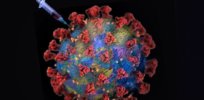
Do we need a new COVID vaccine to fight new and potentially more lethal variants?
The rapid spread of the delta variant of SARS-CoV-2 has put more patients in hospital beds and led to reinstatements ...

New data suggest October 2019 could be SARS-CoV-2’s origin date. Here’s the timeline
A joint WHO study by Chinese and international researchers identified 174 SARS-CoV-2 infections throughout December, with the earliest going back ...

Those infected with the Delta variant may be carrying more than a thousand times more viral particles than prior variants
People infected with the delta variant of the novel coronavirus may be carrying more than a thousand times more virus ...

On average, women live 5 years longer than men. It’s mostly genetics
Around the world, women live longer, on average. So why do women tend to outlive men? Two of the main ...

Simone Biles is suffering from what gymnasts call the ‘twisties.’ It’s a real and dangerous phenomenon
American gymnast Simone Biles withdrew from several Olympic events [recently], including the latest withdrawal from the vault and uneven bars ...
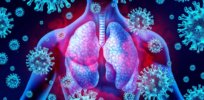
With treatments for COVID still elusive, CRISPR offers promise in preliminary tests
Scientists have harnessed CRISPR gene-editing technology to block the replication of the novel coronavirus in human cells — an approach ...

Deadly COVID mutation wild card: Frightening lessons from the 1918 Spanish flu recovery
The influenza virus that caused the 1918 pandemic mutated into variants, much like the novel coronavirus has done in the ...
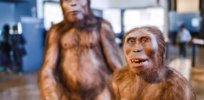
Homo sapiens reevaluated: Why the definition of ‘modern human’ is undergoing a revamp
One definition of a species is: "Groups of interbreeding natural populations that are reproductively isolated from other such groups," according ...

Hairy oddballs: Why are humans the only animal to grow hair on our heads but almost none on our bodies?
Fur keeps animals warm when it's cold at night and protects them from the sun during the day. Human ancestors ...
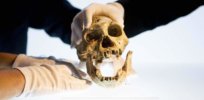
‘Great ape-like brains’: Early humans who first ventured out of Africa 1.5 million years ago had ‘monkey brains’
Early humans still had great ape-like brains, according to a new study that found modern humans evolved to have our ...

Lunar DNA ark? Scientists want to cryogenically store the genes of 6.7 million species on the moon, just in case
[A “lunar ark” gene bank, could] be safely hidden in [the moon's] hollowed-out tunnels and caves sculpted by lava more ...
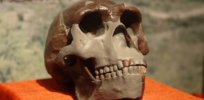
Survival of the brainiacs: Controversial new thesis says humans evolved smarter to capture smaller prey
As the largest animals on the landscape disappeared, the scientists propose, human brains had to grow to enable the hunting ...
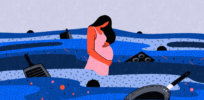
More than 50 environmental chemicals found in pregnant women and their newborns
Researchers have detected more than 50 new environmental chemicals lurking in people's bodies, the vast majority of which are little ...
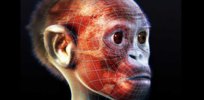
What did Lucy and the Taung child look like? Early human ancestors get reconstructed faces
For the reconstructions of Lucy (Australopithecus afarensis), the oldest and most complete human ancestor when researchers discovered her 3.2 million-year-old ...

Dreamers can ‘talk’ to scientists and solve problems while asleep
People dream every night, but scientists don't fully understand why we dream. Studying dreams is difficult because people often forget ...
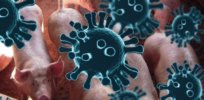
Hundreds of novel coronaviruses likely lurking in animal species around the world
[New research] identifies hundreds of animal species that may become infected with known coronaviruses, although many of these infections haven't ...
