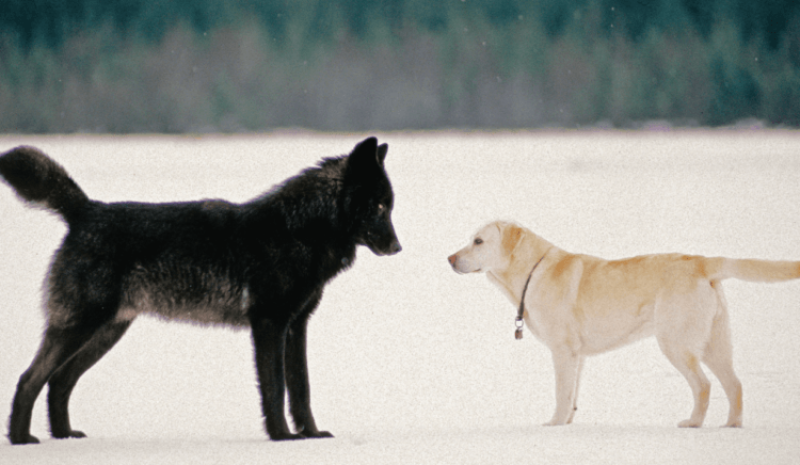
Despite the vast diversity of the size, shape and behavior of dogs, they share a deep evolutionary history

screen shot at pm
Credit: Jos Bakker

The closest living relative to modern dogs is the gray wolf (Canis lupus). The ancestor of modern dogs and the ancestor of modern wolves probably split at some point in the late Pleistocene, the last ice age. Genetic studies put different dates on this split.

Follow the latest news and policy debates on sustainable agriculture, biomedicine, and other ‘disruptive’ innovations. Subscribe to our newsletter.

The oldest fossil that scientists agree came from a dog, rather than a wolf, comes from a site in Germany called Bonn-Oberkassel and dates back about 14,200 years. But archaeologists have found fossil specimens that might be domesticated dogs dating back more than 30,000 years. It’s difficult to confidently identify a Pleistocene fossil fragment as being from either a dog or a wolf, and because dogs and wolves interbred even after they diverged genetically, genomic studies are complicated. Researchers also debate whether dog domestication happened once or at multiple sites around the world.

It is clear that humankind’s bond with dogs goes way back. The 14,200-year-old dog from Bonn-Oberkassel was buried with two humans and had been nursed through several episodes of canine distemper before it died. In a 12,000-year-old cemetery in Israel, a woman was found buried with her hand on a small wolf or dog puppy. A Stone Age dog from what is now Sweden was buried with a human companion about 8,400 years ago, researchers reported in 2020.


This is an excerpt. Read the full article here

{{ reviewsTotal }}{{ options.labels.singularReviewCountLabel }}
{{ reviewsTotal }}{{ options.labels.pluralReviewCountLabel }}
{{ options.labels.newReviewButton }}
{{ userData.canReview.message }}

Related Articles

Infographic: Global regulatory and health research agencies on whether glyphosate causes cancer

Infographic: Global regulatory and health research agencies on whether glyphosate causes cancer

Does glyphosate—the world's most heavily-used herbicide—pose serious harm to humans? Is it carcinogenic? Those issues are of both legal and ...

Most Popular

Screenshot-2026-04-22-at-12.21.32-PM
Viewpoint: Why the retracted Monsanto glyphosate study doesn’t change the science—the world’s most popular herbicide is safe 
ChatGPT-Image-Apr-16-2026-02_56_53-PM
Financial incentives, over diagnosis, and weak oversight: Autism claims are driving up Medicare costs
Picture1
The FDA couldn’t find a vaccine safety crisis, so it buried its own research
global warming
‘Implausible’: Top climate scientists reject worst-case scenario—soaring temperatures and fast-rising sea levels
ChatGPT-Image-May-1-2026-11_42_59-AM-2
Viewpoint: NAD is the wellness grifters latest evidence-lite longevity fad. At least the mice are impressed.

Sorry. No data so far.

glp menu logo outlined

Get news on human & agricultural genetics and biotechnology delivered to your inbox.