


Scientific American
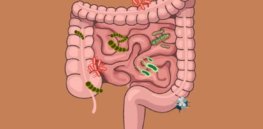
How the microbiome may boost the brain’s recovery from stroke damage
Despite a decades-long search, scientists have yet to pinpoint effective ways of protecting the brain from poststroke damage. In recent ...

‘Peculiar brain waves’ during sleep may be key to forming memories, study suggests
Neuroscientists have always presumed that learning and memory depend on strengthening or weakening the connection points between neurons (synapses), increasing ...

Viewpoint: Doctors will never be replaced by intelligent machines, which lack ’empathy, common sense’
Is there a place for artificial intelligence (AI) in the field of medicine? Will doctors one day be replaced by ...

Fear can keep you alive: Why we need ‘negative’ emotions
Are negative emotions all bad? Should we really try to get rid of them? After all, we figure that thumbs ...

Viewpoint: We can stop the infertility ‘guessing game’ by tapping into new tools, including noninvasive testing for endometriosis
Without understanding the root cause of infertility, treating it often becomes a guessing game. For doctors to effectively aid a ...

People with better memories may have better romantic relationships, study suggests
Common topics of marital disagreement are money, sex and time spent together. None of this will surprise anyone who has ...
Viewpoint: Most Americans ‘woefully underprepared’ for bioethical decisions, including when to remove a loved one from life support
Many Americans will face some form of significant medical decision-making during their lifetimes, either for themselves or for their loved ...

Deep sleep may be critical to flushing out your brain’s ‘toxic waste’
Why sleep has restorative—or damaging—effects on cognition and brain health has been an enduring mystery in biology. Researchers think cerebrospinal ...
‘Time to finish the job’: One wild polio strain stands in the way of eradication of the disease
The international effort to achieve [polio eradication] passed a major milestone [recently] with the worldwide eradication of wild poliovirus type ...
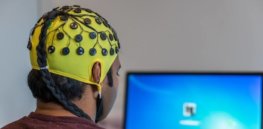
‘BrainNet’ experiment allows people to communicate by thought, ‘blurring fundamental notions about individual identity’
In a new study, technology replaces language as a means of communicating by directly linking the activity of human brains. Electrical ...
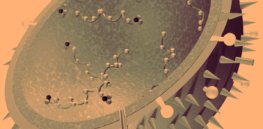
Programming CRISPR to fight viruses could lead to new treatments for Ebola, Zika
CRISPR is usually thought of as a laboratory tool to edit DNA in order to fix genetic defects or enhance ...

‘Puzzle of a million pieces’: New study traces humanity’s birthplace to northern Botswana
[A] study, appearing [October 28] in the journal Nature, uses genetic, archaeological, linguistic and climatic evidence to argue that the ancestral homeland ...

Could a pill make you need less sleep? This genetics research suggests it could happen
We all wish we could get by on less sleep, but one father and son actually can—without suffering any health ...

Why defining ‘death’ is so much harder than it seems
Pronouncing a patient dead in a hospital seems relatively simple: palpate for lack of pulse, determine that the patient's neurological ...

Why is it so hard to think straight when you’re tired? Here’s what’s going on in your brain
Most of us could use more sleep. We feel it in our urge for an extra cup of coffee and ...

‘Connection is what makes life worth living’: Study suggests extroverts are happier
“There are benefits of introversion,” says University of California, Riverside, psychologist Sonja Lyubomirsky. “But research shows that extroverts are happier.” A ...
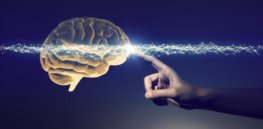
Can death be reversed? Scientists partially revive brains of dead pigs
Despite technological advances, biology and medicine still lack a coherent and principled understanding of what precisely defines birth and death—the ...

Why this NASA engineer believes we’ve already found evidence of life on Mars
I was fortunate to have participated in that historic adventure as experimenter of the Labeled Release (LR) life detection experiment ...

No such thing as a harmless lie? How dishonesty hurts our ability to connect with other people
Have you ever told a friend a made-up story to entertain that person or spare his or her feelings? … ...
‘Why didn’t we think of this earlier?’ Immunotherapy could treat more than just cancer
Immunotherapy has transformed cancer care. Now the tools and new knowledge created by this strategy for treating disease by stimulating ...
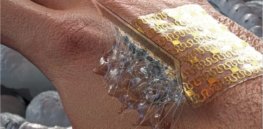
Future of silk could give us wearable sensors, smart fabrics and ‘rubber’ as strong as steel
Tucked away near a freight elevator along the clinical corridors of an upper floor is a solid black door, plain ...
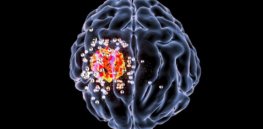
‘It’s unsettling’: Cancer cells use the body’s nerves to attack the brain, studies suggest
Tumour cells can plug into—and feed off—the brain’s complex network of neurons, according to a trio of studies. This nefarious ...
‘Fight or flight’: How your bones may help you make that decision
In the face of fear, whether it be caused by a grizzly bear or an audience waiting to hear you ...

Ticking time bomb: Being obese ‘more than doubles’ risk of common forms of cancer
Being overweight or obese has been linked to at least 13 types of cancer. Obesity more than doubles the risk ...
Searching for a mathematical model of consciousness
What is consciousness? In a sense, this is one of the greatest mysteries in the universe. ... Science has produced ...
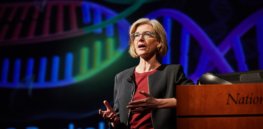
Video: Talking CRISPR challenges with Jennifer Doudna
Jennifer Doudna, winner of the 2018 Kavli Prize in Nanoscience, talks to Scientific American about what it’s like to work in perhaps the ...

Evolution takes time: ‘Relatively recent’ gene variant helps some humans cope with high-sugar diets
It’s well known among palaeontologists and nutrition experts that the human diet began to change after our distant ancestors transitioned ...
