Don’t be afraid of GM salmon

b b z
Credit: Flickr/gemteck1

In an opinion piece for The New York Times, science journalist Emily Anthes describes how politics—not science—has slowed the approval process for AquAdvantage’s genetically modified salmon. The article gives a shout-out to GLP and our executive director, Jon Entine, for his investigative reporting which revealed last fall that the White House intentionally delayed the approval process for the salmon. Now the FDA has extended the deadline for the public to comment on the salmon, further delaying its decision, which it has so far has taken two decades to reach.

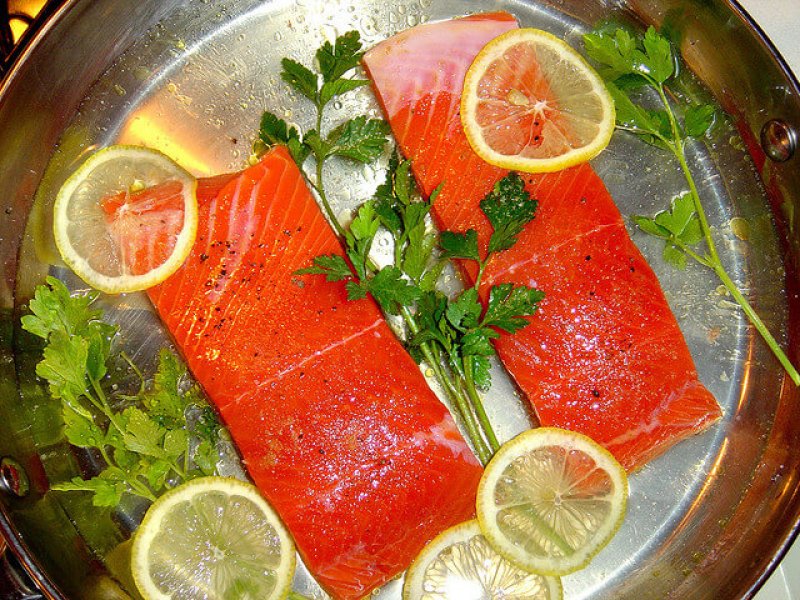
Anthes urges the FDA to approve the GM salmon, pointing out that independent scientists have found the fish poses no threat to consumers or the environment. Instead, she writes, genetic engineering could make this heart-healthy fish more affordable for consumers, and take the strain off of wild fish stocks.

Failure to gain approval wouldn’t just affect consumers. It could also be devastating for biotechnological innovation in the U.S., Anthes writes, potentially driving top scientists into China, Argentina, or India.

If a company that has done everything right can’t get its product approved, who else will be foolish enough to embark upon this kind of research? Who will finance it?

Of course, all this would be just fine with some anti-biotech groups, which traffic in scare tactics rather than science. But it shouldn’t be fine with the rest of us.

Read the original article here: Don’t Be Afraid of Genetic Modification

Further Reading:

{{ reviewsTotal }}{{ options.labels.singularReviewCountLabel }}
{{ reviewsTotal }}{{ options.labels.pluralReviewCountLabel }}
{{ options.labels.noReviewsLabel }}
{{ options.labels.newReviewButton }}
{{ userData.canReview.message }}

Related Articles

Infographic: Global regulatory and health research agencies on whether glyphosate causes cancer

Infographic: Global regulatory and health research agencies on whether glyphosate causes cancer

Does glyphosate—the world's most heavily-used herbicide—pose serious harm to humans? Is it carcinogenic? Those issues are of both legal and ...

Most Popular

Screenshot 2026-07-22 at 1.38
Viewpoint: Are the U.S. and Europe headed towards a repudiation of agricultural biotechnology red tape?
ChatGPT-Image-Mar-10-2026-01_39_01-PM
Viewpoint—“Miracle molecule” debunked: Why acemannan supplements don’t work
ChatGPT-Image-May-26-2026-11_51_01-AM
Viewpoint: RFK, Jr.’s depressingly misguided (and litigator-funded) crusade against antidepressants
Screenshot-2026-07-27-at-3.23.14-PM
Prioritizing AI, robotics, and nuclear energy: Trump administration is guiding research funding away from independent universities to private companies
png-terrace-Farm-asia
Europe’s tentative embrace of agricultural gene editing could revolutionize food production and health in Asia
Screenshot-2026-07-09-at-1.09.25-PM
Anti-vaccine myths rattle health care
Screenshot 2026-07-27 at 6.15
No test, no tennis: Women’s Tennis Association becomes first major female sports league to require genetic sex testing
ChatGPT-Image-Jul-26-2026-05_58_17-PM
Louisiana and Texas bring RFK,Jr.- MAHA-backed restrictions on dyes and other ‘controversial’ ingredients to eight states
ChatGPT-Image-Jul-26-2026-05_35_53-PM
FDA takes up peptide therapies as hype outpaces science
Screenshot 2026-07-28 at 3.22
Hidden hunger: Climate change is speeding up the decline of important nutrients in our food
organic scaled
Facts & Fallacies podcast: Organic food cuts pesticide exposure? A response to Dr. Rhonda Patrick
ChatGPT-Image-Jul-10-2026-09_42_12-AM-1
Peptides, patient autonomy, and the limits of medical freedom
ChatGPT-Image-Jun-25-2026-12_23_17-PM
No, Bill Gates did not secretly engineer ticks to promote veganism
glp menu logo outlined

Get news on human & agricultural genetics and biotechnology delivered to your inbox.