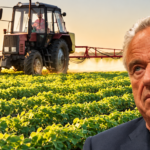
On June 17, 2026, the European Parliament reached a historic milestone by endorsing New Genomic Techniques (NGTs), sending a powerful global signal that science-based innovation is essential for addressing climate change and strengthening food security.
For Asia, the implications could be profound.
Home to nearly 60% of the world’s population, Asia faces the daunting task of feeding billions while confronting some of the world’s harshest climate impacts.
Rising temperatures, droughts, floods, salinity intrusion, emerging pests, and global crises are placing immense pressure on agricultural systems.
According to the International Food Policy Research Institute (IFPRI), countries such as Bangladesh, India, and Pakistan remain highly vulnerable to geopolitical shocks because of their dependence on imported fertilizers and natural gas from the Gulf region. The ongoing Iran conflict, the latest disruption to global fertilizer markets, underscores this vulnerability.
Against this backdrop, NGTs offer a promising tool for developing climate-resilient crops, reducing reliance on pesticides and fertilizers, and strengthening food security, particularly for smallholder farmers.
For decades, the European Union maintained some of the world’s strictest regulations on agricultural biotechnology, influencing policy-making far beyond Europe. Many countries in Asia and Africa adopted similarly cautious approaches.
Europe’s endorsement of NGTs therefore marks a significant shift, demonstrating that innovation and environmental sustainability can go hand in hand.
Several Asian countries are already moving ahead. China has made gene editing a national priority to enhance food security, while Japan has established enabling regulations and commercialized gene-edited foods.
India is actively exploring genome editing to develop climate-resilient crops, and countries including the Philippines, South Korea, Singapore, Vietnam, and Bangladesh are advancing research and regulatory reforms.



Yet technological potential alone will not be enough. Historically, biotechnology research has relied heavily on private investment and donor support.
Today, shrinking research budgets, limited technical expertise, and underinvestment in public research institutions remain major constraints, particularly in developing countries.
Realizing the benefits of genome editing will require evidence-based policymaking, sustained public investment, and long-term government commitment to translate scientific advances into practical solutions for farmers.
Europe’s decision should not be treated as a blueprint to be followed uncritically. Rather, it should encourage countries such as Bangladesh to engage in evidence-based decision-making and assess how emerging technologies like genome editing can contribute to more resilient, sustainable, and food-secure agricultural systems.
Arif Hossain is Regional Head of Asia, WePlanet International and Executive Director at Farming Future Bangladesh. Find Arif on X @arif4science
A version of this article was originally posted at Dhaka Tribune and has been reposted here with permission. Any reposting should credit the original author and provide links to both the GLP and the original article. Find Dhaka Tribune on X @DhakaTribune