Will public trust in personalized medicine suffer, an ethicist wonders

mg
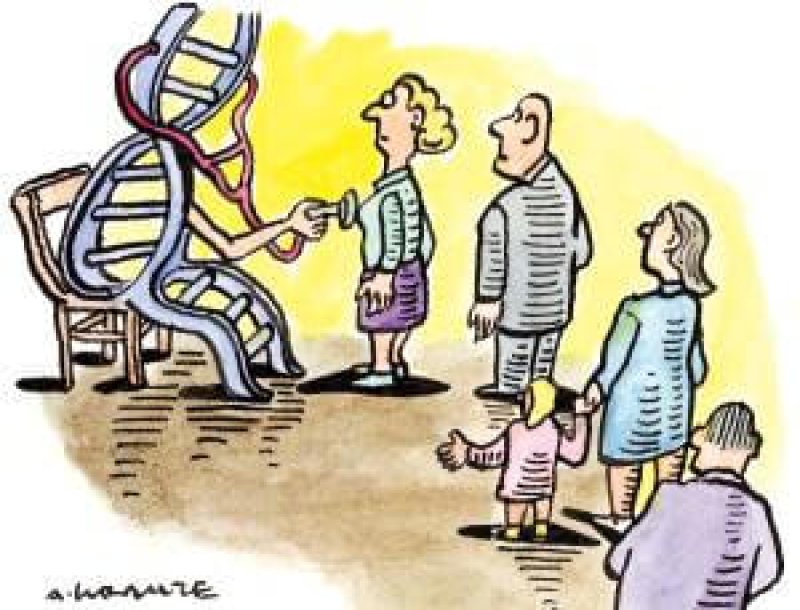
Image via New Scientist.

In 2008, 23andMe’s suite of direct-to-consumer genetic testing services was named “Invention of the Year” by Time magazine.

Just five short years later, however, the FDA demanded that 23andMe stop selling its health-related tests pending scientific analysis, casting a huge shadow of doubt on the future of personal genetic testing. Will the challenges facing 23andMe also affect public trust in personalized medicine?

Doubts go back a long way. In 2008, the American Society for Clinical Oncology commissioned a report that concluded the partial type of analysis involved wasn’t clinically proven to be effective in cancer care. In 2010, the US Government Accountability Office concluded that “direct-to-consumer genetic tests [involve] misleading test results… further complicated by deceptive marketing”.

This is the root of the FDA’s concerns. In its letter to 23andMe, it raised the risk that customers could get false information that leads to drastic and misguided medical steps. 23andMe founder Anne Wojcicki now says: “We want to work with [the FDA], and we will work with them.” But is it too little, too late?

While the most consciously populist genetic testing service wrestles with its critics in the months ahead, there is a growing danger that wider public acceptance of personalised medicine in the clinical setting may also suffer in the fallout from 23andMe’s woes.

Read the full, original article: Testing times for the consumer genetics revolution

Additional Resources:

{{ reviewsTotal }}{{ options.labels.singularReviewCountLabel }}
{{ reviewsTotal }}{{ options.labels.pluralReviewCountLabel }}
{{ options.labels.newReviewButton }}
{{ userData.canReview.message }}

Related Articles

Infographic: Global regulatory and health research agencies on whether glyphosate causes cancer

Infographic: Global regulatory and health research agencies on whether glyphosate causes cancer

Does glyphosate—the world's most heavily-used herbicide—pose serious harm to humans? Is it carcinogenic? Those issues are of both legal and ...

Most Popular

d-b
Blocked arteries, kidney stones, nausea, constipation, fatigue: Long list of health problems caused by too much vitamin D 
Screenshot-PM-24
Viewpoint: The herbicide glyphosate isn’t perfect. Banning it would be far worse.
ChatGPT-Image-Mar-27-2026-11_27_05-AM
The myths of “process”: What science says about the “dangers’ of synthetic products and ultra-processed foods
Screenshot-2026-04-29-at-11.31.42-AM
Dad brains: Only women undergo bodily changes during and after childbirth? Think again.
ChatGPT-Image-Mar-3-2026-01_17_14-PM
MAHA wellness influencers deride proven anxiety medications, tout lifestyle fixes
png-pill-omega-Supp-fish-oil
Fish oil supplements for brain injuries probably don’t work 

circular-bioeconomy-should-focus-on-sustainable-wellbeing
GLP podcast: What's wrong with 'doomsday' environmentalism? It's false.
ChatGPT-Image-Feb-16-2026-01_04_32-PM
Raw milk myth wake-up call
ChatGPT-Image-Apr-28-2026-12_46_14-PM-2
Kennedy has quietly stopped touting problematic raw milk. Health concerns aren’t why
ChatGPT-Image-Apr-22-2026-11_06_18-AM
Wellness influencer nonsense: No, nicotine does not boost cognition and productivity, but it can damage your health 
ChatGPT-Image-Feb-16-2026-01_57_31-PM
Viewpoint: ‘Science-as-Satan’ unites the MAHA—MAGA movements. Is a breakup in the works?
glp menu logo outlined

Get news on human & agricultural genetics and biotechnology delivered to your inbox.