Eleven years ago when I began my career as a professor at the University of Florida, I would enjoy the sunny drives downstate from Gainesville. As I’d progress further south, the landscape became dominated by a truly beautiful sight—lush orange groves bearing Florida’s iconic fruit.
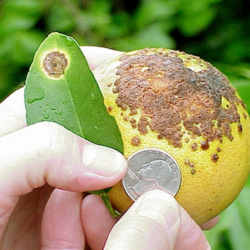
Today, the same drive is remarkably different. Many of the groves that stood as a jungle of leaves and frequent fruits now stand as gray skeletal botanical remains. Devastation is hardly complete. Other groves have remained productive, but only through intensive management and high cost. Even in these cases the leaves are noticeably yellow and the oranges fall easily from the trees to the ground below, unusable.The Florida citrus industry knows this decline as the disease “huanlongbing,” also known as citrus greening. As of the writing of this article, it is estimated that 70 percent of Florida’s trees are infected.
Disease-resistance genes are well understood in plants and hundreds of them have been characterized. We eat thousands of them and their products in every salad. These genes encode proteins that oppose microbial growth through a wide variety of mechanisms. What if that one effective disease-resistance gene, naturally occurring in a food plant we already eat, could be placed into the citrus tree, making it immune, or at least tolerant, to the disease? It could be done, it has been done, and the plants seem to thus far do well in greenhouse trials hot with the disease. Here the gene that helps the plant survive the disease was simply plucked from one plant (in this case a gene from spinach) and moved to citrus using a process that has been with us for decades—recombinant DNA technology.
Many other recombinant DNA, or transgenic (commonly referred to as genetically modified organism [GMO]) solutions, are in the works and show promise. While not commercially available, the example from oranges shows how the transfer of a gene from one species to another can work to potentially solve a monumental problem. Moving a gene is what plant breeders have done for thousands of years, shuffling the genetic deck with human-mediated hybridizations to try to place a stack of favorable genes into one single genetic background.




Every fruit or vegetable you eat today has been genetically remodeled by plant breeders, crossing plants that would typically never hybridize without human intervention and significant cost. Some plant breeders have used chemicals and radiation to damage DNA and induce genetic changes. These practices, and many others that are surprisingly random,dramatic and unnatural, are the foundation of many foods we eat, and have never been questioned for safety. It simply is another way to generate genetic variation, the basis of a new valuable trait.
Read the full, original article: GMO Technology is Simply Precision Breeding