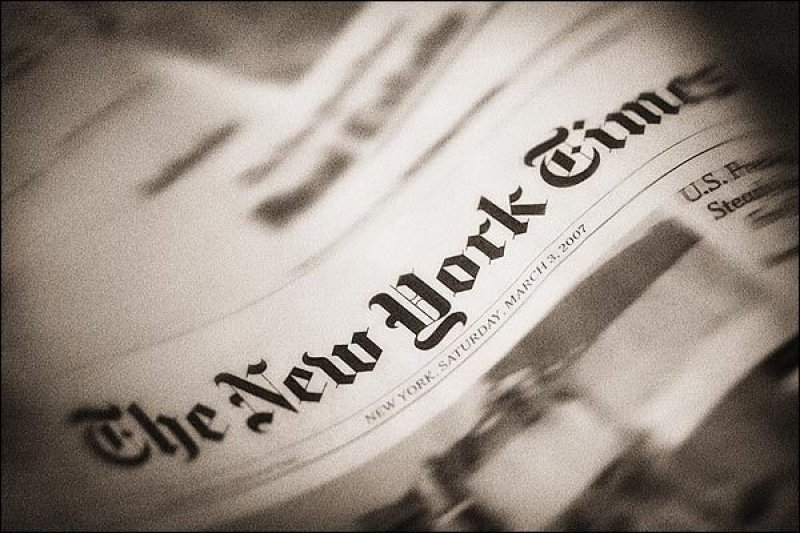
Major liberal publications, including The New York Times, the Los Angeles Times, the Oregonian, Scientific American and The Atlantic have all recently published editorials or articles supportive of genetically modified (GM) crops and opposing the mandatory labeling of foods containing such crops. The articles also note the critical role that GMOs can play in addressing global hunger.
Jon Entine, the executive director of the Genetic Literacy Project, said it all points to the conclusion that “The debate over GMO safety is really over.” Now, he said, the focus should shift toward concerns about chemical use and other “legitimate” areas of debate.
Greg Jaffe, with the Center for Science in the Public Interest, said the editorials were not a surprise, and that some editorial writers for more liberal publications have recently shown a willingness to go “beyond the rhetoric” of the safety debate. “There’s strong scientific consensus that [GMOs] are safe,” he said. “But I think they’re trying to get away from sensationalism on both sides.”
Still, Entine said that even if the shift among media and food writers is evident, the general public is not yet convinced that GMOs are safe. In fact, voters in two counties in Oregon last month passed bans on the cultivation of GMO crops, and Vermont became the first state to pass a labeling law in April.

The GMO issue, he said, is likely to remain controversial for years to come, adding that it is “almost inevitable” that a large state like Colorado or Oregon will pass a mandatory labeling law. “And it’s going to set up a huge legal battle…I’m confident the courts in the United States will reject mandatory labeling,” Entine said. “There will be a lot of rancorous debate…but little by little the ground is shifting underneath.”
Read full, original article: Are Former Critics Changing Attitudes Toward GMOs?