Do strangers who look alike act alike?

o TWINS

When twins have similar personalities, is it mainly because they share so much genetic material or because their physical resemblance makes other people treat them alike?

Most researchers believe the former, but the proposition has been hard to prove. So Nancy Segal, a psychologist who directs the Twin Studies Center at California State University Fullerton, decided to test it — and enlisted an unlikely ally.

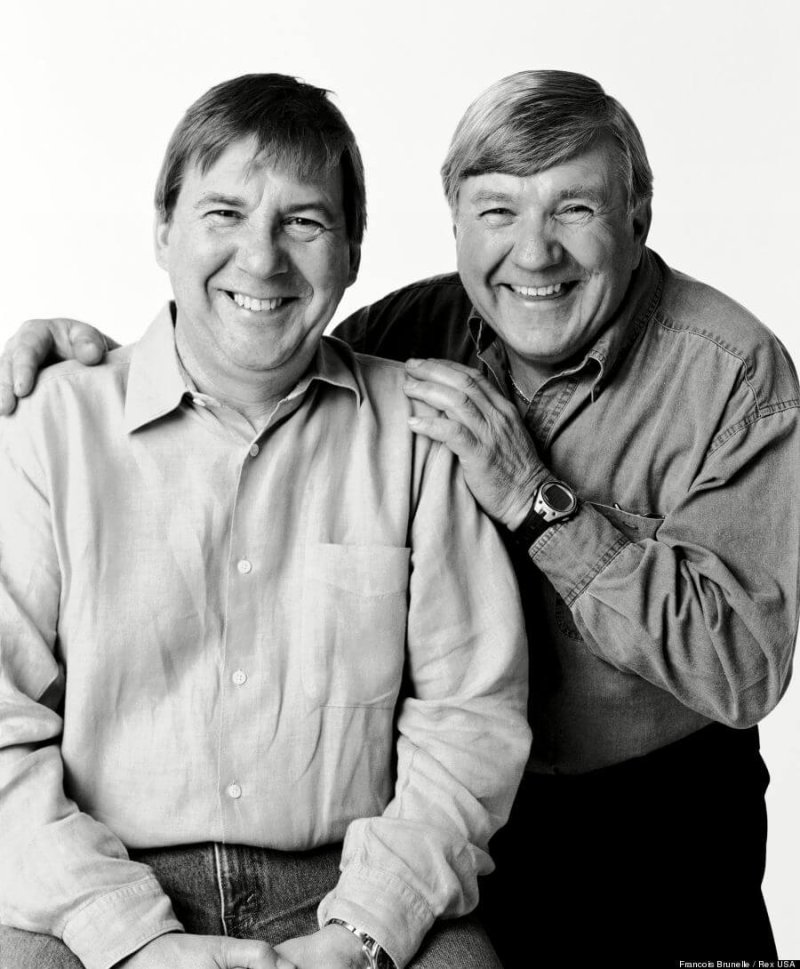
He is François Brunelle, a photographer in Montreal who takes pictures of pairs of people who look alike but are not twins.

Segal was sent to Brunelle’s website by a graduate student who knew of her research with twins. When she saw the photographs, Segal realized that the unrelated look-alikes would be ideal study subjects: She could compare their similarities and differences to those of twins.

“I reasoned that if personality resides in the face,” she said, “then unrelated look-alikes should be as similar in behavior as identical twins reared apart. Alternatively, if personality traits are influenced by genetic factors, then unrelated look-alikes should show negligible personality similarity.”

Read the full, original story: Holding a mirror to their natures

{{ reviewsTotal }}{{ options.labels.singularReviewCountLabel }}
{{ reviewsTotal }}{{ options.labels.pluralReviewCountLabel }}
{{ options.labels.newReviewButton }}
{{ userData.canReview.message }}

Related Articles

Infographic: Global regulatory and health research agencies on whether glyphosate causes cancer

Infographic: Global regulatory and health research agencies on whether glyphosate causes cancer

Does glyphosate—the world's most heavily-used herbicide—pose serious harm to humans? Is it carcinogenic? Those issues are of both legal and ...

Most Popular

Screenshot 2026-05-26 at 10.15
Viewpoint: Double standard—Why does the wellness industry get a free pass while Big Healthcare is treated as morally suspect?
ChatGPT-Image-Jun-4-2026-11_49_36-AM-2
‘You don’t understand Tolkien’: Skeptic Pope trolls tech giants about the exaggerated, risk-less benefits of AI
Screenshot 2025-07-30 at 10.48
Can gene editing eliminate Down syndrome? Scientists have done it in lab-grown cells
Screenshot-2026-06-04-at-12.05.08-PM
Cases of brain inflammation surge as U.S. measles pandemic approaches 2000
ChatGPT-Image-Jun-4-2026-01_27_58-PM
Viewpoint—N.A.D.+: Why Gwenyth Paltrow’s heralded anti-aging supplement doesn’t work
ChatGPT Image May 26, 2026, 08_42_17 AM (1)
Viewpoint: Greenpeace and poison: How environmental advocacy groups rely on compliant (and often ignorant) journalists to spread disinformation and spark litigation
Screenshot-2026-06-03-at-1.24.46-PM
Challenging anti-GMO disinformation: Why genetically-tweaked crops offer bushels of benefits
ChatGPT Image May 26, 2026, 08_21_36 AM
Limiting gender affirming interventions: Trump administration targets Texas even though it already bans youth access
ChatGPT-Image-Mar-10-2026-01_39_01-PM
Viewpoint—“Miracle molecule” debunked: Why acemannan supplements don’t work
ChatGPT-Image-Jun-2-2026-03_04_17-PM
Viewpoint: Why the hyper-promoted doping ‘enhanced games’ pseudo Olympics flopped
ChatGPT-Image-May-26-2026-07_51_21-AM-2
Viewpoint: There are more than 1,000 chemicals in a cup of coffee—including many substances that can cause cancer. Why isn’t it banned?
glp menu logo outlined

Get news on human & agricultural genetics and biotechnology delivered to your inbox.