Emotions connected to memories can be altered, at least in mice

By artificially activating circuits in the brain, scientists have turned negative memories into positive ones.

They gave mice bad memories of a place, then made them good – or vice versa – without returning to that place.

Neurons storing the “place” memory were re-activated in a different emotional context, modifying the association.

Although unlikely to be applied in humans with traumatic memories, the work sheds new light on the details of how emotional memories form and change.

“Emotion is intimately associated with memories of past events and episodes, and yet the ‘valence’ – the emotional value of the memories – is malleable,” said the study’s senior author Prof Susumu Tonegawa, from the Riken-MIT Center for Neural Circuit Genetics in Massachusetts, US.

Male mice were given a negative experience, consisting of small electric shocks, in a particular room, and the neurons working to store that memory were labelled using “optogenetics”.
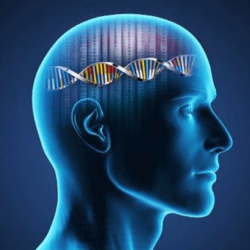
The next day, with the mouse in a different room, stimulating the labelled neurons in this way effectively “reactivated” the original, fearful memory. When the mice were offered a choice between having the blue light on or off, they chose to leave it off.

But next, the researchers stimulated the labelled neurons while they gave the mouse apositive emotional cue (a female for company), in an attempt to “flip” the emotional association of the stored memory.

Sure enough, offered the same choice again, the mice now wanted the blue light switched on: the original memory trace had been altered, and now they liked it.

Read the full, original story: Mouse memories ‘flipped’ from fearful to cheerful

Related Articles

Infographic: Global regulatory and health research agencies on whether glyphosate causes cancer

Infographic: Global regulatory and health research agencies on whether glyphosate causes cancer

Does glyphosate—the world's most heavily-used herbicide—pose serious harm to humans? Is it carcinogenic? Those issues are of both legal and ...

Most Popular

ChatGPT-Image-Mar-10-2026-01_39_01-PM
Viewpoint—“Miracle molecule” debunked: Why acemannan supplements don’t work
ChatGPT-Image-Sep-2-2026-02_03_32-PM
How much of a problem is AI’s water use?
ChatGPT-Image-Sep-22-2026-10_32_46-AM
There has been a slew of recent reports of food recalls and foodborne outbreaks. Do we face an escalating problem?
ChatGPT-Image-Aug-26-2026-12_46_16-PM
Viewpoint: The fake controversy over whether combining childhood vaccines is dangerous— a debate science resolved 25 years ago
Screenshot-2026-09-17-at-1.07.08-PM
'We are dangerously addicted to antidepressants': Should we heed RFK Jr.’s sobering warning?
ChatGPT-Image-Sep-23-2026-01_52_03-PM
Viewpoint: 4 very real AI doomsday scenarios
Screenshot-2026-09-03-at-10.51.20-AM
Viewpoint: Why do online health lies outlive the evidence that debunks them? Read "Everyone Else Is Lying to You"
Screenshot-2026-09-23-at-11.55.01-AM
How can we know if social media bans actually help teens?
Screenshot-2026-09-17-at-12.00.30-PM
Investigative group ProPublica finds links between ectopic pregnancy deaths and abortion bans
Screenshot-2026-09-23-at-3.15.09-PM
Anti-GMO activists in Pakistan rev up their campaign of dire warnings
Screenshot-2026-09-22-at-11.40.28-AM
After Idaho criminalized abortion providers in 2022, one-third of obstetricians fled. Health care advocates are making rural health the case for repealing the ban
Screenshot-2026-09-16-at-2.26.42-PM
Viewpoint: How to ecologically damage America’s forests: Ban glyphosate
ChatGPT-Image-Sep-23-2026-11_47_32-AM
Facing pressure from Trump administration, fewer hospitals offer medical treatment for transgender minors
glp menu logo outlined

Get news on human & agricultural genetics and biotechnology delivered to your inbox.