With the Nov. 4, 2014, ballot measure, Colorado is at the forefront of a fierce food fight raging across the nation: whether or not to label foods made with genetically modified organisms, or GMOs, so consumers can easily see if the food they buy is a product of genetic engineering.
Supporters of the Colorado measure — including Natural Grocers and Eco-Justice Ministries — say mandatory labeling would create transparency for consumers, allowing them to choose what they want to serve at their family tables.
But opponents — including the Colorado Farm Bureau and the Rocky Mountain Agribusiness Association — say the measure would cost Colorado taxpayers millions of dollars, increase grocery costs for families, and create expensive new bureaucratic requirements that would hurt the state’s farmers.
“A lot of chefs are trying to practice a more natural and organic philosophy in cooking food,” said Michael Scott, lead chef instructor at the Auguste Escoffier School of Culinary Arts in Boulder. “If I have ingredients that I can’t find out are GMO produced or not, I can’t make a proper decision whether to use them or not.”
But many local farmers argue that the measure is unnecessary. They say there are already two food labels that identify foods without GMOs: the USDA Organic label and the Non-GMO Project verified seal.
“It would be a nightmare for me,” said Nathan Weathers. At his family farm in Yuma County, they grow two kinds of corn — GMO corn and popcorn that has not been genetically modified. They use the same combine to harvest both crops. Despite extensive cleaning of the equipment between those harvests, he says, if even a tiny bit of GMO corn ends up in a load of non-GMO corn, he won’t be able to sell it. “There’s nothing that I could do with that load,” he said.
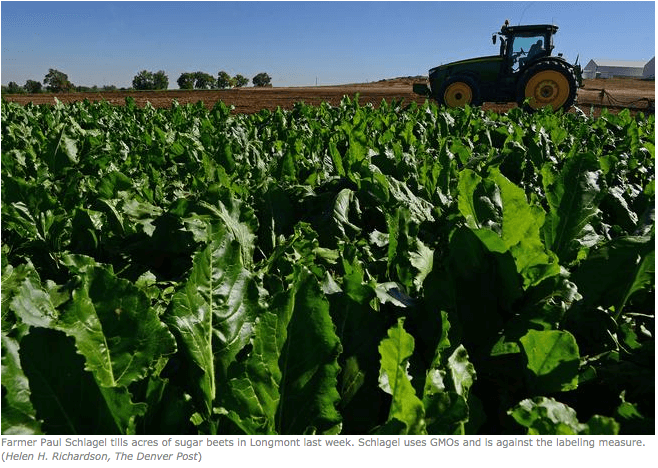
Paul Schlagel, a fourth-generation farmer in Longmont, says that genetically engineered seeds have allowed farmers to reduce their use of herbicides and increased their yield by 40 percent.
“After processing, sugar from genetically engineered sugar beets is molecularly the same as organic sugar, and our sugar in Colorado would be stigmatized by the label,” he said.
Read full, original article:GMO labeling measure in Colorado triggers heated debate
Your body is a wonderland… for viruses, found a new study published in BMC Biology.
This research was a peek into The Human Microbiome Project under the National Institutes of Health that aims, as described on their website, “to develop tools and datasets for the research community for studying the role of these microbes in human health and disease.” Researchers from the Washington University School of Medicine in St. Louis analyzed the DNA of 102 participants ages 18 to 42 from five major “body habitats”: nose, skin, mouth, vagina, and stool. And, on average, each participant had 5.5. viruses.
That’s not all. At least one virus was present in 92 percent of the participants’ DNA, and some participants had up to 15 viruses. These included herpes viruses, which weren’t all found to have been transmitted sexually; papilomaviruses (mostly found in the vagina); adenoviruses (common cold and pneumonia); and otherwise infection-causing virsues, like anelloviruses, parovirues; and circoviruses. To arrive at these results, researchers used a high-throughput DNA sequencing analysis no study has ever used before.
Next Monday, October 6, 2014, is the deadline for genomic testing laboratories, among others, to comply with the new federal regulations governing privacy rules for the results of genome tests and genome sequencing. The laudable goal of the new rules is to make people’s test results easily available to them.
Looks as if it might be a mess.
That’s the message of a new paper in Genomics in Medicine, a journal from the American College of Medical Genetics and Genomics. The authors have adopted an alarmed tone uncommon in journal articles. They mainly discuss challenges the new regulations pose for labs and medical people. But among other issues, people tested at the affected labs “will have access, upon request, to uninterpreted gene variant information,” they say. “It is a ‘what’s-on-file-is-what-you-get’ right that allows access to data but does not entitle individuals to receive ‘interpretive assistance’ to clarify the clinical implications of those data.”
Among the outcomes of that lack of interpretive assistance will surely be confusion and mystification. Recent recipients of medical test results will be familiar with the phenomenon: a (possibly imperfect faxed) sheet of paper laden with meaningless (to most readers) strings of letters and numbers. Some people will be unnecessarily frightened by harmless genomic news. Some people will do nothing despite results that should prompt action. Even research subjects will be able to receive their data once the research is completed.
No “interpretive assistance” possible for VUS
One common situation is likely to be notifications about the presence of gene variants of unknown significance. Professionals have acronymed these: VUS. Even if “interpretive assistance” was available for VUS, it wouldn’t help much. It will take years, and in some cases decades, to figure out the roles–if any–of these rare variant mutations. Some may be very harmful. Others, probably most of them, will have no important effects on bodily functions. Some may even improve life or lifespan. But while people await those clarifications, they will worry about what that weird mutation means for them.
Bioethicists have argued that some genome information may legitimately be withheld from patients. One example is information that could “cause psychosocial harm to scientifically naive laypeople, who lack contextual knowledge to appreciate its uncertainty and who may seek follow-up care that is harmful, unnecessary, or wasteful of scarce health-care resources.”
The authors note that public comment has been divided on whether this concern is justified or just too paternalistic, robbing people of the chance to decide for themselves what information they want. The Department of Health and Human Services has concluded that this worry about potential harm is not sufficient to prevent people’s right of access to their own lab results.
The authors also note that commercial services to help people interpret their genomic data are being developed and marketed despite substantial uncertainties about the clinical relevance of much of the genome.” It’s not hard to foresee that software for consumer genome analysis and personal interpretive services will be for sale soon (online!) after people start asking for their data and find they have no idea what it means. For a time at least, there will be no way to evaluate the accuracy and utility of any of these products.
Coming to a lab near you: epigenome testing
Scientists from the University of Michigan recently pointed out in the Annual Review of Genomics and Human Genetics a looming genome testing problem that few have considered up to now: examining not just the genome but the epigenome . Researchers have begun to study the epigenetic mechanisms that alter gene behavior and figure in disease states. Like all genomic technology, the technology for examining the epigenome is getting better every day. It has now reached the stage, the Michigan authors say, of permitting characterization of multiple epigenetic marks across the genome.
Gene mutations are static and near-impossible to modify. Epigenetic mechanisms are anything but static. In principle they can be altered, at least in some cases, if the environmental factor(s) that triggers them can be discovered. Which means that some abnormal states might be controlled or even prevented by, say, diet or drugs. This could be terrific news some day. But right now, most epigenome information is just VUS. How long will it be before testing services are taking a look too, and sharing the unanalyzed ambiguous epigenome data with patients?
I wrote about the incidental findings problem here at the Genetic Literacy Project last year, when genetic testing turns up VUS or other unexpected information. One such surprise can be about paternity (or, very rarely, even maternity): the discovery that a supposed biological parent is not.
There is no consensus position on whether that startling news should be delivered to the test subject. Nobody knows what to tell people about nonpaternity. The best discussion of the pros and cons of disclosure I’ve seen is a post Clay Jones wrote at Science Based Medicine in August. He came down in favor of withholding that information. But there were well over 100 comments on his post, and plenty of them disagreed with him.
I am reminded of a post from last fall by my PLOS Blog Network colleague Ricki Lewis at her blog DNA Science. She’s written several genetics textbooks, many articles, and a trade book about gene therapy. She has also worked as a genetic counselor. So she knows a lot about genetics, in particular medical genetics and genomics. She reported that she’s not ready for her own genome testing, at least by a direct-to-consumer service like 23andMe. That reluctance should tell us all something.
She also reported on a study showing that, among medical professionals, genetic health professionals were the most reluctant to impart gobs of genetic information to patients. Lewis believes the most important reason for that reluctance is that genetic professionals know just how uncertain is the current state of genetic knowledge. She says an “important reason for hesitancy among some geneticists, including myself, is the incomplete health picture our genomes paint, for now.”
“Until we (or an algorithm) decipher all possible interactions among all gene variants, detecting mutations for some genes provides incomplete information. I’d like to wait until we know more before mailing my spit to a dtc company, although ironically the more of us who do so, the sooner we’ll figure it all out. And while I think people have a right to know their DNA sequences if they want to, I fear that many people who are not familiar with how genes interact may take the results too seriously, especially the bad ones.”
Or be unnecessarily alarmed by those pesky, mysterious VUS.
Tabitha M. Powledge is a long-time science journalist and a contributing columnist for the Genetic Literacy Project. She also writes On Science Blogs for the PLOS Blogs Network. Follow her @tamfecit.
Every year around this time, with the college year starting, I give my students The Talk. It isn’t, as you might expect, about sex, but about evolution and religion, and how they get along. More to the point, how they don’t.
I’m a biologist, in fact an evolutionary biologist, although no biologist, and no biology course, can help being “evolutionary.” My animal behavior class, with 200 undergraduates, is built on a scaffolding of evolutionary biology.
And that’s where The Talk comes in. It’s irresponsible to teach biology without evolution, and yet many students worry about reconciling their beliefs with evolutionary science. Just as many Americans don’t grasp the fact that evolution is not merely a “theory,” but the underpinning of all biological science, a substantial minority of my students are troubled to discover that their beliefs conflict with the course material.
There are a few ways to talk about evolution and religion, I begin. The least controversial is to suggest that they are in fact compatible. Stephen Jay Gould called them “nonoverlapping magisteria,” noma for short, with the former concerned with facts and the latter with values. He and I disagreed on this (in public and, at least once, rather loudly); he claimed I was aggressively forcing a painful and unnecessary choice, while I maintained that in his eagerness to be accommodating, he was misrepresenting both science and religion.
Normally it takes years to prove a new vaccine is both safe and effective before it can be used in the field. But with hundreds of people dying a day in the worst ever outbreak of Ebola, there is no time to wait.
In an effort to save lives, health authorities are determined to roll out potential vaccines within months, dispensing with some of the usual testing, and raising unprecedented ethical and practical questions.
“Nobody knows yet how we will do it. There are lots of tough real-world deployment issues and nobody has the full answers yet,” said Adrian Hill, who is conducting safety trials on healthy volunteers of an experimental Ebola shot developed by GlaxoSmithKline.
Hill, a professor and director at the Jenner Institute at Britain’s University of Oxford, says that if his results show no adverse side-effects, GSK’s new shot could used in people in West Africa by the end of this year.
Even if a drug is shown to be safe, it takes longer to prove it is effective – time that is simply not available when cases of Ebola infection are doubling every few weeks and projected by the World Health Organization to reach 20,000 by November.
Among questions that scientists are grappling with: should an unproven vaccine be given to everybody, or just a few? Should it be offered to healthcare workers first? The young before the old? Should it be used first in Liberia where Ebola is spreading fastest, or Guinea where it is closer to being under control?
Read full original story: Scientists grapple with ethics in rush to release Ebola vaccines
Is this the year that voters will finally insist on knowing which supermarket foods contain genetically modified organisms? Activists in Oregon say the momentum is on their side for a GMO labeling initiative on the November ballot.
“The electorate in Oregon has a greater awareness of this issue than in other states,” says Sandeep Kaushik, a spokesman for Yes On 92, as the initiative is known. “We are approaching a tipping point.”
Labeling campaigns are designed to bypass the thorny scientific debate by reframing the issue around the consumer’s “right to know.” This idea polls extremely well with voters, but not so well that it can’t be overcome by an avalanche of spending on political ads. A poll released in July by Oregon Public Broadcasting put support for GMO labeling at a whopping 77 percent, while a poll released by a Portland TV station last week showed that voter support for the labeling measure has fallen to 53 percent, with 16 percent undecided.
Advocates for Oregon’s I-92 remain optimistic, however. While rural areas of Washington and California are strongly opposed to labeling, that’s less the case so far in Oregon, where GMO contamination incidents have angered farmers and two rural counties have banned cultivation of GM crops. The Oregon measure is also well timed: Young voters, who tend to support labeling, didn’t turn out to vote last year in Washington, but Oregonians will cast ballots this year on a pot legalization initiative, which is seen as a potential magnet for the non-AARP crowd. Anti-GMO activists, for the first time, are also funding a registration drive to target young voters.
For now, at least, I-92’s backers have raised more money than its opponents, but nobody expects that advantage to last. In Washington, the anti-GMO crowd was outspent 3 to 1, and the chasm would have been even wider were it not for the heavy involvement of a few organics companies, notably Dr. Bronner’s Magic Soaps, which is shoveling money at the Oregon effort.
Type the words ‘e coli’ and ‘gmo’ into Google and you get a number of worrisome hits. Could your GMO corn be giving you a dangerous illness? When you drink diet sodas are you drinking bacterial poop? Activists group have frequently played up the alleged dangers of what they call E. Coli “contamination.
Activist groups have frequently raised fears of what they call E. Coli“contamination.
“E-coli live in the gut, and are beneficial,” writes Barbara Peterson, who is neither a farmer nor a scientist, on the site Farm Wars. “That is, unless we ingest one that has mutated into a harmful strain, and then it can cause disease.” Petersen goes on to write:
A little-known fact is that during the genetic modification process, e-coli is used to clone the transgenic (genetically modified) DNA before it is inserted into plant cells that are then grown into transgenic crops such as those bearing the label “Roundup Ready.” It is possible that a mutated form of e-coli resulting from the cloning process used in creating GMOs could get into the gut of a person or animal that eats a transgenic plant. Could this be why DuPont, the company that produces Pioneer Hi-Bred GMO animal feed, and proud proponent of GMO technology, has jumped into partnership with the USDA in identifying hard-to-identify strains of e-coli? With this convenient partnership, even if harmful strains of e-coli relating to GMOs are discovered, it is likely that the public will never hear it from the USDA or DuPont.
In the immortal words of George Costanza from Seinfeld upon swallowing a fly — “What can happen?!” The notorious bacterium Escherichia Coli is indeed used extensively in biotech; but is it a danger to people who might consume GMO foods? I wanted to know more about how and why E. Coli ended up becoming the bacterial lab rat. Let me tell you what I found.
Guts
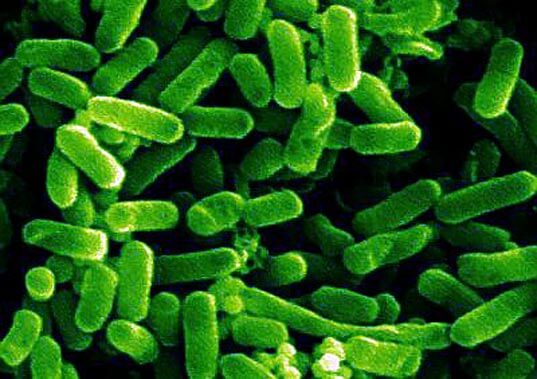
In the late 1800’s scientists had begun exploring a largely unknown habitat. Even though it seemed inhospitable they found that it was teeming with life. One man, Theodor Escherich, discerned minute rod-shaped creatures swishing around there; based on their similar shapes and movement, they were given a single name after their discoverer — Escherichia Coli. The habitat of course was our own guts, and these rod-shaped creatures, which turned out to be a type of bacteria, were first detected in the feces of healthy breastfed infants.
Now we know more about them, and it turns out that the grouping known as ‘Escherichia Coli’ is quite a disparate one even though they look alike. No more than 20 percent of genes are shared by all, and two of them might only share 75% of their genes. For comparison, humans share about 85% of their coding DNA with the mouse. The E. Coli we house in our guts are beneficial ones that produce vitamin K for us (they don’t do this for free — we give them food and shelter). Some others, on the other hand, like the strain that goes by the name O157:H7, can cause dysentery. Even though this phrasing is extremely common in the media, saying that someone contracted a case of E. Coli is about as precise as saying that Jane Goodall once lived among mammals.
The comparison with mammals is an interesting and deep one. Our lower guts are the E. Coli’s main habitat; and when I say ‘our’, I mean us mammals. Our common ancestor with all other mammals probably lived around a hundred million years ago and looked a lot like a rat or shrew. As we have diverged from that ancient shrew into various shapes and sizes and spread all over the world, so have our E. Coli fellow travelers. As we get used to different diets and environments, the E. Coli in our guts evolve to thrive in the food bath that comes down to them. The host’s particular temperature, acidity level, salinity, diet — and even whether the animal is an urban or wild one — matters to their E. Coli hitch-hikers. The E. Coli genome has evolved alongside the mammalian one.
E. Coli outbreaks
In May this year 16 people got sick, some hospitalized, from an outbreak of E. Coli illness that was ultimately traced to a batch of clover sprouts. Another outbreak at the same time was related to ground beef and made 12 people sick. Last year, 33 people were made sick with ready-to-eat salads. What connects these outbreaks? Why salads sometimes, ground beef other times?
What connects them is the Shiga toxin. It acts in ways similar to the ricin poison and causes gastrointestinal sickness in humans. There are only a few strains of E. Coli that can produce cShiga — the most prominent one is O157:H7, a normal resident of cattle guts. Given that fact, and given that cooking kills it, you can probably imagine the scenarios that might cause an outbreak. One scientist in the papers I read helpfully mentioned that humans don’t usually get this infection directly from cattle gut (‘directly?’) But undercooked beef might certainly harbor it; so could a manure application to growing vegetables that has been incompletely composted. E. Coli from infected manure can be drawn into leaf veins, so simple washing may not get rid of the contaminant.
The Shiga toxin is a well-constructed cell-killing machine made of sub-units that each help in different parts of the process. One sub-unit helps it attach to its victim cell and penetrate it. Once it has invaded a healthy cell, another sub-unit is released that cripples RNA function, causing cell death. Repeated over many cells, for us this means diarrhea; dysentery; possibly kidney failure depending on how far the Shiga-toxin producing E. Coli have reached.
Lab rat
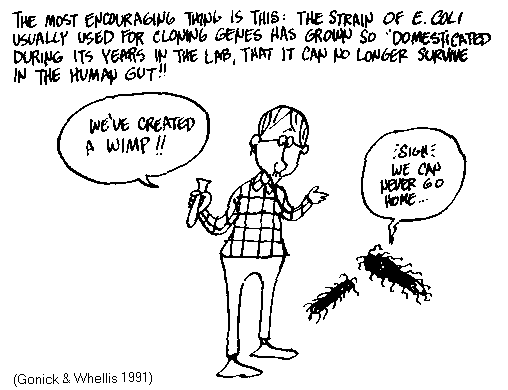
So that’s the bad guy, now let’s talk about some good guys. One that goes by the name of E. Coli K-12 has lived in our labs for almost a hundred years. It may not be particularly pleasant to think about but K-12 originally came from the stools of a diptheria patient in Palo Alto. Since then, it has become a pet of the microbiologists and better understood, down to its genes, than almost any other creature. Over time, it has been bred, cloned, infected with phages, cured of phages, bombarded with X-rays, UV rays, doused with chemicals, and basically been turned into a friendly dog from the wolf that it used to be. What I mean by that is that K-12 has been domesticated; it can no longer live in its wild home, the human gut. The lab is its new human gut.
Cartoon Guide to Genetics, Gonick and Wheelis, 1991 (source: Dr. Steven M. Carr)
At this point, K-12 is given the Biosafety level of 1 — the safest. From the Wikipedia definition, this means that it is “not known to consistently cause disease in healthy adult humans, and of minimal potential hazard to laboratory personnel and the environment (CDC,1997)”. Some oversmart scientists have demonstrated this by sipping E. Coli K-12 cultures. This is never a good idea, but what gave them the confidence to do so was the knowledge that K-12 cannot survive outside the lab for long — it would soon be dead in their guts. Also, it never did produce Shiga or other toxins since it lacks the mechanisms to do so.
Following grand E. Coli tradition, the relationship between K-12 and the microbiologists is a symbiotic one. We spend many research dollars on it to make sure it is safe and reproduces (when we want it to) and lovingly feed it agar-agar. While K-12 for its part has been instrumental in our understanding of how DNA works, and many other fields of study.
Cut and paste
We all use computers, but how many of you hack them? I use Microsoft Windows every single day and it often does one or other annoying thing. But I have neither the ability, nor the tools or expertise needed to go in and ‘fix the code’.
We were in pretty much this position with living cells about half a century ago. Scientists knew that each living cell contained a double-helix — its DNA. And that the sequence of letters in it programmed the cell’s functioning. But they did not and could not manipulate those gene sequences. From that to the DNA hacking world we live in today: how did we get here so quickly? Pardon the awkward metaphor, but we rode in on the shoulders of E. Coli K-12.
In fact the very first such DNA manipulation ever done involved taking some DNA from one E. Coli and putting into another, using a bacteria-infecting virus almost like a pair of pincers. Infect one bacterium, pick up some DNA into the virus, infect another bacterium with the same virus, pass the DNA on. This became known as recombinant DNA.
The period from the late 60s to the seventies saw many separate teams working on techniques to create ‘chimeric’ DNA — those that contained sequences from different species. Some researched restriction enzymes — these are enzymes that can cut DNA into bits at precise points, almost like a pair of scissors that will only cut at previously marked lines. The points are defined by their gene sequences. Some researched DNA ligase — a sort of glue that nature uses to repair broken DNA.
Cut, then paste. In some ways chimeric DNA is like a collage, and one must do things that one does to make a collage. Cut, then paste, and then — of course, make many copies to distribute. This is where E. Coli K-12 came in. It was, and is, used in biotech as a copy machine.
Copy Machine
The biotech industry officially kicked off with a patent awarded to Stanley Norman Cohen and Herbert Boyer for their technique of recombinant DNA (ominously, it seems that the patent was quite a bit broader than it needed to be).
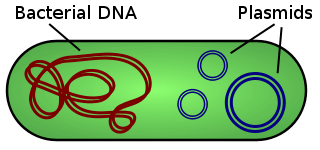
Stanley Norman Cohen was researching plasmids. Plasmids are circles of DNA that exist independently of the main DNA of the bacterial cell. If the main DNA is iOS that runs your phone, the plasmid might be a separate app that you purchase for a specific purpose. Being DNA, it can replicate, and it does replicate, inside the cell, at a rate that can be faster than the rate of the bacterial replication itself. One of the functions of plasmids is to carry gene sequences that give antibiotic resistance to its host for one or other antibiotic.
Meanwhile Herbert Boyer‘s lab was researching a restriction enzyme that would not only cut the DNA in specific places, but also leave sticky ends, making it easier to join up later.
“Plasmid (english)” by User: Spaully on English wikipedia – Own work.
The very first genetically engineered product that came out of this was human insulin. It replaced the use of insulin from cows or pigs, which caused immune reactions in some. Let’s see how the E. Coli copy machine worked. The insulin gene was isolated from humans. Then came the cutting and pasting techniques described above.
An E. Coli plasmid is first cut using a restriction enzyme — now it has open ends and is no longer a circle.
The insulin gene is attached to one end using the paste technique with ligase.
Then the circle is joined back up with ligase. This time it contains cargo — the human insulin gene.
The plasmid is inserted back into the bacterial cell using heat shock — a technique developed in 1970.
The fact that antibiotic resistance is also given by the plasmid makes it easy to recognize the cut-and-paste plasmids from the untouched ones. If the insulin gene is joined at the hip with the gene for antibiotic resistance, and if the bacterial colony that has been grown is treated with the
Eli Lilly & Co. insulin manufacturing site
antibiotic — those that are killed off are the ones that didn’t have that antibiotic resistance gene. Those that survive carry the resistance gene and also its partner the insulin gene.
The E. Coli that are surviving are the hijacked ones, but they themselves are none the wiser. We feed the E. Coli; they multiply; out come a lot of E. Coli, and with them, out come many copies of the human insulin gene.
What genes like to do, is make protein. This they do, as a matter of course. Therefore, the hijacked E. Coli make human insulin.
GM plants
Now if it weren’t the insulin gene, but rather some gene that needed to go into a plant — let’s say, to take a wild (but perhaps not implausible) example, a gene that makes flowers glow in the dark — the gene would have still further to go. We start with the gene being cloned many times in E. Coli as above, and continue from there:
We now have many copies of the glow-in-the-dark gene ensconced in a plasmid.
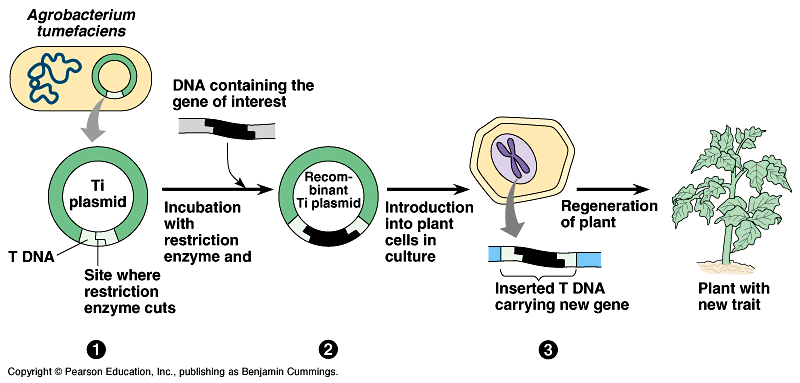
This is inserted into yet another bacteria using the same cut-and-paste plasmid technology. This time, it is the Agrobacterium tumefasciens — bacteria that has the special skill of being able to insert its plasmid into plant cells.
The plasmid with the glow-in-the-dark gene goes into plant cells
The plant is grown from a culture of cells
It makes seeds. These seeds contain the desired gene and will grow plants that exhibit the glow-in-the-dark behavior.
By this point, we are quite distant from the use of E. Coli.
School of Biological Sciences, University of Texas
Safety and the lack thereof
Regardless, do you still worry about the what-if’s and even-so’s of using microbes in the lab? You will be happy to know that you are not alone. Something rather astounding happened in those early days of recombinant DNA, perhaps even more astounding than the experiments with life that were ongoing.
That was this. People raised the alarm about the sheer power of the experiments they were performing in the lab and willingly stopped all work on DNA entirely until an elite community could get together and think a little. The astounding thing was that this wasn’t activists raising the alarm, nor journalists, or governments, or doctors — but scientists themselves; and not rival scientists throwing sand in the wheels to stop to experiments they didn’t want to see succeed, but rather, the very scientist who was performing the work.
This was Paul Berg, one of the originators of recombinant DNA technology, who later went on to win a Nobel prize. He organized a conference in Asilomar, California in 1975 to take stock of potential dangers of biotechnology. Meanwhile all concerned scientists observed a complete moratorium on such work. What came out of it were a set of safety guidelines from NIH that have been improved over the years and are still followed in biotech labs. We are long past the wild west days of biotech.
More importantly, the conference made their work transparent and included the media in their discussions, thereby ensuring that decisions weren’t made behind closed doors. Sounds like a great model for today.
Given all the above, the use of E. Coli in the lab seems very very safe to me, and no one has ever known to have gotten sick from, say, recombinant insulin. But ultimately the best way to get a grasp on safety might be in a relative way.
We routinely accept the much greater risk of using manure in farming. This manure is from the cattle gut, which is where the harmful strains of E. Coli actually do live. Plants can take up E. Coli of the harmful sort and unless they are cooked, can cause illness. There are, once again, regulations about having to completely compost the manure before use, and time limits on how long before harvest it can be applied. Regardless, E. Coli sickness from bad farming practices have known to have happened, though they are rare. In contrast, no one has ever gotten E. Coli sickness from GMO foods or insulin.
Aneela Mirchandani is a software engineer by profession, a writer and biology geek. She blogs about food at The Odd Pantry. Her work has appeared in Harpur Palate and The Indian P.E.N. You can follow @theoddpantry on Twitter or email her at [email protected]
Thousands of British made genetically engineered mosquitoes were released by Brazilian researchers in Rio de Janeiro on Thursday infected with bacteria that suppress dengue fever. The hope is they will multiply, breed and become the majority of mosquitoes, thus reducing cases of the disease.
The British biotech firm Oxitec has altered the DNA of the Aedes aegypti mosquito to prevent it from spreading the potentially deadly virus. Oxitec’s new factory in the Brazilian city of Campinas, outside Sao Paulo, is the first in the world to launch production of genetically modified (GM) mosquitoes to target dengue.
The mosquitoes, which Oxitec has dubbed OX513A, have been bred to carry a sort of genetic self-destruct mechanism that causes their offspring to die before they reach sexual maturity, preventing them from reproducing.
The Oxford-based biotech firm found the perfect way to cut down on the world’s malaria and dengue numbers – create and release genetically engineered mosquitoes which are sterile and unable to reproduce. They also inherit a marker that is visible under a special light, making monitoring in the field simple and helping ensure that dengue mosquito control programmes succeed.
Brazil has now become the first country to allow the commercial release of the genetically modified (GM) mosquito, OX513A.
In several trials, successive releases of the Oxitec males have been shown to reduce substantially the wild population of dengue mosquitoes in the treated area.
The combination of fly genetics and genomics with human genome knowledge enables rapid identification of human disease-causing mutations, including those that result in rare single gene or Mendelian disorders, said an international consortium of researchers led by those at Baylor College of Medicine and the Jan and Dan Duncan Neurological Research Institute at Texas Children’s Hospital.
“Usually, mapping chemically induced mutations is like searching for a needle in the haystack and is the major roadblock in mapping mutations obtained from large-scale fly screens. Combining coarse mapping with whole genome sequencing greatly facilitates this endeavor,” said Hugo Bellen, professor of molecular and human genetics, member of the faculty of the Neurological Research Institute and director of the Baylor College of Medicine Program in Developmental Biology. He also is a Howard Hughes Medical Institute investigator.
The scientists then determined how this information about the fly genes applied to the human genome by identifying and comparing their human counterpart genes (homologs) for variations. They used human exome (the protein-coding part of the genome) databases created by genomic sequencing of DNA samples from families with neurologic disease traits. These series of steps allowed them to quickly pinpoint specific disease-causing mutations in many known and novel human genes.
“It was astonishing to see how quickly basic biological and genomic information obtained from flies could be employed to identify molecular lesions responsible for rare genetic disorders,” said Dr. Manish Jaiswal, a postdoctoral fellow in the Bellen lab and co-first author of the report.
Epigenetics has been used and abused in many ways – can it tell researchers that an expectant mother lived without electricity for a few days?
In January of 1998, what came to be called the North American Ice Storm of 1998 occurred. It knocked out power for days in cities and weeks in remote areas, impacting up to 4 million people. It was so worrisome that the government, concerned about panic among peaceful Canadians, deployed nearly 25 percent of its armed forces to keep peace in Quebec.
Did it change the DNA signature of unborn babies? Scholars from the Douglas Mental Health University Institute and McGill University say they have detected a distinctive ‘signature’ in the DNA of children born in the aftermath of the massive Quebec ice storm. Five months after the event, researchers recruited women who had been pregnant during the disaster and assessed their degrees of hardship and distress in a study called Project Ice Storm.
Thirteen years later, the researchers found that DNA within the T cells – a type of immune system cell – of 36 children showed distinctive patterns in DNA methylation.
The researchers concluded for the first time that maternal hardship predicted the degree of methylation of DNA in the T cells. The “epigenetic” signature plays a role in the way the genes express themselves. This study is the first to find both that and that the objective stress exposure (such as days without electricity) and not the degree of emotional distress in pregnant women causes long lasting changes in the epigenome of their babies.
It’s a question as old as the mountains and valleys of our nation – who are the Welsh?
And the launch of a ground-breaking new project in Cardiff looks set to finally solve that riddle.
CymruDNAWales will carry out an unprecedented mass survey of Wales’s ancestry to trace the origins of its people – back beyond written records to the end of the last ice age around 9,000 BC when colossal glacial shifts gouged out our landscape and allowed the first immigrants to settle here.
By using some of the most advanced genetic testing to date, scientists are able to track the roots of those people who would come to be known as Welsh, revealing a hidden history of Wales.
In an exclusive new partnership, the Daily Post, along with Media Wales, S4C, CymruDNAWales and production company Greenbay Media, will collaborate to create the first “genetic map” of the entire country.
When the same programme was carried out in Scotland in 2012 there were some surprising results, like the revelation that more than 1 percent of all inhabitants there were directly descended from Saharan tribesmen.
A 1980 Supreme Court decision that allowed patents to be granted to living things kicked off a controversy. The basic genetic materials of the things we eat have been around, and have been tinkered with, for millennia, and the idea that a new version of one of them could earn protection that would prevent farmers from saving seed and, perhaps, give the patent holder inordinate control over our food supply has raised a number of concerns. I’m going to tackle the ones that seem to worry people most.
Christopher Holman, a law professor at the University of Missouri at Kansas City, explains that there is a de facto — not a legal — protection for basic research on patented plants.
“As a practical matter, basic researchers are never sued for patent infringement,” he says. What’s basic? “Pure science that is meant to increase our scientific knowledge base,” says Holman. Given the imprecision of the definition, and the fact that the exception isn’t a legal one anyway, this strikes me as an eye-of-the-beholder situation.
Monsanto has agreements with more than 100 universities that allow academic scientists to do independent research with no oversight (although those agreements don’t cover plant breeding).
There’s no definitive research that can tell us the percentage of farmers who can’t get a seed they want. It does happen. It happened to Todd Leake, who grows soybeans in North Dakota.
“After GM soy became available, we weren’t able to access conventional soybean seed in the Northern Plains, except for some old varieties that didn’t have good disease resistance,” he says. Among the dozen or so farmers and the corn and soy growers’ associations I’ve talked to, Leake is the exception.
The story of Big Ag forcing GMOs down the throats of unsuspecting farmers, ensuring that those farmers not only pay through the nose but also can’t save seed and thus have to pay through the nose again next year, is largely fiction. And it’s a story that lots of farmers find really irritating, because it makes them out to be dupes or patsies.
Roundup-Ready corn and soy, which can be sprayed with the herbicide glyphosate (used to kill weeds) and show no ill effects, are widely planted because farmers want them. And Monsanto has made piles of money because it developed plants that the vast majority of farmers wanted to buy. Had patent protection not existed, those companies might have focused almost exclusively on the one megacrop that farmers can’t save seed for regardless: Corn, a hybrid, doesn’t breed true. Patents ensure that crops like soy, for which farmers can save seed, also get attention.
The popular website Mashable has a crisp video presentation on 4 Myths About GMOs.
The four they tackle: Myth 1: GMOs are a new concept
Truth: Farmers have been genetically modifying crops for years.
Myth 2: GMOs are harmful to your health
Truth: For now, scientists and government regulators have concluded that genetically modified foods pose no safety issues.
Myth 3: There’s a GMO variety of everything
Truth: Not yet.
Myth 4: GMO seeds are sterile
Truth: Not entirely. Like traditional plants, GMO seeds will grow and form germs.
University of California-Davis animal biotechnology professor Alison Van Eenennaam, author of recent research published in the Journal of Animal Science [NOTE: article behind paywall until October 1] that examined 29 years of livestock productivity and health data from before and after the introduction of GM crops into animal feed formulations, explains the details and impact of her findings in an podcast with the US Grains Council.
As the Genetic Literacy Project recently reported, the trillion meal study is the latest finding that GM crops are as nutritious as conventional and organic varieties and pose no longterm health concerns.
“The broiler information set is the most powerful because we looked at nine billion birds that were fed mostly GM crops,” Van Eenennaam said. “There was improved feed-to-gain ratios and decreased age to market, which suggests that feeding GM crops did not having any detrimental effects to the birds’ health.”
The findings could have implications for the international marketplace as some countries continue to reject GM crops based on non-science based safety concerns.
“We are going to have more rejections (for unapproved biotech events) in the future and the potential for trade disruptions is going to increase,” Van Eenennaam said. “This is going to increase the cost of food everywhere, which has real implications for food security.”
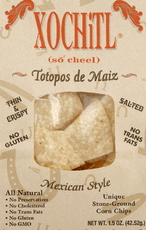
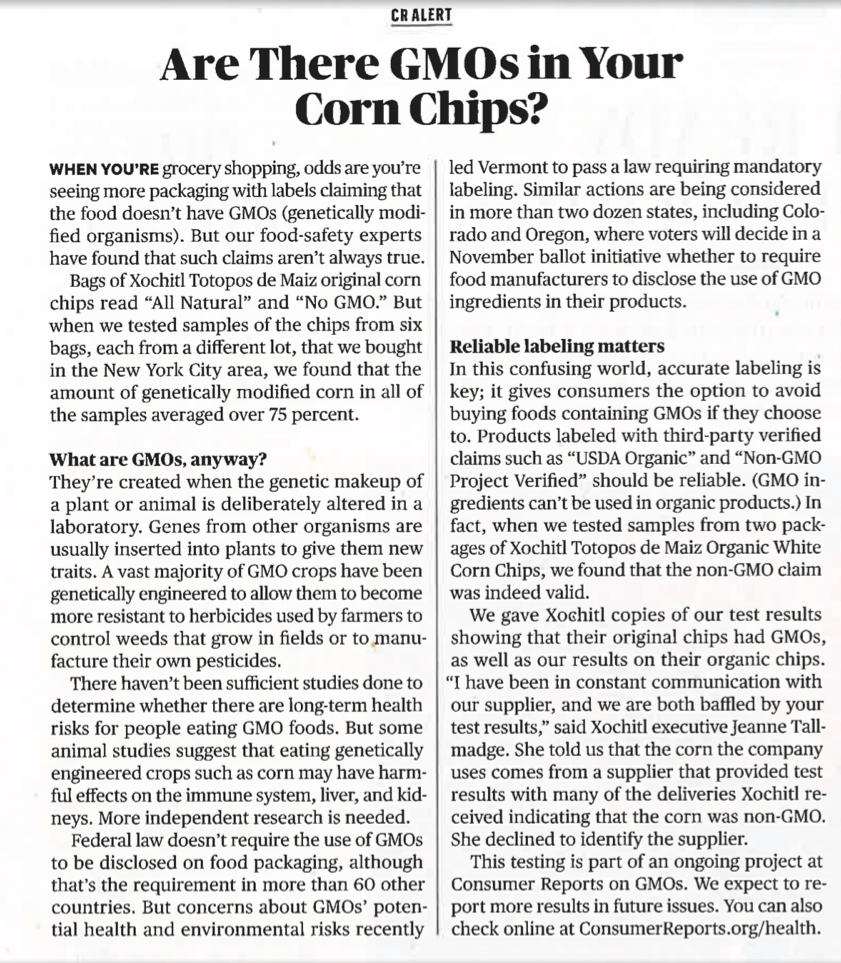
Can consumers trust voluntary labels such as “non GMO”? Apparently not, writes Consumer Reports, at least in the case of a popular junk food brand, Xochitl, that targets the high-priced ‘natural’ foods market.
The magazine tested Xochitl Topos de Maiz corn chips labeled as “No GMO” on the front of the bags, finding genetically engineered (GE) corn, averaging 75 percent in each of six bags. It also tested a different Xochitl product labeled “organic” and found they contain no GMOs. (No organic food can legally be made with GMOs but crops that are non-GMO are not automatically organic, as certified organic products must be produced following strict guidelines). Here is what CR wrote:
The mislabeling alert is of value to those consumers who are more concerned that they are eating chips made from GE corn than they are worried about eating junk food. But CR does nothing to dampen that hysteria surrounding GMOs and in fact goes off the science rails by frightening consumers about GMO safety:
There haven’t been sufficient studies done to determine whether there are long term health risks for people consuming GMO foods. But some animal studies suggest that eating genetically engineered crops such as corn may have effects on the immune system, kidneys and liver. More research is needed.
This is just wrong. There have been plenty of long term term studies on the health effects of GE crops. As GLP’s Jon Entine noted in his recent talk to the National Academy of Sciences, an updated review published last December of 33 studies—17 long-term and 16 multigenerational (from two to five generations)—by a team of scientists including Chelsea Snell and Agnès Ricroch found, “Results…do not suggest any health hazards…and there were no statistically significant differences within parameters observed. …The studies reviewed present evidence to show that GM plants are nutritionally equivalent to their non-GM counterparts and can be safely used in food and feed,” the researchers added.
The field data represented more than 100 billion animals covering a period before 1996 when animal feed was 100 percent non-GMO, and after its introduction when it jumped to 90 percent and more. The documentation included the records of animals examined pre and post mortem, as ill cattle cannot be approved for meat.
What did they find? That GM feed is safe and nutritionally equivalent to non-GMO feed. There was no indication of any unusual trends in the health of animals over 18 years since 1996 when GMO crops were first harvested.
The animal studies that CR references which supposedly hint at health concerns have all been discredited for poor design and not one has seen its data replicated–a basic hallmark of good science. There really isn’t an scientific basis to believe that food made from GE crops would pose any unusual health issue. There simply isn’t a biological hypothesis to test as to how GE crops might cause harm or pose more risks than conventional crops.
This backhanded attack on GE crops and food is par for the course at Consumer Reports, which has been openly hostile towards the technology and deceptive in its reporting. As we reported at the GLP in August, in an article headlined “Milk Alternatives: Should You Sip or Skip,” Consumer Reports urged its readers to avoid perfectly healthy soy milk for fear that it might have been made using GE soy. “Look for brands with the USDA organic seal or the non-GMO verified label,” it wrote.
Who is steering this anti-science trend on CR? The key driver is almost certainly Michael Hansen, a senior staff scientist long known as a rogue outlier on the GM issue. Hansen is notorious for hyping the alleged potential dangers of GMOs in contrast with every major independent global science oversight committee in the world. Geneticist Val Giddings has provided a comprehensive analysis of Hansen’s disinformation strategy at state legislatures where he is often asked to speak because of his connection to CR.
Hansen’s director, Jean Halloran, is little better. She long ago embraced the style views of the activist Organic Consumers Association, referring to GM crops as “Frankenfoods,” and claiming that the U.S. food regulatory oversight of GMO safety is a “fraud. CR’s evidence free stance on GE crops undermines its hard won credibility for empirical reporting and venerable reputation.
CR does make one important case in its latest report: “Products labeled with third party verified claims such as “USDA Organic Certified” or “Non GMO Project Verified” should be reliable.” While the organic tortilla chips, subject to third party certification passed with flying colors, the non-organic chips which failed, were not third party certified. Xochitl is not listed as participating in the Non GMO Project; in other words its label was little more than marketing hype—and in this case wrong. Xochitl claims that it believes it was misled by a supplier which was not third party certified.
This gets at something that I think the advocates of mandatory GMO labels miss (at the state level especially). What isn’t taken into account is the incentives for accountability in accurate labeling. Xochitl had “mandated” that the supplier ship them non-GMO corn, but there isn’t necessarily the buy in from the supplier, or the accountability that comes from third party certification. A food manufacturer or supplier that seeks out, commits to and pays for third party certification has a self-selected, highly motivated reason to live up to the label. That label is enforced by an organization committed to the label’s integrity. Why anyone would want to switch to an expensive and inevitably patchwork system of government bureaucrats trying to police businesses that are not committed to labeling, and have in fact been fighting it, is a head scratcher. It’s all the more confusing that people who don’t trust the FDA or USDA on the safety of GE crops want to put them in charge of verifying the presence of GMOs in on supermarket shelves.
Marc Brazeau is a writer and agriculture editor for the Genetic Literacy Project. He blogs at Food and Farm Discussion Lab. Follow Marc on Twitter @realfoodorg
Spider silk has a unique combination of properties that make it a highly desirable material. But since spiders can’t be farmed, it’s not suitable for mass production. The Department of Energy has awarded a grant to a laboratory at Utah State University that is researching transgenic bacteria that produce spider silk. Their hope is that spider silk will make safer, more energy-efficient cars.
Dr. Randy Lewis, whose lab at Utah State University studies spider silk, compares the molecular properties of spider silk to Legos and to Slinkys. Spider silk is strong because it has a pin-and-hole locking mechanism, akin to the way Legos stick together. It’s elastic because it is long and spiral-shaped, like a Slinky.
If you’ve ever accidentally walked through a spider web, you have some idea of the amazing properties of spider silk. Pound for pound, it’s stronger than steel, but it’s also extremely light, stretchy, and resistant to damage.
Reportedly, ancient Greeks used spider silk to dress wounds. Australian Aborigines used it as fishing line. In World War II, black widow silk was used for crosshairs in firearm sights. In 2012, Japanese researcher Shigeyoshi Osaki made spider-silk violin strings. The same year, the Victoria and Albert Museum in England proudly displayed the largest garment ever made of spider silk. But it took one million spiders and four years to make.
Unfortunately, we can’t farm spiders very well. They’re predatory, territorial, and cannibalistic. But we can grow bacteria. Enter transgenic bacteria with spider genes.
So why bacteria? Lewis’s team has investigated quite a few organisms that might be able to produce spider silk. They have inserted spider silk into alfalfa and into silkworms. Both of those organisms have their benefits, because they can be scaled up well. We already know how to farm alfalfa and silkworms. Unfortunately, the strains of alfalfa and silkworms we have don’t produce enough spider silk to make them efficient yet. Utah State University also has a herd of over 30 transgenic goats expressing spider silk proteins in their milk, first bred by Nexia Biotechnologies in 2000. A regulatory element was included with the introduction of the spider silk gene, so that the goats express the spider silk gene only in their milk. The goats’ milk must be filtered and dried to extract the protein, which is then made into a fiber and pulled through a syringe to make a thread of the silk. But the purification process is difficult, and the amount of protein we can get from a goat this way makes it impractical. Lewis is still researching goats, silkworms, and alfalfa to see if he can get more silk out of them.
Lewis’s lab has also engineered E. coli bacteria that produce spider silk. Bacteria are also a good bet, because transgenic bacteria are already used to produce proteins such as human insulin. While goats can take a year or two to begin producing milk, one of Dr. Lewis’s vats of bacteria can churn out half a kilogram of spider silk in about 18 hours. But there’s a major problem with using bacteria: they are very good at making small proteins like insulin (molecular weight: 6 kDa) but not so good at making larger proteins like spider silk (molecular weight: 80 kDa and up). Thus, his team has had to engineer the expression plasmid that produces the protein in the bacteria to be able to produce larger proteins.
The startup costs for bacteria-based spider silk production include giant, specialized vats to hold the bacteria. In the past, this has proved prohibitive. However, Lewis reports that their facility has dramatically increased its production of transgenic bacteria with the addition of two custom-built 500-liter fermenting vats.
Lewis recently received a grant from DOE Energy Efficient Transportation to research spider silk’s applications as a material for safe, eco-friendly materials in the automotive industry. He plans to investigate spider silk as an alternative to carbon fibers in cars.
Carbon fiber is used in some high-end vehicles because it is lighter than traditional steel. This makes cars more energy-efficient, because less weight means lower fuel consumption and greenhouse gas emissions in gas-powered cars. Decreasing weight could also make battery-powered cars more practical.
But spider silk is even lighter than carbon fiber, which could make it even more energy-efficient. Unlike carbon fiber, spider silk is not a petroleum product. Also unlike carbon fiber, spider silk can be sourced in the U.S. Since spider silk is biodegradable, silk could reduce the problem of waste as well. By contrast, one of the major environmental problems with carbon fiber is that it’s more difficult to recycle than traditional steel car bodies. Carbon fiber is also very expensive. So is spider silk- for now. But scaled mass production of spider silk is a hope Lewis has for the future.
Data on how spider silk would respond in a car crash are not yet available, but we have reason to believe that spider silk may be safer than carbon fiber. Carbon fiber holds up pretty well in car crashes, but it’s brittle. Spider silk is highly elastic- and the faster you pull it, the tougher it gets. Spider silk also has some degree of ability to pop back into shape after traumatic force has been applied, like ‘smart’ shape-memory alloys.
In addition, spider silk could make a highly effective airbag. Airbags right now are a problem because they’re explosive- note the warnings in cars not to let small children sit in the front seat. Lewis envisions airbags that envelop you rather than using explosive force to protect you from your windshield and dashboard. Because spider silk is very good at absorbing force, you would need less explosive force in a spider-silk airbag than a traditional airbag to keep you from hitting your dashboard in a wreck.
Even if you’re not in the market for a new car, spider silk technology has something for you. Because of spider silk’s unique physical properties, the other uses for it are boundless. In the future, spider silk may be used for medical applications like sutures or artificial tendons or ligaments. There’s even been some talk of lightweight, stretchy, tough spider-silk athletic wear, and I for one can’t wait to try that.
Steph Gorski is currently completing her PhD in entomology at NC State University. She is a contributor to Genetic Literacy Project, Biology Fortified, and SkeptiForum. You can email her at [email protected].
Science writer David Dobbs has definitively described the voracious appetite of the “selfish gene” meme, pointing out that the notion of individual genes exercising power on the outcome of events has been so good at mass producing itself, that “the selfish gene has become a selfish meme.”
All “genes of the week” have something in common: they never actually live up to their billing. For starters, it is never true that a single gene just does something. Genes work together, and genomes work with their environments. But this inconvenient reality has done amazingly little to stem genetic determinism, or the funding of research that relies upon its framework.
There are some people who really want to find the genetic basis of intelligence. The sole effort of BGI’s Cognitive Genomics Lab, for example, is to investigate the genetics of human cognition. The fascinating documentary film DNA Dreams sheds light on the hopes of those involved with this project. They harbor no doubt that there is a genetic basis for intelligence; the only question is when they’ll uncover it and how limitless the possibilities will be once they do. Embryo selection and modification to ensure smarter babies are among the future scenarios they envision.
For scientists, this has contradicted several longstanding theories about the evolution of multicellular organisms.
“This opens up a new door for us to shine some light on the timing and evolutionary steps that were taken by multicellular organisms that would eventually go on to dominate the Earth in a very visible way,” said Shuhai Xiao, a professor of geobiology in the Virginia Tech College of Science.