World stem cell scientists look to Japanese human trial with hope

“It’s awesome, it’s amazing, I’m thrilled, I’ve been waiting for this,” says Jeanne Loring, a stem-cell biologist at the Scripps Research Institute in La Jolla, California.

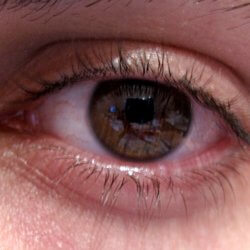
She is one of several researchers around the world to welcome the news that a Japanese woman with visual impairment had become the first person to receive a therapy derived from stem cells known as induced pluripotent stem (iPS) cells.

A lot rides on this trial. If the procedure proves safe, it could soften the stance of regulatory bodies in other nations towards human trials of iPS cells, and it could pave the way for treatments for other conditions, such as Parkinson’s disease and diabetes. It could also cement Japan, recently plagued by a stem-cell scandal, as a frontrunner in iPS-cell research.

Pioneered in 2006 by Shinya Yamanaka, now director of the Center for iPS Cell Research and Applications at Kyoto University, iPS cells are created by inserting certain genes into the DNA of adult cells to reprogram the cells back to an embryonic-like state. The cells can then be turned into almost any tissue type, much as embryonic stem cells can. But because iPS cells can be derived from a patient’s own tissue, the hope is that they will dodge some of the controversial aspects and safety concerns of those derived from embryos.

Read the full, original story: Japan stem-cell trial stirs envy

{{ reviewsTotal }}{{ options.labels.singularReviewCountLabel }}
{{ reviewsTotal }}{{ options.labels.pluralReviewCountLabel }}
{{ options.labels.newReviewButton }}
{{ userData.canReview.message }}

Related Articles

Infographic: Global regulatory and health research agencies on whether glyphosate causes cancer

Infographic: Global regulatory and health research agencies on whether glyphosate causes cancer

Does glyphosate—the world's most heavily-used herbicide—pose serious harm to humans? Is it carcinogenic? Those issues are of both legal and ...

Most Popular

Screenshot-2026-04-23-at-11.00.36-AM
Regulators' dilemma: Thalidomide, Metformin, and the cost of getting drug approvals wrong
Picture1-5
Science Disinformation Gap: The transatlantic battle over social media and censorship
ChatGPT-Image-May-13-2026-11_56_08-AM
After slashing global health aid by $19 Billion, Trump moves to tap $2.1 billion more—to cover shutdown costs
ChatGPT-Image-May-12-2026-08_39_41-PM
GLP podcast: Big Pharma, Big Ag, Big Food—health harming industries or life-saving innovators?
ChatGPT Image May 10, 2026, 08_16_59 PM 2
Overmedicalization? RFK Jr.’s antidepressant crackdown raises conflict questions over his fee stake in Wisner Baum, the tort firm built on suing drug makers
Screenshot-2026-05-12-at-9.58.31-PM
'He seems fine': Marty Makary out as FDA commissioner
ChatGPT-Image-Apr-13-2026-02_20_22-PM
Viewpoint: Misinformation infodemic? Why assessing evidence is so challenging 
Screenshot-2026-05-01-at-1.29.41-PM
Viewpoint: What happens when whole grains meet modern food manufacturing? Labels don’t tell the whole story.
Picture1-1
Cooling the planet with balloons: Could a geoengineering gamble slow global warming?
Screenshot-2026-05-11-104424
Hantavirus outbreak research: Trump administration shut down study last year on rodent-to-human transmission
S
As vaccine rejectionism spreads, measles may be taking a more dangerous turn
images
The never-ending GMO debate: Pros and cons
glp menu logo outlined

Get news on human & agricultural genetics and biotechnology delivered to your inbox.