Kenyan farmer wants the best crop tech for Africa

To many people around the world, the cassava is an exotic crop that they have never eaten. Or so they think. Yet anybody who has tasted tapioca pudding has profited from this versatile plant: Tapioca is a starch that comes from the cassava, a tropical shrub whose tuber is edible.

I don’t eat much cassava either. Farmers don’t grow it in my part of Kenya. Yet it’s a staple crop on my continent — a rich source of carbohydrates for millions of Africans.

“Cassava is to the African peasant farmers what rice is to the Asian farmers, or what wheat and potato are to the European farmers,” says Alfred Dixon of the International Institute of Tropical Agriculture.

In Tanzania, researchers have figured out how to improve the cassava through biotechnology — a development that everyone ought to celebrate and promote. This progress comes at a good time because the cassava brown-streak virus has become the leading threat to food security in many parts of East Africa.

Yet that will happen only if politics doesn’t get in the way of science. In Africa, unfortunately, politics always seems to intrude. Too often, we turn over our public policies to special-interest groups that despise biotechnology for reasons of ideology.

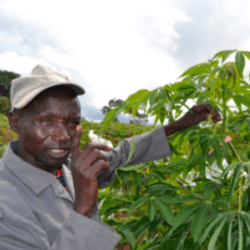
The result is a tragedy for Africa. Our continent routinely fails to feed itself.

In the United States and elsewhere, GM crops have produced an enormous bounty. This year, corn farmers in the Midwest are shattering all-time yield records, in large part because they can grow the best crops science can offer. From the eyes of this African farmer, though, every year is a pretty good year for American growers. I wish we could enjoy similar levels of success.

The difference is technology. Americans have embraced it — and now they’re growing more food than ever before. In Africa, our governments have resisted GM crops — and we continue to suffer from hunger and malnourishment.

Read full original article: Africa’s Farmers Want to Plant the Best Crops Science Can Offer

Related Articles

Infographic: Global regulatory and health research agencies on whether glyphosate causes cancer

Infographic: Global regulatory and health research agencies on whether glyphosate causes cancer

Does glyphosate—the world's most heavily-used herbicide—pose serious harm to humans? Is it carcinogenic? Those issues are of both legal and ...

Most Popular

Screenshot-2026-09-20-at-9.03.54-AM
From Malaysia to the world: A pioneering science communicator reimagines global science communication for a digital age
Screenshot-2026-09-16-at-2.26.42-PM
Viewpoint: How to ecologically damage America’s forests: Ban glyphosate
ChatGPT-Image-Sep-17-2026-12_28_43-PM
Vitamin D, omega-3 fish oil and glucosamine supplements could cause brain damage 
ChatGPT-Image-Mar-10-2026-01_39_01-PM
Viewpoint—“Miracle molecule” debunked: Why acemannan supplements don’t work
Screenshot-2026-09-20-at-4.31.28-PM
White House drafting executive order to control what OMB Director Vought claims are “woke” NIH science grants
ChatGPT-Image-Sep-20-2026-04_22_32-PM
What’s Trump’s ‘AI Force’? Administration rushes to announce ill-defined watchdog agency and czar amid criticism of its resistance to curb AI acceleration
Screenshot-2026-08-12-at-11.31.46-AM
AI is helping develop new vaccines
Screenshot-2026-09-14-at-4.31.14-PM
Viewpoint: What’s the likely impact when the EPA loosens rules limiting methane pollution from oil and gas wells?
Screenshot-2026-08-19-at-6.19.42-PM
Facts & Fallacies podcast: 'Regenerative farming'? RFK Jr.’s federal push romanticizes the past and risks food security
ChatGPT-Image-Aug-28-2026-03_33_46-PM
Viewpoint: Bad science—Five bogus Trump administration claims about vaccines and autism
ChatGPT-Image-Sep-18-2026-10_49_24-AM
‘Symptom borrowing’: Young people are copying health problems they see on TikTok
ChatGPT-Image-Sep-9-2026-02_48_24-PM
Viewpoint: Trump-RFK Jr. report on “Gender Ideology & Left-wing Ideology’ targets LGBTQ community—and science
glp menu logo outlined

Get news on human & agricultural genetics and biotechnology delivered to your inbox.