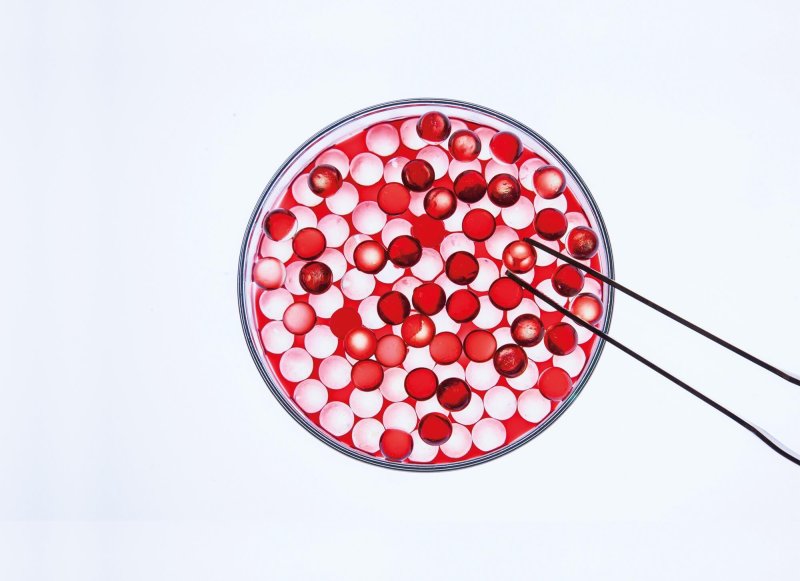
A year after the first lab-developed hamburger was judged for flavor, a collection of artists have published The In Vitro Meat Cookbook, the cookbook of the future, featuring fictionalized meat and meat products:
The conversation about cultured meat proliferates through some of the same news sites and blogs as other popular futurist topics (driverless cars, space elevators, cures for diseases that seem untouchable by medicine) but the visceral nature of meat always seems to ground our talk about it, making it less ethereal than, say, artificial intelligence. Cultured meat is something we don’t just imagine, but imagine consuming. It is tantalizing, or revolting (in truth, if cultured meat never makes it to market, it may be because producers feared that consumers would reject it), whereas the “rewards” of thinking about future AIs are far more abstract. We can imagine how it might smell, how it might taste, and a few people have even had a chance to eat it.
If this book performs a contradiction (A cookbook you can’t cook from?), there are precedents in the history of culinary literature, cookbooks that are much more about ideas and fantasies than about the workaday virtues of a trusty cookbook. The In Vitro Meat Cookbook is not a manifesto on behalf of change, but rather an exploration, growing out of a project that Next Nature’s Koert van Mensvoort conducted with design students at Design Academy Eindhoven, bravely going where only a few cooks involved with cell culture laboratories have gone before. And unlike the Futurist Cookbook, which reads like an instruction manual from an avant-garde theater, The In Vitro Meat Cookbook speaks the language of contemporary cookbooks and lifestyle magazines, its authors displaying a certain familiarity with dining trends both fine and fast (the detail is sometimes delightfully fine-grained, as in a recipe for in vitro shwarma that references shwarma joints in London’s Whitechapel neighborhood). If Post’s 2013 burger demonstration showed that in vitro meat is possible, this cookbook asks if it is desirable – and it does so through the techniques of design fiction.
Read the full, original story: The In Vitro Meat Cookbook