Superweeds have been in been in the news a lot over the last few months. Most of the recent coverage has been related to new 2,4-D resistant crops that were recently approved by the USDA and the new herbicide formulation (2,4-D plus glyphosate) that the EPA is reviewing. The Genetic Literacy Project’s Marc Brazeau recently wrote a compelling piece arguing that our focus on superweeds in GMO crops draws attention away from solutions that could really help make modern agriculture more sustainable.
The Weed Science Society of America (WSSA) is announcing a new fact sheet that addresses some of the most common misconceptions related to superweeds. [Full disclosure, I helped develop the WSSA fact sheet, and am quoted in the accompanying press release from WSSA.] I encourage anyone who’s interested in weed management or herbicide-resistant crops to go download and read this 2-page document. But more importantly, I hope that anyonewriting about superweeds will check out this resource to avoid contributing to these misconceptions.
I wanted to provide some of my thoughts here on why I think using the word superweed has actually contributed to misunderstandings about herbicide-resistant weeds and GMO herbicide-resistant crops.
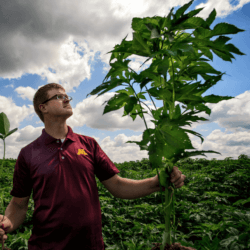
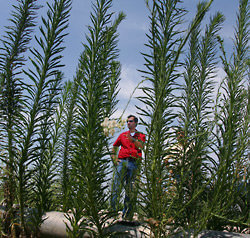
In reality, the superweeds in most recent news articles aren’t really any different than the herbicide-resistant weeds we’ve been battling for 50 years. That doesn’t mean herbicide-resistant weeds aren’t a problem, quite the contrary. But it isn’t because they are resistant that they are problematic; weeds are problematic because they grow tall, they are aggressive, they damage harvest equipment, they produce a lot of seeds, etc. Weeds, in general, are pretty super. And they possess these traits whether they are herbicide-resistant or not. Herbicide-resistance simply removes one powerful tool out of the many we use to control weeds.



If we really want to have a rational discussion about the impact of weeds, resistance to herbicides, GMO crops, or herbicide use, it is counter-productive to continue using a term that only creates more confusion about all of these things. It would be nice if we could stop using the term superweed, and instead just say what we mean. Because after all, in nearly all cases, a superweed vigorous weed was already a superweed difficult to control before it became a superweed herbicide resistant, and it probably isn’t even a superweed crop-weed hybrid.
Read full original article: Superweeds: A Mutating Problem