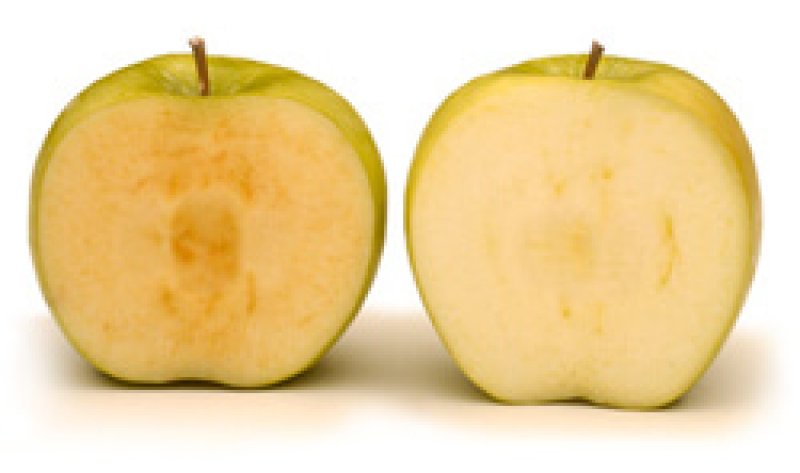

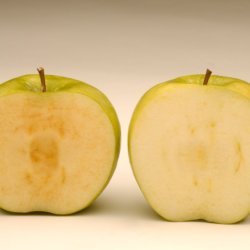
Two sliced apples sit on either side of a clock as a time-lapse video compresses 24 hours into 30 seconds. By the end, the apple on the left has turned brown but the one on the right has stayed fresh and white.
The demonstration highlights the Arctic Apple, as shown in a video made by its producer, Okanagan Specialty Fruits Inc. More than a decade in the making, Okanagan’s new Arctic Apple has been genetically modified to resist browning when cut open or sliced.
Federal regulators are weighing whether to approve the Arctic apple for sale in the United States. If approved, the apple would be the first non-browning variety on the market, and could be among the country’s first products required to carry a genetically modified label.
Some farmers have asked the Agriculture Department to ban the new apple from entering the U.S. market on concerns it could compromise the fruit’s reputation as a healthy, wholesome food. Several individuals commenting on the agency’s assessment of the fruit said Okanagan was “playing God” with the apple.
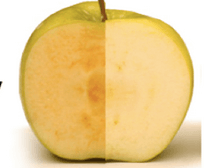



Okanagan says the Arctic apple works by shutting off the enzyme that initiates browning on the apple’s flesh. Neal Carter, co-founder of the Canada-based Okanagan, hopes the non-browning trait will reinvigorate the apple industry in the same way baby-cut carrots helped create a surge in carrot demand. Okanagan envisions a world where cooks can take their time slicing apples for pies and dinner guests linger over apple wedges on their salads.
The Agriculture Department and the Food and Drug Administration are both reviewing the Arctic apple but only the USDA’s approval is needed for it to be sold to U.S. consumers. That agency is looking at whether the Arctic apple poses a threat to other plants. It said in a 2013 draft assessment that the apple is unlikely to do so.
Read full, original article: Inventing a GMO Apple That Won’t Brown (subscription required)