How culture shaped human evolution

Culture is not a luxury; it is life or death. Culture has likely been the most important part of the human selective environment for hundreds of thousands of years. Humans are not adapted to life without culture. Robert Boyd, Peter Richerson, and Joseph Henrich (also the authors of the aforementioned 41-page PDF) invite us to consider the “lost European explorer experiment” in order to understand the gravity of our dependence on culture for survival:

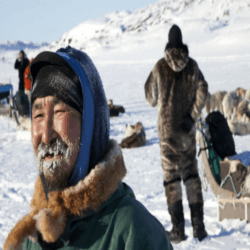
“[The Lost European Explorer] experiment has been repeated many times when European explorers were stranded in an unfamiliar habitat. Despite desperate efforts and ample learning time, these hardy men and women suffered or died because they lacked crucial information about how to adapt to the habitat. The Franklin Expedition of 1846 illustrates this point. Sir John Franklin, a Fellow of the Royal Society and an experienced Arctic traveler, set out to find the Northwest Passage, and spent two ice-bound winters in the Arctic, the second on King William Island. Everyone eventually perished from starvation and scurvy. The Central Inuit have lived around King William Island for at least 700 years. This area is rich in animal resources. Nonetheless, the British explorers starved because they did not have the necessary local knowledge, and despite being endowed with the same cognitive abilities as the Inuit, and having two years to use these abilities, failed to learn the skills necessary to subsist in this habitat.”

Humans rely on culture to survive not only in marginal environments, but even in environments rich with resources, such as the Australian outback. People rely on culture to obtain sources of food, and also to eat their food safely.

Read full, original article: Why Cultural Evolution Is Real (And What It Is)

{{ reviewsTotal }}{{ options.labels.singularReviewCountLabel }}
{{ reviewsTotal }}{{ options.labels.pluralReviewCountLabel }}
{{ options.labels.newReviewButton }}
{{ userData.canReview.message }}

Related Articles

Infographic: Global regulatory and health research agencies on whether glyphosate causes cancer

Infographic: Global regulatory and health research agencies on whether glyphosate causes cancer

Does glyphosate—the world's most heavily-used herbicide—pose serious harm to humans? Is it carcinogenic? Those issues are of both legal and ...

Most Popular

Screenshot-2026-04-20-at-2.26.27-PM
Viewpoint — Food-fear world: The latest activist scientists campaign: Cancer-causing additives
Screenshot-2026-03-13-at-12.14.04-PM
The FDA wants to make many popular prescription drugs OTC—a great idea. Here’s why it’s unlikely to happen
ChatGPT-Image-May-1-2026-02_20_13-PM
How RFK, Jr.’s false vaccine claims are holding up $600 million to fight diseases in poor countries
Screenshot-2026-05-01-at-11.56.24-AM
‘Science moves forward when people are willing to think differently’: Memories of DNA maverick Craig Venter
Screenshot-2026-04-03-at-11.15.51-AM
Paraben panic: How a flawed study, media hype, and chemophobia convinced the public of the danger of one of the safest classes of preservatives
viva-la-vida-watermelons
Misinformation and climate change are endangering summer watermelons
Screenshot-2026-04-30-at-2.19.37-PM
5 myths about summer dehydration that could damage your health — or even kill you
ChatGPT-Image-Mar-27-2026-11_27_05-AM
The myths of “process”: What science says about the “dangers’ of synthetic products and ultra-processed foods
Screenshot-2026-05-04-at-12.54.32-PM
How Utah became the country’s supplement capital  — and a haven for unregulated, ineffective and fake products
Drinking lots of water can help reduce the effects of aging
Nanoplastics in drinking water: MAHA activists forge science-based bipartisan coalition 
ChatGPT-Image-Mar-10-2026-01_39_01-PM
Viewpoint—“Miracle molecule” debunked: Why acemannan supplements don’t work
circular-bioeconomy-should-focus-on-sustainable-wellbeing
GLP podcast: What's wrong with 'doomsday' environmentalism? It's false.
glp menu logo outlined

Get news on human & agricultural genetics and biotechnology delivered to your inbox.