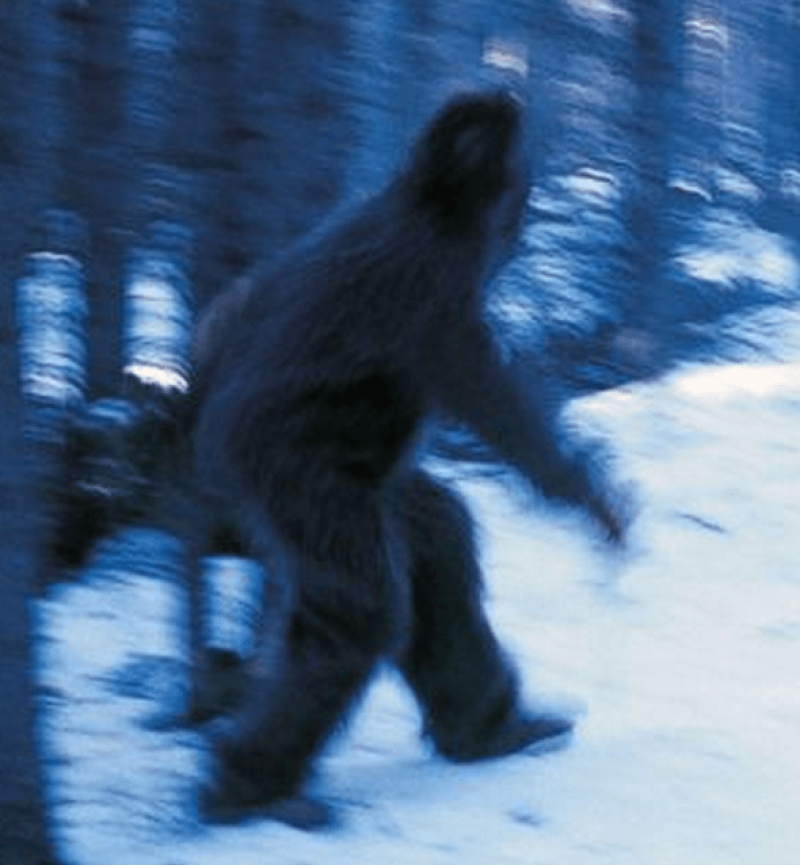
‘Abominable Snowman’ hairs match DNA of ancient polar bear

Screen Shot at PM

Last year, Oxford University genetics professor Bryan Sykes revealed the results of DNA tests on hairs said to be from the Abominable Snowman.

The tests matched the samples with the DNA of an ancient polar bear.

But two other scientists have said re-analysis of the same data shows the hairs belong to the Himalayan bear, a sub-species of the brown bear.

The results of the new research by Ceiridwen Edwards and Ross Barnett have been published in the Royal Society journal, Proceedings of the Royal Society B.

Among Edwards’ previous work was an attempt to carry out DNA analysis of a sample taken from bones of a polar bear washed into caves in north west Scotland 18,000 years ago.

Prof Sykes, along with other genetics experts, conducted DNA tests on hairs from two unidentified animals, one from Ladakh – in northern India on the west of the Himalayas – and the other from Bhutan, 800 miles (1,285km) further east.

The results were then compared with the genomes of other animals stored on a database of all published DNA sequences.

The scientists found that he had a 100 percent match with a sample from an ancient polar bear jawbone found in Svalbard, Norway, that dates back to between 40,000 and 120,000 years ago – a time when the polar bear and closely-related brown bear were separating as different species.

The species are closely related and are known to interbreed where their territories overlap.

Sykes said the most likely explanation for the myth was that the animal was a hybrid of polar bears and brown bears.

Read full, original article: Scientists challenge ‘Abominable Snowman DNA’ results

 

{{ reviewsTotal }}{{ options.labels.singularReviewCountLabel }}
{{ reviewsTotal }}{{ options.labels.pluralReviewCountLabel }}
{{ options.labels.noReviewsLabel }}
{{ options.labels.newReviewButton }}
{{ userData.canReview.message }}

Related Articles

Infographic: Global regulatory and health research agencies on whether glyphosate causes cancer

Infographic: Global regulatory and health research agencies on whether glyphosate causes cancer

Does glyphosate—the world's most heavily-used herbicide—pose serious harm to humans? Is it carcinogenic? Those issues are of both legal and ...

Most Popular

Screenshot-2026-07-09-at-1.09.25-PM
Anti-vaccine myths rattle health care
ChatGPT-Image-Mar-10-2026-01_39_01-PM
Viewpoint—“Miracle molecule” debunked: Why acemannan supplements don’t work
ChatGPT-Image-Jul-10-2026-12_21_03-PM
Viewpoint: Is there new evidence that the animal deworming drug ivermectin decreases the risk of Covid and cancer? Don’t waste your money.
Picture1
Hiroshima at 81: America’s new nuclear bomb, a buried Iranian target, and a question no one wants to ask
leeteam
How Kennedy and his family could pocket millions from Merck’s $50 million vaccine injury settlement that he oversaw
Screenshot-2026-07-30-at-3.07.42-PM
Controversy over WNBA star Sophie Cunningham’s comment opposing trans females in women’s sports reinvigorates the culture wars
ChatGPT-Image-Jun-25-2026-12_23_17-PM
No, Bill Gates did not secretly engineer ticks to promote veganism
Screenshot-2026-07-30-at-2.30.35-PM
Climate scientists claim conservative activists are promoting ‘lies’ that Europe’s summer heatwaves are far from unusual

Sorry. No data so far.

glp menu logo outlined

Get news on human & agricultural genetics and biotechnology delivered to your inbox.