Debate ramps up on release of genetically engineered mosquitoes in Key West

In this bite-size community near Key West, like so many other mosquito-plagued spots up and down the Florida Keys, residents long ago made peace with insecticides dropped into town by planes or rumbling by on trucks.

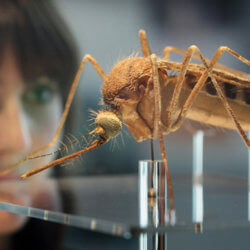
But Keys residents are far less enamored of another approach to mosquito control — a proposal to release the nation’s first genetically modified mosquitoes, hatched in a lab and pumped with synthetic DNA to try to combat two painful mosquito-borne viral diseases, dengue and chikungunya.

If the federal Food and Drug Administration gives the go-ahead for the trial, Key Haven, with 444 houses built on a tiny peninsula, would become the focal point of the first American release of several million mosquitoes genetically altered by Oxitec, a British biotechnology company.

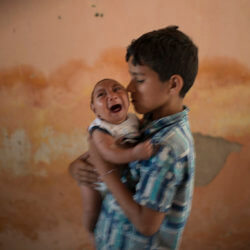
Trying to unleash a better weapon to curb dengue, which hit Key West in 2009 and 2010, and chikungunya is a smart preventive, said Michael S. Doyle, the executive director of the mosquito control district, which invited Oxitec to conduct the trial.

Phil Lounibos, a University of Florida professor of ecology and behavior, said the risks, in general, were “very, very low.” But, he added, “we don’t know all the answers, and Oxitec could do a better job of explaining it.”
Still, residents say, a trial is an experiment.

“This is not the way to protect our community, with an unproven and unprecedented experiment in the Florida Keys,” said Meagan Hull, a Key West resident. “The genie will be out of the bottle, and you can’t stuff it back in.”

Read full, original article: A Mosquito Solution (More Mosquitoes) Raises Heat in Florida Keys

{{ reviewsTotal }}{{ options.labels.singularReviewCountLabel }}
{{ reviewsTotal }}{{ options.labels.pluralReviewCountLabel }}
{{ options.labels.noReviewsLabel }}
{{ options.labels.newReviewButton }}
{{ userData.canReview.message }}

Related Articles

Infographic: Global regulatory and health research agencies on whether glyphosate causes cancer

Infographic: Global regulatory and health research agencies on whether glyphosate causes cancer

Does glyphosate—the world's most heavily-used herbicide—pose serious harm to humans? Is it carcinogenic? Those issues are of both legal and ...

Most Popular

Screenshot-2026-07-30-at-3.07.42-PM
Controversy over WNBA star Sophie Cunningham’s comment opposing trans females in women’s sports reinvigorates the culture wars
leeteam
How Kennedy and his family could pocket millions from Merck’s $50 million vaccine injury settlement that he oversaw
ChatGPT-Image-Jul-10-2026-12_21_03-PM
Viewpoint: Is there new evidence that the animal deworming drug ivermectin decreases the risk of Covid and cancer? Don’t waste your money.
Screenshot-2026-07-30-at-2.30.35-PM
Climate scientists claim conservative activists are promoting ‘lies’ that Europe’s summer heatwaves are far from unusual
ChatGPT-Image-Mar-10-2026-01_39_01-PM
Viewpoint—“Miracle molecule” debunked: Why acemannan supplements don’t work
Picture1
Hiroshima at 81: America’s new nuclear bomb, a buried Iranian target, and a question no one wants to ask
Screenshot-2026-07-09-at-1.09.25-PM
Anti-vaccine myths rattle health care
ChatGPT Image Jul 29, 2026, 12_05_21 PM
AI-generated physicians promoting bogus cures and worthless supplements surge on social media
ChatGPT Image Jul 29, 2026, 06_26_01 PM 2
Facts & Fallacies podcast: Organic food myths make a comeback on Instagram, with Dr. Kevin Folta
ChatGPT Image Jul 29, 2026, 05_50_04 PM
Fear, science, and the law: If talc powder is unlikely to cause cancer and J&J was winning in court, why did it pay more than $5.5 billion to settle?
ChatGPT Image Jul 29, 2026, 10_14_27 PM
After muzzling RFK, Jr. over autism-vaccine conspiracy theories, Trump defies aides to push scares again
Screenshot 2026-07-22 at 1.38
Viewpoint: Are the U.S. and Europe headed towards a repudiation of agricultural biotechnology red tape?
glp menu logo outlined

Get news on human & agricultural genetics and biotechnology delivered to your inbox.