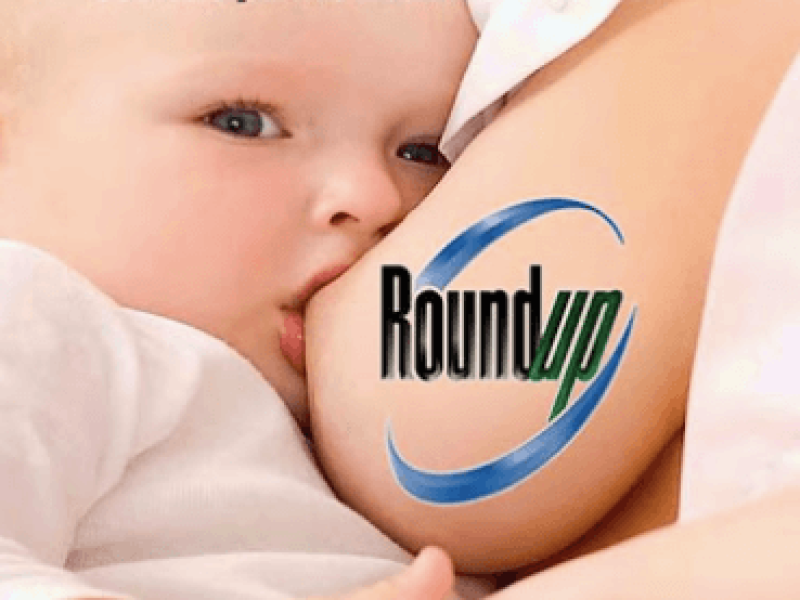
In reaction to the World Health Organization’ International Agency for Research on Cancer (IARC) report listing glyphosate as a “probable” carcinogen, various anti-GMO activists have been dredging up scientifically dubious studies that purportedly show the omnipresent danger of the pesticide.
Reading summary accounts on advocacy websites, it would appear that glyphosate is a gun pointed to the head of consumers. March Against Monsanto, for example, headlined its article: “Top Medical Journal, WHO Confirm: Monsanto’s Flagship Product Probably Causes Cancer.” But that’s not what the agency concluded.
IARC did not conclude or even suggest that glyphosate is likely to harm anyone; in fact there was no evidence of that. It did find that there is a remote risk that extended exposure to the chemical in occupational settings and in laboratory animal epidemiological studies raised risk concerns.
Case-control studies of occupational exposure in the USA, Canada, and Sweden (that) reported increased risks for non-Hodgkin lymphoma that persisted after adjustment for other pesticides.
In male CD-1 mice, glyphosate induced a positive trend in the incidence of a rare tumour, renal tubule carcinoma. A second study reported a positive trend for haemangiosarcoma in male mice. Glyphosate increased pancreatic islet-cell adenoma in male rats in two studies. A glyphosate formulation promoted skin tumours in an initiation-promotion study in mice.
Setting aside the debate over the validity of those studies, there was no indication–zero–that consumers faced any real world harm. The finding that glyphosate posed a likely cancer puts it in the illustrious company of such dangerous substances as coffee and alcohol–known cancer causing substances. Unlike coffee, alcohol and many other known cancer-causing substances, however, which consumers gulp down in voluminous amounts every week, people don’t regularly consume glyphosate. In other words, there is no evidence that the minuscule amounts of glyphosate particles that consumers are exposed do poses any harm.
But that’s not the way this reclassification played out among groups campaigning to ban GMOs. Pesticide Action Network said in a release that “The finding gives new urgency to questions about the impacts of genetically engineered (GE) crops that are designed to tolerate herbicide applications.” In fact, there is no reference in the IAARC report to genetically modified crops.
Ken Cook, president and co-founder of the Environmental Working Group, immediately attempted to leverage this report to energize his efforts to stigmatize GMOs, scaring consumers away from foods containing GM ingredients. “Consumers have the right to know how their food is grown and whether their food dollars are driving up the use of a probable carcinogen,” he said.
Other advocacy groups used the opportunity to dredge up a host of prior reports and claims about glyphosate that have long since been debunked. Among them:





- A review commissioned by Moms Across America and the pro-organic site Sustainable Pulse allegedly found urine and drinking water levels of glyphosate in the US that were 10 times higher than those found in Europe. The review had no scientific controls. In fact, Moms Across America later admitted that it was “not meant to be a full scientific study”.
- Another report, also originally circulated by Moms Across America, found breast milk levels of glyphosate that they claimed were dangerously high. The claims were widely circulated among activists. But there are no other studies indicating these levels–which even if found pose no known harm. The specific claims were subsequently addressed and debunked.
- The IARC announcement also revived interest in a 2012 study in the Journal of Organic Systems claiming that glyphosate was not only carcinogenic, but also responsible for a host of chronic diseases, including diabetes, Parkinson’s disease and obesity. The journal is what’s known as ‘pay for play’; marginal authors can literally buy their way into the journal. In this case, the lead author was Andre Leu–not a scientist but an organic farmer with the International Federation of Organic Agricultural Movements. The study was dismissed by mainstream scientists, and not just because of Leu’s association with the anti-GMO movement, and the journal’s association with the organic farming industry, but also with the classic fallacy in science: correlation does not equal cause. Using Leu’s standards, for example, every one of those diseases could be “linked” to the rise in the consumption of organic foods.
- Another study, this one allegedly linking glyphosate and kidney disease in Sri Lanka, was revived by anti-GMO activists in response to the IARC announcement. It too was a dubious correlation study. When it first appeared, it was used to justify a government ban on the pesticide; that ban was later lifted, because of a lack of evidence connecting dehydration, death, kidney disease and glyphosphate.
Let’s be clear on what IARC actually concluded:
Group 2A is used when there is limited evidence of carcinogenicity in humans and sufficient evidence of carcinogenicity in experimental animals. Limited evidence means that a positive association has been observed between exposure to the agent and cancer but that other explanations for the observations (called chance, bias, or confounding) could not be ruled out. This category is also used when there is limited evidence of carcinogenicity in humans and strong data on how the agent causes cancer.
The U.S. EPA, in contrast, no longer uses the term “probable”, especially when referring to animal studies, because it is so vague. Instead, it uses “carcinogenic”, “likely,” “suggestive”, “inadequate information” and “not likely.” The EPA, which does not currently consider glyphosate a carcinogen and is not required to change its designation in response to IARC, has been conducting a review of the popular pesticide.
The IARC report has resulted in an recirculating of marginal surveys or reports. Presence of a substance in water, urine or breast milk does not indicate that the chemical poses any harm. If it did, coffee and alcohol, among hundreds of substances, would be banned. There needs to be a logical mechanism by which a substance causes harm, and evidence needs to be found in dose-controlled studies whereby higher dosages of the chemical result in greater harm (or show a threshold of some physiological sort). As Val Giddings wrote in a recent article for the Genetic Literacy Project, there are many, many other causes of cancer that are more likely than glyphosate and other chemicals.
So far, what we have are dozens of studies concluding that glyphosate is safe as used, independent oversight agencies from around concluding glyphosate is safe as used, and one determination that suggests likely occupational risks—but not at levels found in the real world.
Andrew Porterfield is a writer, editor and communications consultant for academic institutions, companies and non-profits in the life sciences. He is based in Camarillo, California. Follow @AMPorterfield on Twitter.