Is it dehumanizing to call children born with disabilities ‘divine’?

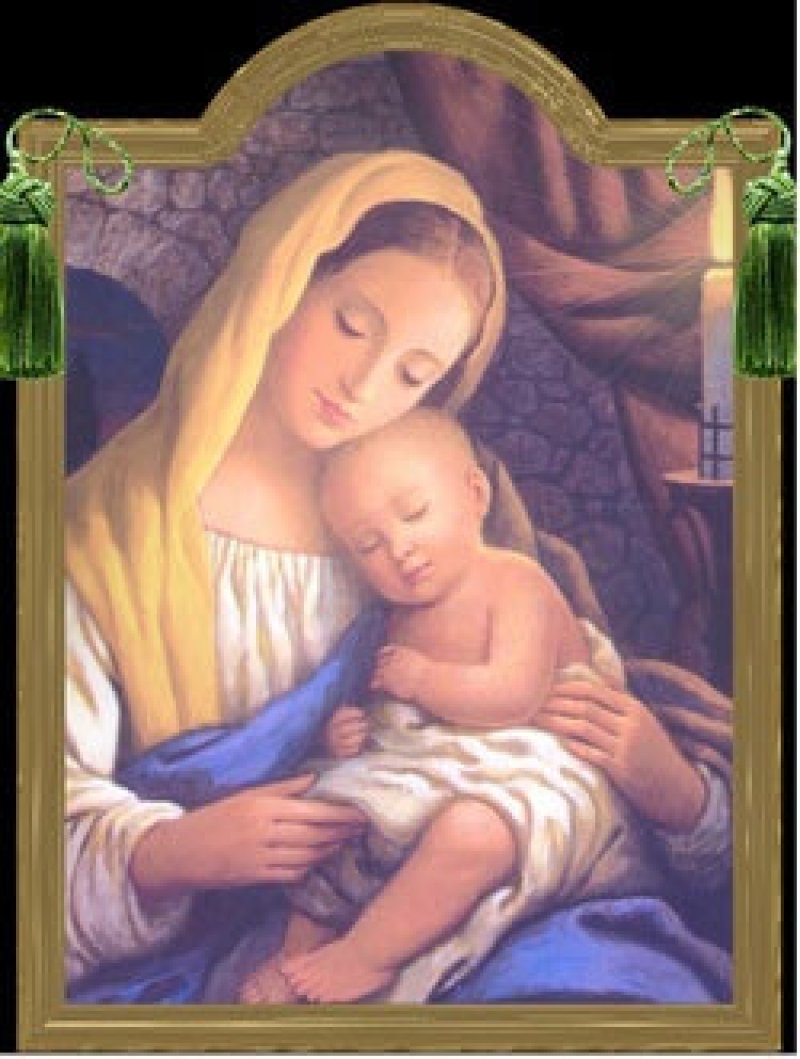
Virgin birth

My brother was born with Down’s syndrome and for most of his life, people have been making it a point to talk about how he is a divine gift – as if his extra chromosome somehow gives him a direct line to heaven.

Of course, not all divine connections are light and glory. Early Scottish folklore believed that elves or fairies would take away desirable children and in their place leave a changeling – an elfin child, who would grow up peevish and malcontent. The reality behind those myths, which are pervasive in many western European nations, is that changelings were often children born with Down’s syndrome or other disabilities like Prader-Willi syndrome, cerebral palsy and spina bifida.

Recently, geneticist and pediatrician Judith Hall noted in an interview: “In the same way that ancient societies viewed [people] with differences as a pathway to the divine, I see them as a pathway to access the knowledge of nature.” Hall further explains that by tracing genetic anomalies, worlds of scientific knowledge have been expanded.

Hall is not alone in this belief. In his book Freaks of Nature: What Anomalies Tell Us About Development and Evolution, Mark Blumberg posits that when genetic variance occurs in nature it is called evolution; when it’s in humans we regulate our differences to a sideshow.
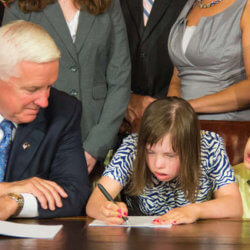

People have interpreted anomalies in babies as messages from God for centuries, and modern scientists are attempting to link genetic differences to our chemical-laced lifestyles. These overlook one simple fact: the human life before them.

The GLP aggregated and excerpted this blog/article to reflect the diversity of news, opinion and analysis. Read full, original post: Seeing the divine in children born disabled ignores their very real humanity

Related Articles

Infographic: Global regulatory and health research agencies on whether glyphosate causes cancer

Infographic: Global regulatory and health research agencies on whether glyphosate causes cancer

Does glyphosate—the world's most heavily-used herbicide—pose serious harm to humans? Is it carcinogenic? Those issues are of both legal and ...

Most Popular

ChatGPT-Image-Mar-10-2026-01_39_01-PM
Viewpoint—“Miracle molecule” debunked: Why acemannan supplements don’t work
ChatGPT-Image-Sep-30-2026-01_11_07-PM
How U.S. teamed with Russia to block global human AI weapons oversight
ChatGPT-Image-Sep-29-2026-12_16_42-PM
Social media influencers are driving food misinformation across Europe
ChatGPT-Image-Sep-21-2026-03_15_09-PM
Viewpoint: Chipotle-inspired lesson: 10,000 sick customers suggest that processed foods can be safer than fresh ones
Screenshot-2026-09-29-at-11.06.43-AM
Astrology, homeopathy, vaccine rejectionism, creationism: Why pseudoscience thrives as science advances
Screenshot-2026-09-28-at-1.16.38-PM
Defying public perceptions, U.S. cancer deaths plunged 35% since 1991
generated-1790707585414
Facts & Fallacies podcast: America's health care system is broken. A doctor explains how to fix it
ChatGPT-Image-Sep-23-2026-02_36_39-PM
Viewpoint: After firing the entire National Science Board, Trump reshapes funding initiatives. Here’s the good and the bad.
ChatGPT-Image-Jun-18-2026-04_15_29-PM
Viewpoint: Kennedy’s ‘bad science’: MAGA embrace bolsters HHS secretary’s influence and popularity
Screenshot-2026-09-17-at-1.07.08-PM
'We are dangerously addicted to antidepressants': Should we heed RFK Jr.’s sobering warning?
glp menu logo outlined

Get news on human & agricultural genetics and biotechnology delivered to your inbox.