Protesters March Against Monsanto in over 400 cities around the world

Thousands of people across the world have joined together in a global movement, protesting against American biotech giant Monsanto. Activists from over 400 cities are speaking out against GMOs and Monsanto’s monopoly over the food supply.

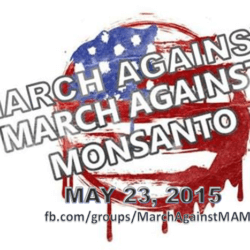
Saturday marked the third global annual March Against Monsanto (MAM). According to the organizers, 48 countries were scheduled to participate in a massive global turnout.

Activists accuse the agricultural corporation of selling toxic chemicals, which are bad for people’s health, water supplies, vital crop pollinators and environment in general. The giant is also criticized for its attitude towards food safety regulations and a staunch opposition to GMO labeling. Meanwhile, small farmers blame Monsanto for monopolizing the seed market.

The first annual MAM action was held in 2013. It saw over two million protesters from around the globe taking to the streets to demonstrate.

Monsanto was founded in 1901 and originally produced food additives. In over a century, it has become the world leader in the production of genetically engineered seeds and chemical herbicides. It currently employs over 22,000 people in factories across 61 countries.

Monsanto spokesperson, Charla Lord, issued a statement in response to the global movement today:“The company is committed to making a more balanced meal accessible for everyone.”

In light of thousands of people opposing Monsanto on Saturday, a few individuals came out in support of the agricultural giant, gathering outside Monsanto’s headquarters, with banners in favor of the use of GMOs. The pro-Monsanto demonstrators said protesters are spreading “myths” about genetically modified products.

The GLP aggregated and excerpted this blog/article to reflect the diversity of news, opinion and analysis. Read full, original post: World stands up against Monsanto: Over 400 cities protest GMOs

{{ reviewsTotal }}{{ options.labels.singularReviewCountLabel }}
{{ reviewsTotal }}{{ options.labels.pluralReviewCountLabel }}
{{ options.labels.newReviewButton }}
{{ userData.canReview.message }}

Related Articles

Infographic: Global regulatory and health research agencies on whether glyphosate causes cancer

Infographic: Global regulatory and health research agencies on whether glyphosate causes cancer

Does glyphosate—the world's most heavily-used herbicide—pose serious harm to humans? Is it carcinogenic? Those issues are of both legal and ...

Most Popular

Screenshot-2026-03-13-at-12.14.04-PM
The FDA wants to make many popular prescription drugs OTC—a great idea. Here’s why it’s unlikely to happen
Screenshot-2026-05-04-at-12.54.32-PM
How Utah became the country’s supplement capital  — and a haven for unregulated, ineffective and fake products
Screenshot-2026-04-20-at-2.26.27-PM
Viewpoint — Food-fear world: The latest activist scientists campaign: Cancer-causing additives
Screenshot-PM-24
Viewpoint: The herbicide glyphosate isn’t perfect. Banning it would be far worse.
images
The never-ending GMO debate: Pros and cons
Screenshot-2026-05-01-at-11.56.24-AM
‘Science moves forward when people are willing to think differently’: Memories of DNA maverick Craig Venter
Screenshot-2026-04-30-at-2.19.37-PM
5 myths about summer dehydration that could damage your health — or even kill you
Screenshot-2026-04-03-at-11.15.51-AM
Paraben panic: How a flawed study, media hype, and chemophobia convinced the public of the danger of one of the safest classes of preservatives
79d03212-2508-45d0-b427-8e9743ff6432
Viewpoint: The Casey Means hustle—Wellness woo opportunism dressed up as medical wisdom
bigstock opioids on chalkboard with rol
GLP podcast: 'Safe injection sites': enabling drug addiction or saving lives?
glp menu logo outlined

Get news on human & agricultural genetics and biotechnology delivered to your inbox.