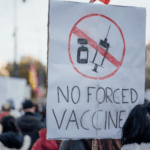
Just as more Americans grow wary of GMOs, the scientific community is moving in the opposite direction. There is now near unanimity among scientists that GMOs are safe to eat.
Yet the divergence between scientists and the American public has only grown bigger. As of last fall, nearly 60 percent of Americans believed that GMOs were “generally unsafe.” Back in 2000, the population was pretty much evenly split.
There are many reasons for this, says Jayson Lusk, an agricultural economist at Oklahoma State University, who has been studying peoples’ aversion to GMOs ever since they were introduced in the late 1990s.
I spoke with Lusk to learn why people are so scared of GMOs, why he believes they shouldn’t be, and what it will take to shed all of the fear.
Let’s get right to the heart of this. When did all this GMO talk — both positive and negative —start?

The topic was pretty under the radar for many years. There was some interest when the first biotech crops hit the market in the late 90s, and there were groups, of course, that opposed them, but by and large it wasn’t a significant majority of people.
What brought it to everyone’s attention was, quite frankly, the sellers of many natural foods and organic products. I don’t want to say that they were stoking people’s fears, but they kind of were, at least to the extent that that helps sales of their own products. So there was some of that advertising, and the advertising that pitched products as not containing GMOs, which raised consumer awareness.
The GLP aggregated and excerpted this blog/article to reflect the diversity of news, opinion and analysis. Read full, original post: Why we’re so scared of GMOs, according to someone who has studied them since the start