How one farmer uses GMO corn to reduce pesticides, increase sustainability

In a wide, brown field, Bret Davis opens a pocketknife with a click, kneels down and scrapes through a furrow of dirt. He uncovers a purple corn seed. He measures about six inches to his right, scrapes the dirt again and reveals a green seed.

Their appearance in the field is not a prank nor evidence of some agricultural disease. The corn’s identity resides in those colors.

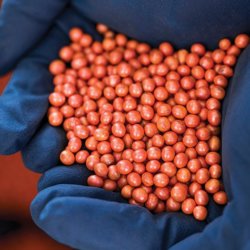
Green means the corn is a genetically modified organism, often referred to as a GMO, and carries traits that repel insects and protect it from the herbicide RoundUp.

The purple ones, just 5 percent of the planted seeds, are fodder for the insects, a way of keeping pests from developing immunity to the green corn’s ability to kill them.

“It’s made raising a healthy crop easier,” said Davis, who farms 3,600 acres of corn and soybeans in Delaware County. “We can do it non-GMO, but we’d need more pesticide and labor. (GMOs) make it a lot easier on the farmer.

He believes GMOs make his farm more sustainable and profitable and his crops safer for consumers and farmers. Since he’s used them, he said, he no longer has to blanket his cornfields indiscriminately with insecticide.

“(GMOs) are no more silver bullets than pesticides were,” said Margaret Smith, professor of plant breeding and genetics at Cornell University
Root worms and other pests, plus some weeds, have adapted to the technology. “If you keep hitting pests with the same hammer, (they) will evolve to overcome it,” she said.

Davis knows that. He’s betting the purple refuge seeds will give bugs another wrinkle to figure out. “Nothing’s perfect,” he said.


The GLP aggregated and excerpted this blog/article to reflect the diversity of news, opinion and analysis. Read full, original post: Genetically modified seeds are changing agriculture

 

Related Articles

Infographic: Global regulatory and health research agencies on whether glyphosate causes cancer

Infographic: Global regulatory and health research agencies on whether glyphosate causes cancer

Does glyphosate—the world's most heavily-used herbicide—pose serious harm to humans? Is it carcinogenic? Those issues are of both legal and ...

Most Popular

ChatGPT-Image-Mar-10-2026-01_39_01-PM
Viewpoint—“Miracle molecule” debunked: Why acemannan supplements don’t work
ChatGPT-Image-Sep-2-2026-02_03_32-PM
How much of a problem is AI’s water use?
ChatGPT-Image-Sep-22-2026-10_32_46-AM
There has been a slew of recent reports of food recalls and foodborne outbreaks. Do we face an escalating problem?
ChatGPT-Image-Aug-26-2026-12_46_16-PM
Viewpoint: The fake controversy over whether combining childhood vaccines is dangerous— a debate science resolved 25 years ago
Screenshot-2026-09-17-at-1.07.08-PM
'We are dangerously addicted to antidepressants': Should we heed RFK Jr.’s sobering warning?
ChatGPT-Image-Sep-23-2026-01_52_03-PM
Viewpoint: 4 very real AI doomsday scenarios
Screenshot-2026-09-03-at-10.51.20-AM
Viewpoint: Why do online health lies outlive the evidence that debunks them? Read "Everyone Else Is Lying to You"
Screenshot-2026-09-23-at-11.55.01-AM
How can we know if social media bans actually help teens?
Screenshot-2026-09-17-at-12.00.30-PM
Investigative group ProPublica finds links between ectopic pregnancy deaths and abortion bans
Screenshot-2026-09-23-at-3.15.09-PM
Anti-GMO activists in Pakistan rev up their campaign of dire warnings
Screenshot-2026-09-22-at-11.40.28-AM
After Idaho criminalized abortion providers in 2022, one-third of obstetricians fled. Health care advocates are making rural health the case for repealing the ban
Screenshot-2026-09-16-at-2.26.42-PM
Viewpoint: How to ecologically damage America’s forests: Ban glyphosate
ChatGPT-Image-Sep-23-2026-11_47_32-AM
Facing pressure from Trump administration, fewer hospitals offer medical treatment for transgender minors
glp menu logo outlined

Get news on human & agricultural genetics and biotechnology delivered to your inbox.