Can the Chinese government overcome public mistrust of GMOs?

BB A A A B E E ED F EA mw n s

The GLP aggregated and excerpted this blog/article to reflect the diversity of news, opinion and analysis.

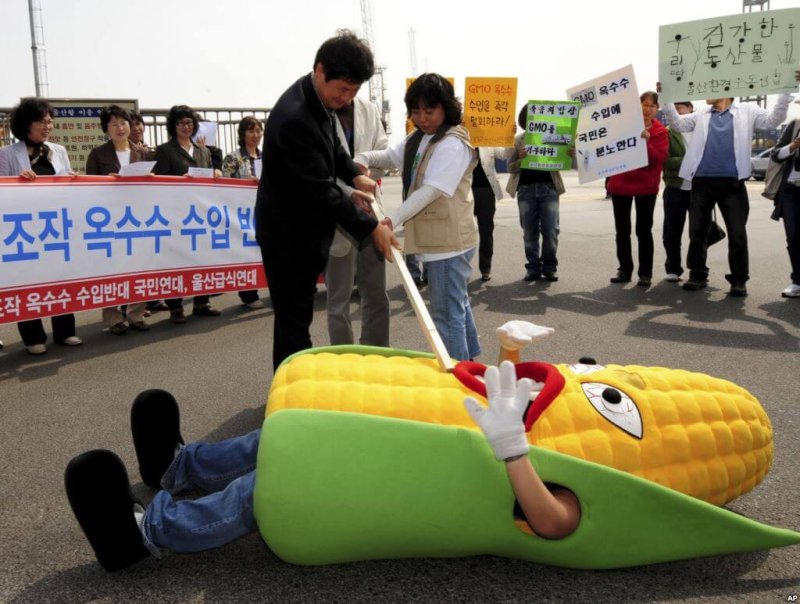
In China, food security is a national obsession. Pesticides and enhanced fertilizers no longer improve crop yields as markedly as they once did, and staple crops, such as rice, may not grow as reliably as the climate changes. As a result, the government has begun to invest heavily in research on genetically modified crops. But genetically modified food faces zealous public opposition and is largely banned from the marketplace.

Public anxiety about G.M.O.s has been stoked by people and organizations from across the ideological spectrum. An online survey by the China Daily revealed that eighty-four per cent of respondents believe that genetically modified foods are unsafe.

“Put simply, the problem mostly lies in the rising resistance of the public to G.M.O.s, which has made the political leadership hesitant to go ahead with commercialization,” Cong Cao, an expert in China’s science policy at the University of Nottingham, in the United Kingdom, told me.

To live in modern China is to worry constantly about food safety. Recent scandals about tainted baby formula, rice laced with heavy metals and others have gripped the public imagination. This mistrust makes it difficult to introduce new food technologies, even if China needs them. “If the government says that G.M.O. food is safe, Chinese people won’t readily believe it,” Sam Geall, an anthropologist at the University of Sussex who has been studying public opinion regarding G.M.O.s in China.

Read full, original post: Can the Chinese Government Get Its People to Like G.M.O.s?

{{ reviewsTotal }}{{ options.labels.singularReviewCountLabel }}
{{ reviewsTotal }}{{ options.labels.pluralReviewCountLabel }}
{{ options.labels.newReviewButton }}
{{ userData.canReview.message }}

Related Articles

Infographic: Global regulatory and health research agencies on whether glyphosate causes cancer

Infographic: Global regulatory and health research agencies on whether glyphosate causes cancer

Does glyphosate—the world's most heavily-used herbicide—pose serious harm to humans? Is it carcinogenic? Those issues are of both legal and ...

Most Popular

Screenshot-2026-04-20-at-2.26.27-PM
Viewpoint — Food-fear world: The latest activist scientists campaign: Cancer-causing additives
Screenshot-2026-03-13-at-12.14.04-PM
The FDA wants to make many popular prescription drugs OTC—a great idea. Here’s why it’s unlikely to happen
Screenshot-2026-05-04-at-12.54.32-PM
How Utah became the country’s supplement capital  — and a haven for unregulated, ineffective and fake products
Screenshot-2026-05-01-at-11.56.24-AM
‘Science moves forward when people are willing to think differently’: Memories of DNA maverick Craig Venter
Screenshot-2026-04-03-at-11.15.51-AM
Paraben panic: How a flawed study, media hype, and chemophobia convinced the public of the danger of one of the safest classes of preservatives
ChatGPT-Image-May-1-2026-02_20_13-PM
How RFK, Jr.’s false vaccine claims are holding up $600 million to fight diseases in poor countries
Screenshot-2026-04-30-at-2.19.37-PM
5 myths about summer dehydration that could damage your health — or even kill you
ChatGPT-Image-Mar-27-2026-11_27_05-AM
The myths of “process”: What science says about the “dangers’ of synthetic products and ultra-processed foods
viva-la-vida-watermelons
Misinformation and climate change are endangering summer watermelons
Drinking lots of water can help reduce the effects of aging
Nanoplastics in drinking water: MAHA activists forge science-based bipartisan coalition 
circular-bioeconomy-should-focus-on-sustainable-wellbeing
GLP podcast: What's wrong with 'doomsday' environmentalism? It's false.
ChatGPT-Image-Mar-10-2026-01_39_01-PM
Viewpoint—“Miracle molecule” debunked: Why acemannan supplements don’t work
glp menu logo outlined

Get news on human & agricultural genetics and biotechnology delivered to your inbox.