Catch the kids: Argentinian grandmothers use DNA to track down stolen children

missing children arg

The GLP aggregated and excerpted this blog/article to reflect the diversity of news, opinion and analysis.ย 

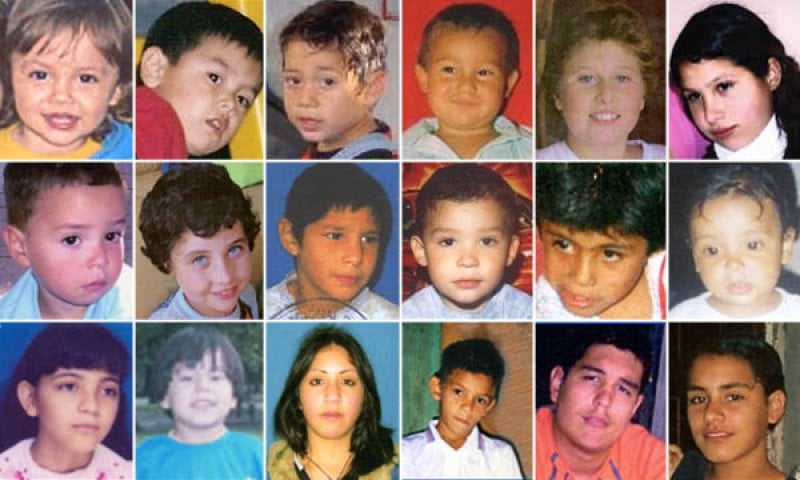
Itโ€™s been over 30 years since Argentina emerged from a military dictatorship that devolved into a โ€œDirty War.โ€ But even now, reports UPIโ€™s Andrew V. Pestano, Argentinian women whose babies were abducted under the military junta are looking for their children. And they have added a powerful tool to their quest to find the missing: DNA.

From 1976 to 1983, Argentinaโ€™s military dictators ran a program to root out dissidents and political opponents. They called it the โ€œProcess of National Reorganization,โ€ but Argentinians called it the โ€œDirty Warโ€: A brutal reign of terror that resulted in the disappearance of up to 30,000 people who were abducted, tortured and killed. Many children disappeared or born after their mothers were raped in prison, and then adoptedย by childless couples in the military and police forces.

In 1977, writes Pestano, a group of bereft grandmothersย formed a group calledย Abuelas de Plaza de Mayo (Grandmothers of the Plaza de Mayo). They set out to find over 400 stolen children. Today, writes Pestano, theyโ€™ve identified 117.

The grandmothers’ quest has even led to new advancements in DNA identification, reports PRI. Since 1984, geneticist Mary-Claire King has worked with the organization, coming up with a novel way to use mitochondrial DNA, which is inherited only from mothers, to identify individuals.

Read full, original post:ย Argentinian Grandmothers Are Using DNA to Tack Down Stolen Children

{{ reviewsTotal }}{{ options.labels.singularReviewCountLabel }}
{{ reviewsTotal }}{{ options.labels.pluralReviewCountLabel }}
{{ options.labels.newReviewButton }}
{{ userData.canReview.message }}

Related Articles

Infographic: Global regulatory and health research agencies on whether glyphosate causes cancer

Infographic: Global regulatory and health research agencies on whether glyphosate causes cancer

Does glyphosateโ€”the world's most heavily-used herbicideโ€”pose serious harm to humans? Is it carcinogenic? Those issues are of both legal and ...

Most Popular

Screenshot-2026-04-13-at-1.39.26-PM
Viewpoint: โ€˜Safer for children?โ€™ Stonyfield yogurt under fire for deceptive organic marketing
Screenshot-2026-04-22-at-10.46.29-AM
Viewpoint: How to counter science disinformation? Science journalist offers 12 practical tips
ChatGPT-Image-May-7-2026-12_16_37-PM-2
Viewpoint: Are cancer rates โ€˜skyrocketingโ€™ as RFK, Jr. and MAHA claim? The evidence says mostly the opposite
Picture1-14
When superbugs threaten vulnerable children: Can AI help solve antibiotic resistance?
ChatGPT-Image-May-12-2026-08_39_41-PM
GLP podcast: Big Pharma, Big Ag, Big Foodโ€”health harming industries or life-saving innovators?
Screenshot-2026-04-23-at-11.00.36-AM
Regulators' dilemma: Thalidomide, Metformin, and the cost of getting drug approvals wrong
Picture1-1
Cooling the planet with balloons: Could a geoengineering gamble slow global warming?
png-pill-omega-Supp-fish-oil
Millions take omega-3 fish oil for brain health. New research suggests it may do the opposite.
bigstock opioids on chalkboard with rol
GLP podcast: 'Safe injection sites': enabling drug addiction or saving lives?
glp menu logo outlined

Get news on human & agricultural genetics and biotechnology delivered to your inbox.