
Consumers may not perceive GMO labels as warning, study suggests

The GLP aggregated and excerpted this blog/article to reflect the diversity of news, opinion and analysis.

In July, the U.S. House of Representatives passed a Bill to block states from mandating labelling of genetically modified foods. At its root is a fear that such labels will be seen as ‘warnings’ by consumers and will adversely affect purchase behaviour. But data from a new study suggests this concern may be unfounded.

The study, presented at the annual conference of the Agricultural and Applied Economics Association, is based on five years of data (2003, 2004, 2008, 2014 and 2015) and includes 2012 responses to a representative, statewide survey of residents of the US state of Vermont.

The research focuses on the relationship between two primary questions: whether respondents are opposed to GMOs in commercially available food products and if they thought products containing GMOs should be labelled.

The results showed no evidence that attitudes towards GMOs are strengthened in either a positive or negative way due to a desire for labels that indicate the product contains GM ingredients.
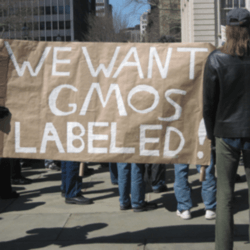
“When you look at consumer opposition to the use of GM technologies in food and account for the label, we found that overall the label has no direct impact on opposition. And it increased support for GM in some demographic groups,” said Jane Kolodinsky, author of the study. “This was not what I hypothesised… We didn’t find evidence that the labels will work as a warning.”

“We need more evidence to determine which position is correct,” Kolodinsky said at the conference. “When only the label is considered, it has no impact on consumer opposition. And there is some evidence that the label will increase consumer confidence in GM technology among certain groups.”

Read full, original post: Study: GMO labels not viewed as warnings

Related Articles

Infographic: Global regulatory and health research agencies on whether glyphosate causes cancer

Infographic: Global regulatory and health research agencies on whether glyphosate causes cancer

Does glyphosate—the world's most heavily-used herbicide—pose serious harm to humans? Is it carcinogenic? Those issues are of both legal and ...

Most Popular

ChatGPT-Image-Mar-10-2026-01_39_01-PM
Viewpoint—“Miracle molecule” debunked: Why acemannan supplements don’t work
Screenshot-2026-10-08-at-10.41.33-AM
Viewpoint: Wellness patches: Most vitamin supplements are useless and sometimes even dangerous, but this craze is even worse
newborn baby spit up gerd
Vaccine-preventable congenital infections are a leading driver of autism
Screenshot-2026-10-14-at-11.45.36-AM
Viewpoint: RFK Jr.’s stacked FDA advisory council endorses multicancer screening test from ethically- questionable company that would increase false positives and waste billions of dollars
Misinformation-Shatters-the-Clockwork-Mind
Viewpoint: The price Americans pay for science denialism
Screenshot-2026-10-15-at-12.13.33-PM
Ahead of the midterms, Meta has paid at least 29 anti-LGBTQ accounts for their posts
Pride and Patriotism in the Breeze
Retreat from identity labels: Does the sharply declining number of young teens identifying as gay and bisexual reflect an ideological shift?
Screenshot-2026-10-14-at-12.47.21-PM
Viewpoint: Are these Trump-conservative GOP doctor-politicians violating their medical oath?
Crossed-Out-Calendar-with-Milk-Carton
Viewpoint: The shocking consequences after a year of Robert F. Kennedy Jr.'s distortions, deceptions, and flat-out falsehoods
Open-Menthol-Cigarette-Pack
How the tobacco industry conspired with conservative activists to kill the Biden administration’s proposed ban on menthol cigarettes 
glp menu logo outlined

Get news on human & agricultural genetics and biotechnology delivered to your inbox.



















