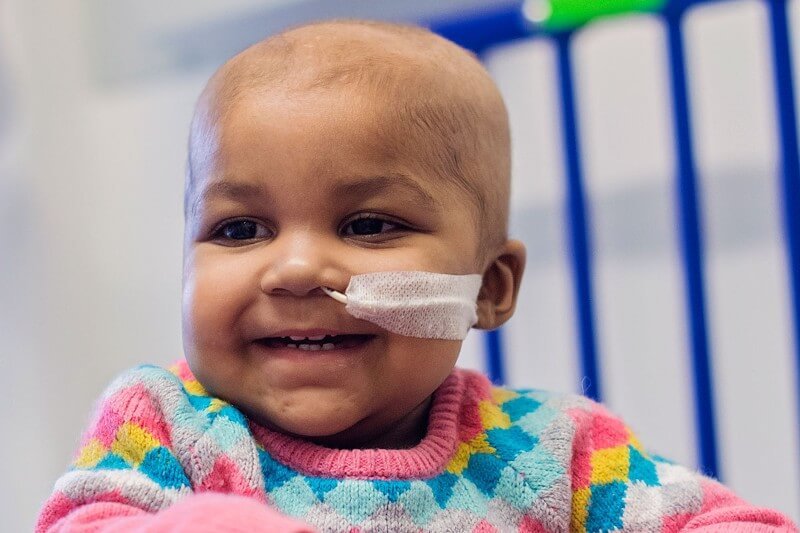
Gene therapy saves life of one-year-old with leukemia in medical first

dn

The GLP aggregated and excerpted this blog/article to reflect the diversity of news, opinion and analysis. 

For the first time ever, a person’s life has been saved by gene editing.

One-year-old Layla was dying from leukaemia after all conventional treatments failed. “We didn’t want to give up on our daughter, though, so we asked the doctors to try anything,” her mother Lisa said in a statement released by Great Ormond Street Hospital in London, where Layla was treated.

And they did. Layla’s doctors got permission to use an experimental form of gene therapy using genetically engineered immune cells from a donor. Within a month these cells had killed off all the cancerous cells in her bone marrow.

It is too soon to say she is cured, the team stressed at a press conference in London on 5 November. That will only become clear after a year or two. So far, though, she is doing well and there is no sign of the cancer returning. Other patients are already receiving the same treatment.

The basic idea is to remove immune cells from a patient’s body, genetically engineer them to attack cancerous cells and place them back in the body. Several human trials are already underway around world. Some trials involve adding a gene for a receptor called CAR19, which sits on the outside of the T-cells. This programs the T-cells to seek out and kill any cells with a protein called CD19 on their surface – which is found on the cells that cause acute lymphoblastic leukaemia.

Read full, original post: Gene editing saves girl dying from leukaemia in world first

{{ reviewsTotal }}{{ options.labels.singularReviewCountLabel }}
{{ reviewsTotal }}{{ options.labels.pluralReviewCountLabel }}
{{ options.labels.newReviewButton }}
{{ userData.canReview.message }}

Related Articles

Infographic: Global regulatory and health research agencies on whether glyphosate causes cancer

Infographic: Global regulatory and health research agencies on whether glyphosate causes cancer

Does glyphosate—the world's most heavily-used herbicide—pose serious harm to humans? Is it carcinogenic? Those issues are of both legal and ...

Most Popular

Screenshot-2026-04-20-at-2.26.27-PM
Viewpoint — Food-fear world: The latest activist scientists campaign: Cancer-causing additives
Screenshot-2026-03-13-at-12.14.04-PM
The FDA wants to make many popular prescription drugs OTC—a great idea. Here’s why it’s unlikely to happen
Screenshot-2026-05-04-at-12.54.32-PM
How Utah became the country’s supplement capital  — and a haven for unregulated, ineffective and fake products
Screenshot-2026-05-01-at-11.56.24-AM
‘Science moves forward when people are willing to think differently’: Memories of DNA maverick Craig Venter
ChatGPT-Image-May-1-2026-02_20_13-PM
How RFK, Jr.’s false vaccine claims are holding up $600 million to fight diseases in poor countries
Screenshot-2026-04-03-at-11.15.51-AM
Paraben panic: How a flawed study, media hype, and chemophobia convinced the public of the danger of one of the safest classes of preservatives
Screenshot-2026-04-30-at-2.19.37-PM
5 myths about summer dehydration that could damage your health — or even kill you
ChatGPT-Image-Mar-27-2026-11_27_05-AM
The myths of “process”: What science says about the “dangers’ of synthetic products and ultra-processed foods
viva-la-vida-watermelons
Misinformation and climate change are endangering summer watermelons
Drinking lots of water can help reduce the effects of aging
Nanoplastics in drinking water: MAHA activists forge science-based bipartisan coalition 
ChatGPT-Image-Mar-10-2026-01_39_01-PM
Viewpoint—“Miracle molecule” debunked: Why acemannan supplements don’t work
circular-bioeconomy-should-focus-on-sustainable-wellbeing
GLP podcast: What's wrong with 'doomsday' environmentalism? It's false.
glp menu logo outlined

Get news on human & agricultural genetics and biotechnology delivered to your inbox.