Will gene drive safety concerns limit breakthrough research?

The GLP aggregated and excerpted this blog/article to reflect the diversity of news, opinion and analysis.

In the late 1980s I was one of the first scientists to propose the use of “gene drives” to alter the ability of insect vectors to transmit human pathogens based on Margaret Kidwell’s demonstration that the Drosophila P element had spread throughout wild populations world-wide in just a few decades.  At the World Health Organization in Geneva, I suggested that the ability of a problem population of malaria mosquito vectors to transmit human malaria might be altered by introducing transposons with the ability to spread throughout target populations of such vectors.

Today, I worry that recent concern over the safety of even studying gene drive systems in the laboratory threatens to derail this promising avenue of research.  In my view, such worries are not based on evidence of an actual danger sufficient to preclude the active pursuit of a research program under current recombinant DNA guidelines and as part of coordinated international development efforts that could bring immense benefit to humans around the world.

Akbari et al. call for stringent regulation of research using Drosophila melanogaster on “gene drives,” genetic constructs that at least in a laboratory setting can increase their inheritance above simple Mendelian expectation.  The new proposed regulations would include prior committee approval, restrictive laboratory design not readily available in most institutions, and time-consuming biological containment. Unfortunately, if adopted, these policies would make it considerably more difficult to carry out research on gene drives, despite their potential for beneficial applications and evolutionary interest.

Read full, original post: Gene Drive: More research, not more regulations

{{ reviewsTotal }}{{ options.labels.singularReviewCountLabel }}
{{ reviewsTotal }}{{ options.labels.pluralReviewCountLabel }}
{{ options.labels.newReviewButton }}
{{ userData.canReview.message }}

Related Articles

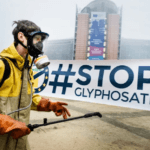
Infographic: Global regulatory and health research agencies on whether glyphosate causes cancer

Infographic: Global regulatory and health research agencies on whether glyphosate causes cancer

Does glyphosate—the world's most heavily-used herbicide—pose serious harm to humans? Is it carcinogenic? Those issues are of both legal and ...

Most Popular

Screenshot-2026-05-01-at-11.56.24-AM
‘Science moves forward when people are willing to think differently’: Memories of DNA maverick Craig Venter
Screenshot-2026-04-03-at-11.15.51-AM
Paraben panic: How a flawed study, media hype, and chemophobia convinced the public of the danger of one of the safest classes of preservatives
79d03212-2508-45d0-b427-8e9743ff6432
Viewpoint: The Casey Means hustle—Wellness woo opportunism dressed up as medical wisdom
ChatGPT-Image-Apr-30-2026-12_21_05-PM-2
The tech billionaires behind the immortality movement
Screenshot-PM-24
Viewpoint: The herbicide glyphosate isn’t perfect. Banning it would be far worse.
ChatGPT-Image-Mar-27-2026-11_27_05-AM
The myths of “process”: What science says about the “dangers’ of synthetic products and ultra-processed foods
ChatGPT-Image-Mar-10-2026-01_39_01-PM
Viewpoint—“Miracle molecule” debunked: Why acemannan supplements don’t work
ChatGPT-Image-May-1-2026-02_20_13-PM
How RFK, Jr.’s false vaccine claims are holding up $600 million to fight diseases in poor countries
Drinking lots of water can help reduce the effects of aging
Nanoplastics in drinking water: MAHA activists forge science-based bipartisan coalition 
ChatGPT-Image-Mar-3-2026-01_17_14-PM
MAHA wellness influencers deride proven anxiety medications, tout lifestyle fixes
Screenshot-2026-04-20-at-2.26.27-PM
Viewpoint — Food-fear world: The latest activist scientists campaign: Cancer-causing additives
glp menu logo outlined

Get news on human & agricultural genetics and biotechnology delivered to your inbox.