‘Certified organic’ benefits sales, not kids’ health says pediatrician

baby

The GLP aggregated and excerpted this blog/article to reflect the diversity of news, opinion and analysis.

Marketing for organics focuses on promoting the image of a healthier lifestyle. This includes the idea that organic foods deliver better nutrition. Aside from small exceptions, this has not been shown to be the case. . .

Conversely, there are reasons to be weary of organic produce. Jon Entine, a senior fellow at the Institute for Food and Agricultural Literacy, says “that E.coli and other pathogen contamination is more likely in organic than conventional produce.” Between 1990 and 2001, more than 10,000 people fell ill due to foods contaminated with pathogens, and many have organic foods to blame. One study found E. coli in produce from almost 10 percent of organic farm samples, but only 2 percent of conventional ones.

This sentiment was echoed by Penn State’s College of Agricultural Science in a 2014 article which stated, “Organic farmers and processors do not have the arsenal of preventive measures available that conventional farmers and processors do, so spoilage and pests can be a bigger issue.” . . .

Another widespread belief is that CO produce is beneficial to the environment based on marketing messages that invoke images of farming via “natural” methods. In reality, the organic industry takes a toll on the planet no smaller than conventional farming’s methods. CO foods not only use pesticides, but often must use larger amounts of approved non-synthetic agents to achieve pest control. . .
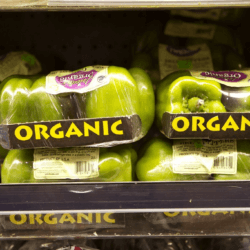
Labeling foods with special, descriptive words such as “Certified Organic”, “all natural” or “local” has long been a powerful tool for marketers. The way foods are labeled has powerful implications on sales, and not one of us is immune to these convincing forces. . .

As consumers, however, it is generally a wise approach to understand the difference between real science-based benefit and clever marketing.

Read full, original post: Organic vs. conventional foods: environmental impact, nutrition, taste

{{ reviewsTotal }}{{ options.labels.singularReviewCountLabel }}
{{ reviewsTotal }}{{ options.labels.pluralReviewCountLabel }}
{{ options.labels.newReviewButton }}
{{ userData.canReview.message }}

Related Articles

Infographic: Global regulatory and health research agencies on whether glyphosate causes cancer

Infographic: Global regulatory and health research agencies on whether glyphosate causes cancer

Does glyphosate—the world's most heavily-used herbicide—pose serious harm to humans? Is it carcinogenic? Those issues are of both legal and ...

Most Popular

Screenshot-2026-05-01-at-11.56.24-AM
‘Science moves forward when people are willing to think differently’: Memories of DNA maverick Craig Venter
Screenshot-2026-04-03-at-11.15.51-AM
Paraben panic: How a flawed study, media hype, and chemophobia convinced the public of the danger of one of the safest classes of preservatives
79d03212-2508-45d0-b427-8e9743ff6432
Viewpoint: The Casey Means hustle—Wellness woo opportunism dressed up as medical wisdom
ChatGPT-Image-Apr-30-2026-12_21_05-PM-2
The tech billionaires behind the immortality movement
Screenshot-PM-24
Viewpoint: The herbicide glyphosate isn’t perfect. Banning it would be far worse.
ChatGPT-Image-Mar-27-2026-11_27_05-AM
The myths of “process”: What science says about the “dangers’ of synthetic products and ultra-processed foods
ChatGPT-Image-Mar-10-2026-01_39_01-PM
Viewpoint—“Miracle molecule” debunked: Why acemannan supplements don’t work
ChatGPT-Image-May-1-2026-02_20_13-PM
How RFK, Jr.’s false vaccine claims are holding up $600 million to fight diseases in poor countries
Drinking lots of water can help reduce the effects of aging
Nanoplastics in drinking water: MAHA activists forge science-based bipartisan coalition 
ChatGPT-Image-Mar-3-2026-01_17_14-PM
MAHA wellness influencers deride proven anxiety medications, tout lifestyle fixes
Screenshot-2026-04-20-at-2.26.27-PM
Viewpoint — Food-fear world: The latest activist scientists campaign: Cancer-causing additives
viva-la-vida-watermelons
Misinformation and climate change are endangering summer watermelons
glp menu logo outlined

Get news on human & agricultural genetics and biotechnology delivered to your inbox.