Companies make big bucks by making you afraid of chemicals

image

The GLP aggregated and excerpted this blog/article to reflect the diversity of news, opinion and analysis.

Most people don’t realize that it’s virtually impossible to prove something completely safe. Instead, science tests for the lack of evidence of risk. A subtle but important distinction, this means that nothing, not even water, is completely safe at all doses and modes of exposure. . . . In essence, companies create a market for their products based on fear, not evidence. Here’s how:

Step 1: Plant the seeds of fear

An ancient and adaptive emotion ingrained in humanity through evolution, fear is one of the most powerful motivators of behavior. . .  In the developed world, we have far less to fear than our ancestors did, so our instincts latch on to not-so-hazardous “threats.” . . .

Step 2: Obscure the science

. . . These companies’ marketing campaigns have little to do with science and everything to do with inducing maximum fear. Bemoaning the evils of the chemicals other companies use, they provide little evidence about the safety of their own ingredients, often because that data does not exist. The goal is to keep their customers afraid of the competition while posing as the safe and caring alternative.
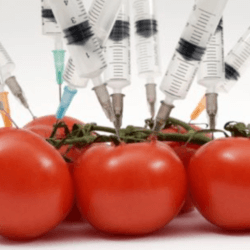
Co-opting the  language of science without adopting principles of science is a clever bait and switch.

Step 3: Profit

Once consumers are afraid and the science has been obscured, companies slap on a premium for their products based on vague claims about safety or even hazier concepts like “honesty” or “conscience.” Primed with fear, potential customers are ready to pay much more than they would for a mainstream brand. These fear-based marketing campaigns are not about educating consumers but creating an illusion of consumer empowerment.

Read full, original post: How Marketers Use Fear Of Chemicals For Profit: 3 Easy Steps

Related Articles

Infographic: Global regulatory and health research agencies on whether glyphosate causes cancer

Infographic: Global regulatory and health research agencies on whether glyphosate causes cancer

Does glyphosate—the world's most heavily-used herbicide—pose serious harm to humans? Is it carcinogenic? Those issues are of both legal and ...

Most Popular

Screenshot-2026-11-16-at-2.37.32-PM
30 years of GMO farming: Is the boom in glyphosate and glufosinate use harming the environment? Data show they’re the most sustainable choice
Stormlit Portrait Over Golden Mountains
Searching for life where no one thought to look: A renowned astrophysicist’s seemingly quixotic quest to explore Venus’s clouds
Screenshot-2026-11-19-at-7.23.23-PM
Viewpoint: After a yearlong hiatus, the U.S. Preventive Services Task Force is back in business—gutted by RFK Jr. and promoting junk science
ChatGPT-Image-Mar-10-2026-01_39_01-PM
Viewpoint—“Miracle molecule” debunked: Why acemannan supplements don’t work
Soybean Harvest in Cupped Hands
30 years of GMO farming: Defying cynics, we’ve had larger harvests, lower costs, and $385 billion in added global farmer income
Screenshot-2026-11-19-at-7.54.57-PM
European General Court sides with scientists, dismisses activist claims that glyphosate is toxically dangerous
Nurturing Care Beneath the Crunchy Moms Logo
Crunchy Moms disinformation flood: Zuckerberg's Facebook has opened floodgates on measles and vaccines
Screenshot-2026-11-17-at-12.18.09-PM
Challenging glyphosate fear-mongering: Statewide Nebraska study finds no link between weedkiller use and non-Hodgkin lymphoma
Nicotine Products on Gray Marble
Comparing vaping, nicotine patches and cigarettes: Not ‘safe vs. dangerous’  but ‘less harmful vs. more harmful’
glp menu logo outlined

Get news on human & agricultural genetics and biotechnology delivered to your inbox.