Should doctors, scientists stop grouping us by race?

Race xlarge

The GLP aggregated and excerpted this blog/article to reflect the diversity of news, opinion and analysis.

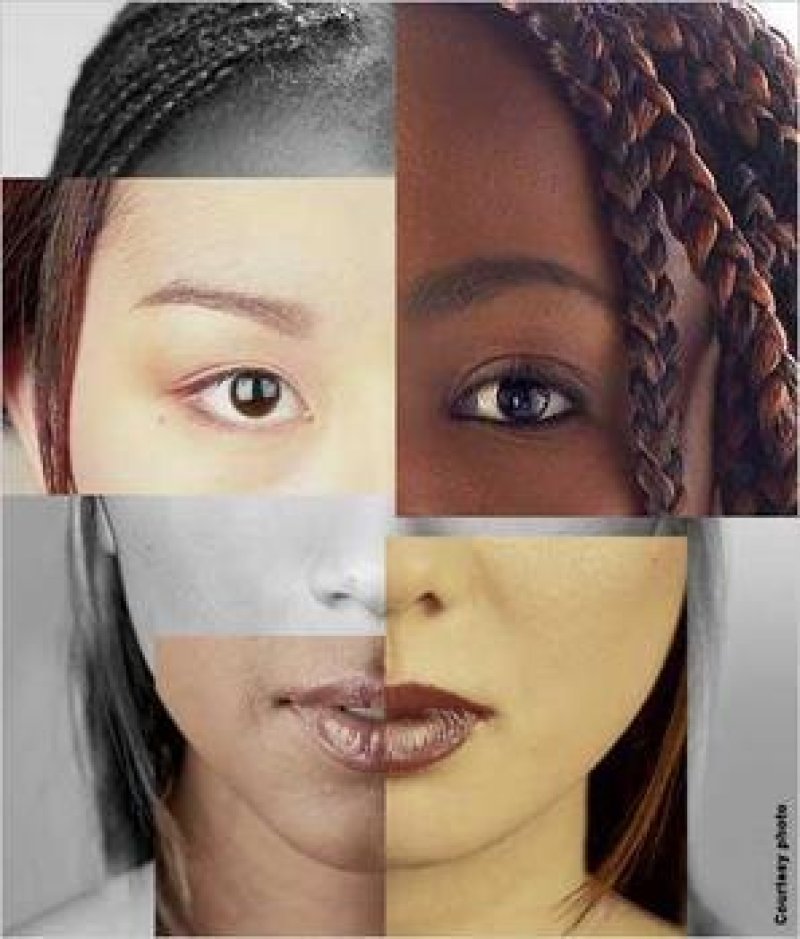
More than a decade after leading geneticists argued that race is not a true biological category, many studies continue to use it, harming scientific understanding and possibly patients, researchers argued in a provocative essay in Science.

“We thought that after the Human Genome Project, with [its leaders] saying it’s time to move beyond race as a biological marker, we would have done that,” said Michael Yudell, a professor in the Dornsife School of Public Health at Drexel University and coauthor of the Science paper calling on journals and researchers to stop using race as a category in genetics studies. “Yet here we are, and there is evidence things have actually gotten worse in the genomic age.”

Categorizing someone as “black” can affect medical care, research has shown. Doctors might miss cystic fibrosis in “black” patients because it is considered a “white” disease, a 2015 study suggested. Similarly, because blood disorders called thalassemias are considered a Mediterranean/white disease and sickle-cell anemia a black disease, they are sometimes misdiagnosed when they strike the “wrong” racial group, Yudell and his colleagues wrote.

The reason scientists still use race as a way to group people — asking, for instance, which genetic variants are more common in this or that race — is that many still consider the concept useful if imperfect, said geneticist Neil Risch of the University of California, San Francisco, and president of the American Society of Human Genetics.

Read full, original post: Should biologists stop grouping us by race?

{{ reviewsTotal }}{{ options.labels.singularReviewCountLabel }}
{{ reviewsTotal }}{{ options.labels.pluralReviewCountLabel }}
{{ options.labels.newReviewButton }}
{{ userData.canReview.message }}

Related Articles

Infographic: Global regulatory and health research agencies on whether glyphosate causes cancer

Infographic: Global regulatory and health research agencies on whether glyphosate causes cancer

Does glyphosate—the world's most heavily-used herbicide—pose serious harm to humans? Is it carcinogenic? Those issues are of both legal and ...

Most Popular

ChatGPT-Image-Mar-10-2026-01_39_01-PM
Viewpoint—“Miracle molecule” debunked: Why acemannan supplements don’t work
ChatGPT-Image-Jun-25-2026-12_23_17-PM
No, Bill Gates did not secretly engineer ticks to promote veganism
ChatGPT-Image-Jun-30-2026-10_27_31-AM
Viewpoint: Europe clears the way for gene-edited crops — but fear-driven restrictions still slow their full potential
ChatGPT-Image-Jul-1-2026-12_37_08-PM
Viewpoint: Trump poised to politicize all U.S.-supported science research
ChatGPT-Image-Jul-1-2026-03_33_49-PM
‘Alternative’ cancer treatments that could kill you
ChatGPT-Image-Jul-7-2026-03_07_17-PM
Kennedy blocks preventive health care panel that reviews treatments for HIV, diabetes, and cancer from meeting — for fourth time
DtAieAIkCZy-uchn-oqg
Viewpoint: In the science misinformed grifter game plan, the organic-food-is-healthier myth might be the worst.
d a ca e c c beb x
Facts & Fallacies podcast: The 'woke' crusade against anthropology? Dr. Elizabeth Weiss
ChatGPT-Image-Jun-15-2026-01_04_14-PM
Viewpoint: How politicized science became a political religion 
ChatGPT-Image-Jul-7-2026-12_01_35-PM
Viewpoint: 21 worthless wellness trends inspired by RFK, Jr.’s ill-informed MAHA followers that can harm or even kill you.
ChatGPT-Image-Jun-15-2026-03_00_23-PM
World’s first AI-designed vaccine explained

Sorry. No data so far.

glp menu logo outlined

Get news on human & agricultural genetics and biotechnology delivered to your inbox.