How do courts look at neuroscientific evidence?

Screen Shot at AM

The GLP aggregated and excerpted this blog/article to reflect the diversity of news, opinion and analysis.

Several years ago, Ars looked at the role of neuroscience in crime. Since then, the scientific community has continued to learn about how brain abnormalities or dysfunctions can affect reasoning and behavioral traits, and certain gene variants like monoamine oxidase have been linked to violent behavior.

But correlation isn’t the same as causation, and many of those correlations fall well short of 100 percent linkage. So, while biologically reductionist arguments like “my brain made me do it” can be appealing, scientists know that in the real world things are a lot more complex.

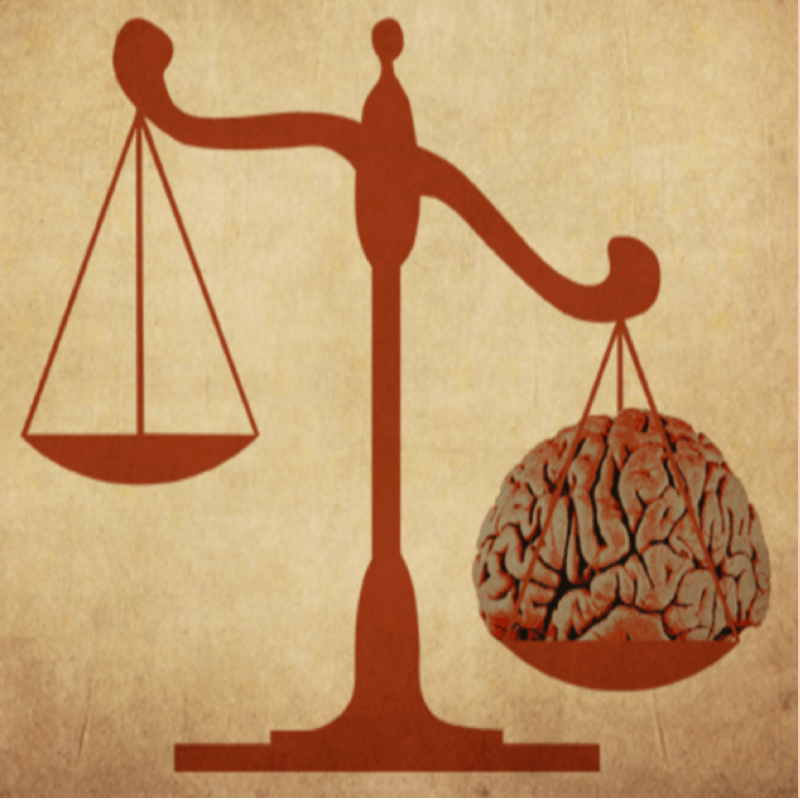
Nevertheless, neuroscience is increasingly being used as evidence in the criminal justice system. Nita Farahany, a professor of law and philosophy at Duke University, has now conducted a systematic study of how neuroscience ends up being used in the courthouse.

Starting with over 10,000 federal and state criminal cases that produced judicial opinions published between 2005 and 2012, she found 1,585 cases where neurobiological evidence was introduced. Her findings show that there is an increasing trend by criminal defendants to use neuroscience or behavioral genetics in their trials—and that those uses are often well outside the accepted academic or scientific implications of that work.

One might expect that neurobiological evidence would mean submitting brain scans to the court. However, it turns out this only happened in about 15 percent of cases. More than 40 percent “have no discussion of neurological testing the opinion, even though the defendant staked their defense in part on a claim that ‘his brain made him do it.'”

Read full, original post: My brain made me do it: Neuroscience and behavioral genetics in court

{{ reviewsTotal }}{{ options.labels.singularReviewCountLabel }}
{{ reviewsTotal }}{{ options.labels.pluralReviewCountLabel }}
{{ options.labels.newReviewButton }}
{{ userData.canReview.message }}

Related Articles

Infographic: Global regulatory and health research agencies on whether glyphosate causes cancer

Infographic: Global regulatory and health research agencies on whether glyphosate causes cancer

Does glyphosate—the world's most heavily-used herbicide—pose serious harm to humans? Is it carcinogenic? Those issues are of both legal and ...

Most Popular

ChatGPT-Image-Mar-10-2026-01_39_01-PM
Viewpoint—“Miracle molecule” debunked: Why acemannan supplements don’t work
ChatGPT-Image-Jun-25-2026-12_23_17-PM
No, Bill Gates did not secretly engineer ticks to promote veganism
ChatGPT-Image-Jul-1-2026-12_37_08-PM
Viewpoint: Trump poised to politicize all U.S.-supported science research
ChatGPT-Image-Jun-30-2026-10_27_31-AM
Viewpoint: Europe clears the way for gene-edited crops — but fear-driven restrictions still slow their full potential
ChatGPT-Image-Jul-1-2026-03_33_49-PM
‘Alternative’ cancer treatments that could kill you
ChatGPT-Image-Jul-7-2026-03_07_17-PM
Kennedy blocks preventive health care panel that reviews treatments for HIV, diabetes, and cancer from meeting — for fourth time
DtAieAIkCZy-uchn-oqg
Viewpoint: In the science misinformed grifter game plan, the organic-food-is-healthier myth might be the worst.
d a ca e c c beb x
Facts & Fallacies podcast: The 'woke' crusade against anthropology? Dr. Elizabeth Weiss
ChatGPT-Image-Jun-15-2026-01_04_14-PM
Viewpoint: How politicized science became a political religion 
ChatGPT-Image-Jul-7-2026-12_01_35-PM
Viewpoint: 21 worthless wellness trends inspired by RFK, Jr.’s ill-informed MAHA followers that can harm or even kill you.
ChatGPT-Image-Jun-15-2026-03_00_23-PM
World’s first AI-designed vaccine explained

Sorry. No data so far.

glp menu logo outlined

Get news on human & agricultural genetics and biotechnology delivered to your inbox.