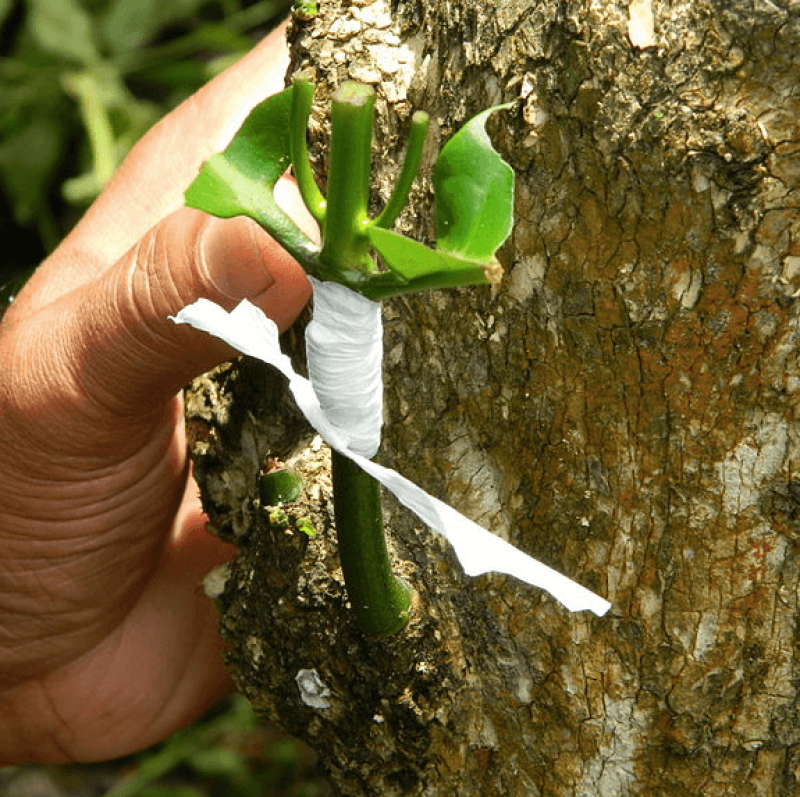
We’ve been making, eating GMOs for centuries, in form of ‘grafted plants’

Screen Shot at PM
A coffee plant graft

The GLP aggregated and excerpted this blog/article to reflect the diversity of news, opinion and analysis.

We have been accidentally genetically engineering plants – and eating GMOs – for millennia.

That is the implication of a series of studies showing the ancient practice of grafting can allow even distantly related plants to swap all three kinds of genomes they possess.

“It’s genetic engineering done by mother nature,” says Ralph Bock of the Max Planck Institute of Molecular Plant Physiology. . .

Grafting involves transplanting part of one plant onto another so they fuse and continue to grow.

Farmers [graft plants] to combine, say, a tree that bears delicious fruit with one that has disease-resistant roots. Grafting also occurs naturally, when branches press together.

Bock’s 2009 study showed that cells on either side of a graft could exchange chloroplasts – organelles that carry out photosynthesis and have their own small genome.

Then, in 2014, another study found that the entire nucleus of a cell, containing the main genome, could be transferred across grafts. The transferred nucleus can be added to an existing cell nucleus – fusing the two genomes and potentially creating a new species.

Now a team led by Pal Maliga of Rutgers University . . .has shown that cells also swap mitochondria – energy-generating organelles with a small genome of their own – across grafts.

. . . .

Because grafting has been widely used for millennia, it is highly likely that some of the plants we eat were created by this kind of unintentional genetic engineering by farmers, Maliga and Bock think.

. . . .

Bock points out that many crop plants have more than two sets of chromosomes. Such polyploidy, as it is called, is usually attributed to genome duplication, but some cases could be evidence of genome exchange in grafted plants.

Read full, original post: Farmers may have been accidentally making GMOs for millennia
Related Articles

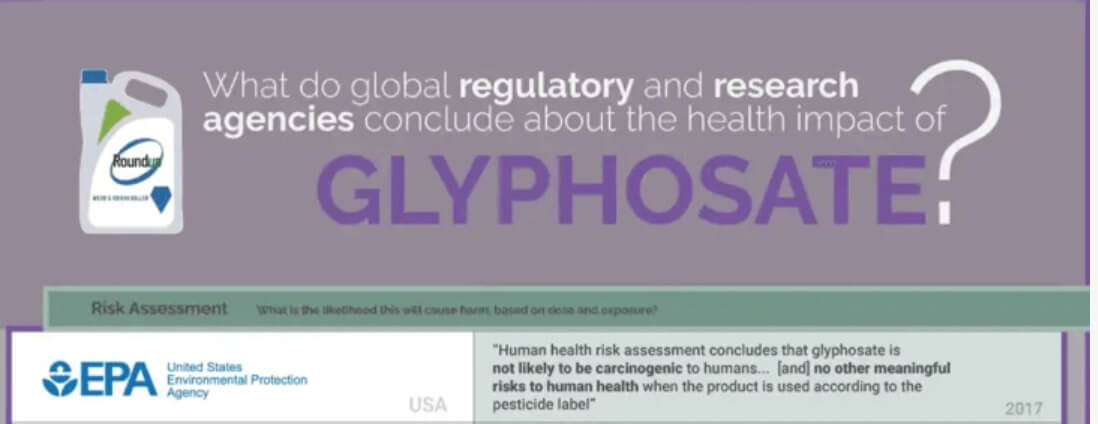
Infographic: Global regulatory and health research agencies on whether glyphosate causes cancer

Infographic: Global regulatory and health research agencies on whether glyphosate causes cancer

Does glyphosate—the world's most heavily-used herbicide—pose serious harm to humans? Is it carcinogenic? Those issues are of both legal and ...

Most Popular

Screenshot-2026-11-17-at-12.18.09-PM
Challenging glyphosate fear-mongering: Statewide Nebraska study finds no link between weedkiller use and non-Hodgkin lymphoma
Soybean Harvest in Cupped Hands
30 years of GMO farming: Defying cynics, we’ve had larger harvests, lower costs, and $385 billion in added global farmer income
Screenshot-2026-11-18-at-2.44.24-PM
Why should thousands of Americans die every year waiting for a kidney transplant? There’s an easy fix to this morbid reality
Health vs
Health vs. Hype’s rocky debut: American Medical Association’s misinformation-debunking podcast platforms ‘leaky gut’ wellness crank 
Low-Poly Climate Connections Infographic
Viewpoint: EU-backed climate “disinformation” crackdown—who polices what’s false?
ChatGPT-Image-Mar-10-2026-01_39_01-PM
Viewpoint—“Miracle molecule” debunked: Why acemannan supplements don’t work
measles
The grim human cost of the Trump—RFK Jr. measles-prevention failure: 16 times more cases than in 2024
Gloved Hand Holding M-M-R Vaccine Vial
Viewpoint: The dangerous lie RFK Jr.-founded Children’s Health Defense is circulating to discredit one of medicine’s great breakthroughs: the MMR (measles-mumps-rubella) vaccine
BEMT Lotion for Freckled Skin
Burned by FDA bureaucracy: Why Americans waited decades for cancer-preventing sunscreen
Screenshot-2026-11-17-at-12.56.22-PM
RFK Jr.’s CDC blocked measles risk alert for pregnant women; 112 contracted the disease, and one-quarter were hospitalized
Screenshot-2026-11-17-at-11.04.14-AM
There are more than 6,000 genetic disorders. For the first time, gene editing is making some treatable. Are we ready?
glp menu logo outlined

Get news on human & agricultural genetics and biotechnology delivered to your inbox.