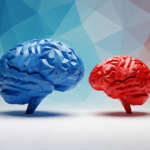
What makes you a righty or a lefty?

The GLP aggregated and excerpted this blog/article to reflect the diversity of news, opinion and analysis.

About 90 percent of us are righties — though the rate can vary by country and time period. Also, almost all the information we have on this comes from Western countries after the year 1900. As you grow up, you will learn to raise a mighty eyebrow at generalizations taken from such limited data. Sometimes, though, it’s all you’ve got.

Here’s what we do know: Humans are pretty asymmetrical creatures. That applies to both how we use the body parts we have and where things are in the first place. Our hearts tend to be on the left. Our livers tend to be on the right. Not only do these asymmetries exist, but some of them seem to be interconnected. People who are right-handed tend to process language on the left side of their brain.


In 2013, a paper published in the journal Heredity demonstrated that handedness had to involve more genes than was originally thought — a lot more. The researchers analyzed the genomes of 3,940 twins whose handedness was recorded from previous studies. First, they found that identical twins, who share all the same genetic material, weren’t significantly more likely to have the same dominant hand than fraternal twins, who are just regular siblings who shared a womb. That alone starts to rule out simple genetics.

Read full, original post: Why Am I Right-Handed?

{{ reviewsTotal }}{{ options.labels.singularReviewCountLabel }}
{{ reviewsTotal }}{{ options.labels.pluralReviewCountLabel }}
{{ options.labels.newReviewButton }}
{{ userData.canReview.message }}

Related Articles

Infographic: Global regulatory and health research agencies on whether glyphosate causes cancer

Infographic: Global regulatory and health research agencies on whether glyphosate causes cancer

Does glyphosate—the world's most heavily-used herbicide—pose serious harm to humans? Is it carcinogenic? Those issues are of both legal and ...

Most Popular

Picture1-5
Science Disinformation Gap: The transatlantic battle over social media and censorship
ChatGPT Image May 10, 2026, 08_16_59 PM 2
Overmedicalization? RFK Jr.’s antidepressant crackdown raises conflict questions over his fee stake in Wisner Baum, the tort firm built on suing drug makers
Picture1-1
Cooling the planet with balloons: Could a geoengineering gamble slow global warming?
Screenshot-2026-05-11-104424
Hantavirus outbreak research: Trump administration shut down study last year on rodent-to-human transmission
Picture1-14
When superbugs threaten vulnerable children: Can AI help solve antibiotic resistance?
Screenshot 2026-05-11 at 11.30
Despite politicized disinformation, Midwest AI data centers are fueling a solar energy boom
ChatGPT-Image-Apr-13-2026-02_20_22-PM
Viewpoint: Misinformation infodemic? Why assessing evidence is so challenging 
S
As vaccine rejectionism spreads, measles may be taking a more dangerous turn
Screenshot-2026-05-08-at-11.55.47-AM
Anti-vax activists falsely blame COVID vaccines for the rising U.S. cancer rate among younger people.
Screenshot-2026-05-01-at-1.29.41-PM
Viewpoint: What happens when whole grains meet modern food manufacturing? Labels don’t tell the whole story.
Screenshot-2026-05-08-at-3.40.33-PM
Seeds of power: China turns to genetic engineering to become global superpower
Screenshot-2026-04-20-at-2.26.27-PM
Viewpoint — Food-fear world: The latest activist scientists campaign: Cancer-causing additives
glp menu logo outlined

Get news on human & agricultural genetics and biotechnology delivered to your inbox.