The GLP aggregated and excerpted this blog/article to reflect the diversity of news, opinion and analysis.
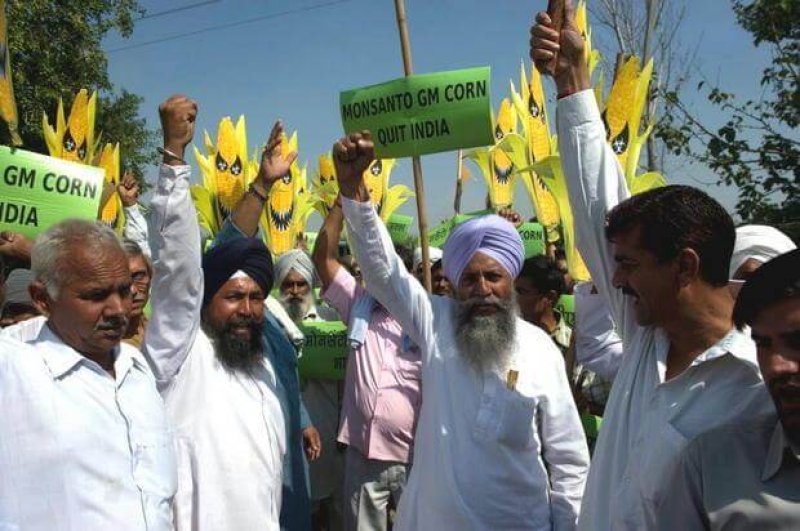
U.S. seed company Monsanto is welcome to leave India if it does not want to lower prices of genetically modified cotton seeds as directed by the government, a minister said on [March 16], in a sign the rift between New Delhi and the firm is widening.
The comments come as Prime Minister Narendra Modi’s nationalist government expects to develop its own genetically modified (GM) cotton varieties early next year to end Monsanto’s dominance; it controls over 90 percent of cotton seed supply.
New technologies are critical to lifting India’s poor farm productivity, although even if India did develop a home-grown GM cotton variety in 2017, it would struggle to sustain a program that needs to refresh seeds every decade or so, experts warned.
. . . .
India’s anti-trust regulator is also investigating whether the company misused its near-monopoly to jack up rates. A Monsanto joint venture with a local company says it is confident the allegations will be proved groundless.
Monsanto has taken the government to court over the royalty.

It said in a statement this month it would have to reevaluate its India business, because it was difficult to bring in new technologies in an “environment where such arbitrary and innovation-stifling government interventions make it impossible to recoup research and development investments …”
But Sanjeev Kumar Balyan, the junior agriculture minister, told Reuters the government was trying to rectify what he called past mistakes that allowed a foreign company to dictate seed prices and stifled local crop research.
. . . .
“We’re not scared if Monsanto leaves the country, because our team of scientists are working to develop (an) indigenous variety of (GM) seeds,” he said.
Read full, original post: India ‘not scared’ if Monsanto leaves, as GM cotton row escalates