Do GMO labels address food issues consumers care about?

Screen Shot at AM

The GLP aggregated and excerpted this blog/article to reflect the diversity of news, opinion and analysis.

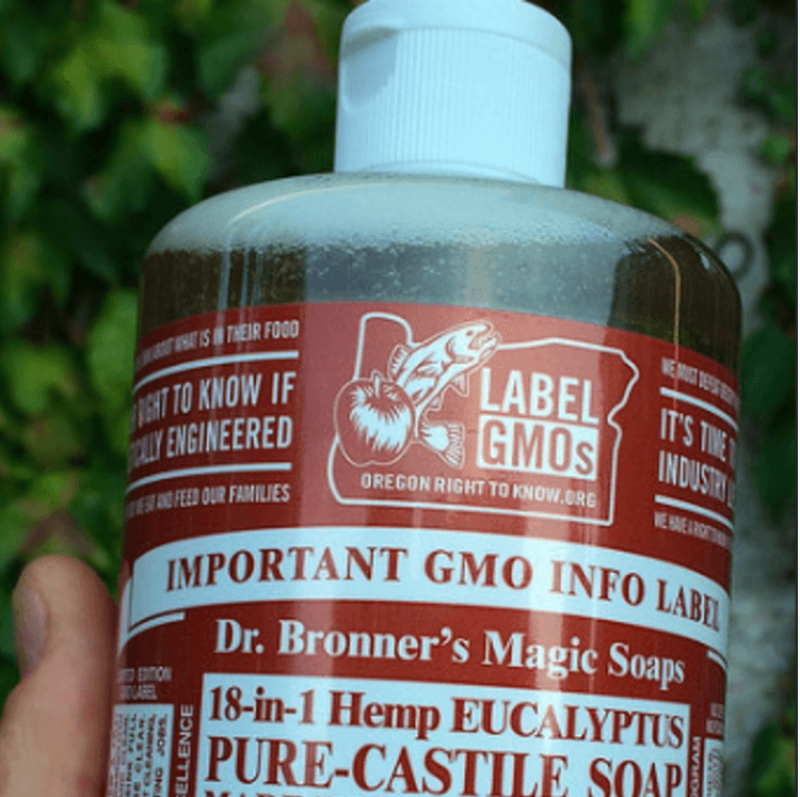
Both the pro-labeling and anti-labeling movements are colossal wastes of money, since GMOs are neither all good nor all bad. . . . Anti-GMO talking points are pretty much all misdirections: the real issues all straddle the GMO/non-GMO border.

. . . .

. . . the things people don’t like about GMOs are not GMO-specific problems. Here are some things labeling won’t help with:

So if GMO labeling doesn’t help you, the consumer, to make better choices—who does it help?
It helps people who have been crusading against imaginary risks to feel better about themselves. And it helps brands like the Just Label It campaign’s 700 partners that sell non-GMO products.

The fight by some food companies against GMO labeling is likewise using you as a patsy: they say you will be scared away from purchasing totally safe food because of the GMO label. . . . Nice try, but the problem is that consumers are already confused. Both sides have to stop treating GMOs as all good or all bad.

So do we, as consumers. Seeing a “No GMOs” label shouldn’t make us feel good; it’s just another marketing gimmick with no real health benefit. And seeing “partially produced with genetic engineering” shouldn’t scare us off.

Read full, original post: GMO Labels Won’t Make Your Food Safer

{{ reviewsTotal }}{{ options.labels.singularReviewCountLabel }}
{{ reviewsTotal }}{{ options.labels.pluralReviewCountLabel }}
{{ options.labels.newReviewButton }}
{{ userData.canReview.message }}

Related Articles

Infographic: Global regulatory and health research agencies on whether glyphosate causes cancer

Infographic: Global regulatory and health research agencies on whether glyphosate causes cancer

Does glyphosate—the world's most heavily-used herbicide—pose serious harm to humans? Is it carcinogenic? Those issues are of both legal and ...

Most Popular

ChatGPT-Image-May-26-2026-07_51_21-AM-2
Viewpoint: There are more than 1,000 chemicals in a cup of coffee—including many substances that can cause cancer. Why isn’t it banned?
Screenshot-2026-04-14-at-11.11.06-AM
‘Turbo cancer’ or mRNA cancer cure? Strategies to counter misinformation
ChatGPT-Image-May-22-2026-10_56_42-AM-2
‘It’s not super useful’: As wariness about AI grows, Trump proposes rollback of healthcare safeguards
Screenshot 2026-05-29 at 2.47
Psychological inoculation: With a vaccine to prevent HIV on the horizon, misinformation is soaring. What can be done.
Screenshot-2026-04-30-at-11.33.46-AM
Anti-seed-oil to anti-vax pipeline: MAHA movement spreads to teen influencers
Screenshot 2025-07-30 at 10.48
Can gene editing eliminate Down syndrome? Scientists have done it in lab-grown cells
ChatGPT-Image-May-28-2026-02_12_17-PM
Can ‘Social Stress Indicators’ help contain social media misfluencers?
ChatGPT-Image-Mar-10-2026-01_39_01-PM
Viewpoint—“Miracle molecule” debunked: Why acemannan supplements don’t work
Screenshot-2026-05-29-at-1.23.52-PM
Viewpoint: Scientists recently revised downward the likelihood of catastrophic global warming. Reassured? You shouldn't be.
ChatGPT Image May 28, 2026, 08_16_38 PM
Viewpoint: Why the EPA mismeasures cancer risk of chemicals and what should be done to fix it
edb7f6d7-2370-418f-9578-74e29678e35c
Facts & Fallacies Podcast: Nicotine vaping—public health miracle, or risk to children? Professor Cliff Douglas
Screenshot-2026-04-22-at-12.21.32-PM
Viewpoint: Why the retracted Monsanto glyphosate study doesn’t change the science—the world’s most popular herbicide is safe 
Screenshot-2026-05-29-at-12.17.58-PM
RFK, Jr.’s delusion: Anti-depressants are not harder to quit than heroin—but that does not mean tapering off is easy
glp menu logo outlined

Get news on human & agricultural genetics and biotechnology delivered to your inbox.