Scientists use ‘assisted evolution’ in attempt to save coral reefs

The GLP aggregated and excerpted this blog/article to reflect the diversity of news, opinion and analysis.

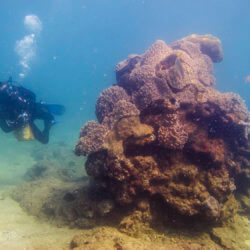
The Hawaii Institute of Marine Biology occupies its own tiny island in Kaneohe Bay, known as Moku o Lo‘e, or, alternatively, Coconut Island. Kaneohe Bay was the inspiration for what is called the “super coral” project. For much of the twentieth century, it was used as a dump for sewage. By the nineteen-seventies, a majority of its reefs had collapsed. A sewage-diversion program led to a temporary recovery, but then invasive algae took over and the water turned into a murky soup.

In 2005, the state teamed up with the Nature Conservancy and the University of Hawaii to devise a contraption—basically, a barge equipped with giant vacuum hoses—to suck algae off the seabed. Gradually, the reefs revived. There are now more than fifty so-called “patch reefs” in the bay.

In one set of experiments planned for the super-coral project, corals from Kaneohe Bay will be raised under the sorts of conditions marine creatures can expect to confront later this century. Some colonies will be bathed in warm water, others in water that’s been acidified, and still others in water that’s both warm and acidified. Those which do best will then be bred with one another, to see if the resulting offspring can do even better.
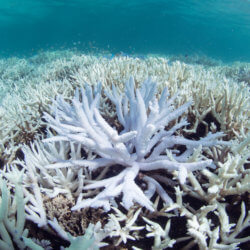
The power of selective breeding is all around us. Dogs, cats, cows, chickens, pigs—these are all the products of generations of careful propagation. But the super-coral project pushes into new territory. Already there’s a term for this sort of effort: assisted evolution.

Read full, original post: Unnatural selection

Related Articles

Infographic: Global regulatory and health research agencies on whether glyphosate causes cancer

Infographic: Global regulatory and health research agencies on whether glyphosate causes cancer

Does glyphosate—the world's most heavily-used herbicide—pose serious harm to humans? Is it carcinogenic? Those issues are of both legal and ...

Most Popular

ChatGPT-Image-Mar-10-2026-01_39_01-PM
Viewpoint—“Miracle molecule” debunked: Why acemannan supplements don’t work
ChatGPT-Image-Sep-10-2026-10_36_07-AM
Viewpoint: Even lousy scientific articles can shield authors when they hype dubious health claims and products
sorghum farmers in kenya FARMERS TREND
Here are all the ways CRISPR gene editing is transforming Africa’s staple crops—and there’s a lot more innovation to come
Screenshot-2026-10-01-at-11.21.27-AM
Vaccine hesitancy, like malaria, surges globally, topping 35% in some countries
ChatGPT-Image-Sep-30-2026-01_11_07-PM
How U.S. teamed with Russia to block global human AI weapons oversight
ChatGPT-Image-Sep-21-2026-03_15_09-PM
Viewpoint: Chipotle-inspired lesson: 10,000 sick customers suggest that processed foods can be safer than fresh ones
ChatGPT-Image-Sep-30-2026-01_25_34-PM
Blood tests for Alzheimer’s? The latest grifter, social media scam.
ChatGPT-Image-Sep-29-2026-12_16_42-PM
Social media influencers are driving food misinformation across Europe
generated-1790707585414
Facts & Fallacies podcast: America's health care system is broken. A doctor explains how to fix it
ChatGPT-Image-Sep-30-2026-01_38_36-PM
Viewpoint: Died “with measles” vs. died “from measles”: RFK, Jr.’s dangerously subversive word games
Screenshot-2026-09-28-at-1.16.38-PM
Defying public perceptions, U.S. cancer deaths plunged 35% since 1991
Screenshot-2026-09-17-at-1.07.08-PM
'We are dangerously addicted to antidepressants': Should we heed RFK Jr.’s sobering warning?
glp menu logo outlined

Get news on human & agricultural genetics and biotechnology delivered to your inbox.