Is CRISPR patent dispute hurting scientific progress?

x crispr cas

The GLP aggregated and excerpted this blog/article to reflect the diversity of news, opinion and analysis.

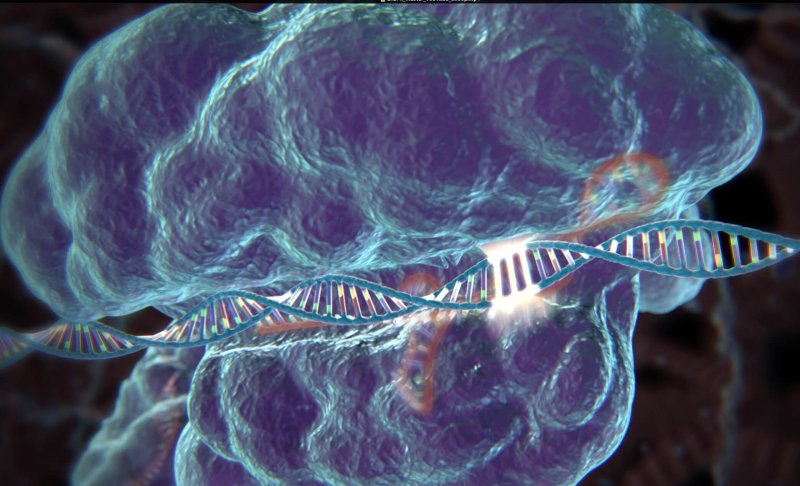
In an extraordinary dispute before the US Patent and Trademark Office (USPTO), university lawyers laid out their clients’ legal strategies for claiming patents that cover the celebrated gene-editing technology CRISPR–Cas9. Over the next year, the USPTO will receive volumes of evidence centred on who first invented the technology.

Battles over scientific priority are as old as science itself. But the CRISPR–Cas9 patent dispute is unusual because it pits two leading research institutions against one another for the control and industrial development of a foundational technology: the University of California, Berkeley (UC Berkeley), and the Broad Institute of MIT and Harvard in Cambridge, Massachusetts.

As scientific institutions increase their involvement in the commercialization of research, it is worth considering the potential consequences for science if more institutions follow the path of UC Berkeley and the Broad Institute.

The financial stakes are high. The CRISPR–Cas9 patents are widely viewed to be worth hundreds of millions, if not billions, of dollars. Both organizations have invested directly in spin-off companies that were co-founded by their researchers — the Broad Institute in Editas Medicine, co-founded by Zhang, and UC Berkeley in Caribou Biosciences, co-founded by Doudna. A report submitted by Editas in January to the US Securities and Exchange Commission lists the Broad Institute and other Harvard-affiliated institutions as owning a major equity stake in the company: about 4.2% of its common shares.

Read full, original post: CRISPR: Pursuit of profit poisons collaboration

{{ reviewsTotal }}{{ options.labels.singularReviewCountLabel }}
{{ reviewsTotal }}{{ options.labels.pluralReviewCountLabel }}
{{ options.labels.newReviewButton }}
{{ userData.canReview.message }}

Related Articles

Infographic: Global regulatory and health research agencies on whether glyphosate causes cancer

Infographic: Global regulatory and health research agencies on whether glyphosate causes cancer

Does glyphosate—the world's most heavily-used herbicide—pose serious harm to humans? Is it carcinogenic? Those issues are of both legal and ...

Most Popular

ChatGPT-Image-Mar-10-2026-01_39_01-PM
Viewpoint—“Miracle molecule” debunked: Why acemannan supplements don’t work
ChatGPT-Image-Jul-1-2026-12_37_08-PM
Viewpoint: Trump poised to politicize all U.S.-supported science research
ChatGPT-Image-Jun-25-2026-12_23_17-PM
No, Bill Gates did not secretly engineer ticks to promote veganism
ChatGPT-Image-Jun-30-2026-10_27_31-AM
Viewpoint: Europe clears the way for gene-edited crops — but fear-driven restrictions still slow their full potential
ChatGPT-Image-Jul-1-2026-03_33_49-PM
‘Alternative’ cancer treatments that could kill you
ChatGPT-Image-Jul-7-2026-03_07_17-PM
Kennedy blocks preventive health care panel that reviews treatments for HIV, diabetes, and cancer from meeting — for fourth time
DtAieAIkCZy-uchn-oqg
Viewpoint: In the science misinformed grifter game plan, the organic-food-is-healthier myth might be the worst.
d a ca e c c beb x
Facts & Fallacies podcast: The 'woke' crusade against anthropology? Dr. Elizabeth Weiss
ChatGPT-Image-Jun-15-2026-01_04_14-PM
Viewpoint: How politicized science became a political religion 
ChatGPT-Image-Jun-15-2026-03_00_23-PM
World’s first AI-designed vaccine explained
glp menu logo outlined

Get news on human & agricultural genetics and biotechnology delivered to your inbox.