NRDC plays scary Agent Orange card about 2,4-D herbicide found safe by regulators

Screen Shot at PM

The GLP aggregated and excerpted this blog/article to reflect the diversity of news, opinion and analysis.

There has been a long-running scare campaign against the commonly-used herbicide 2,4-D, which has been conducted by a number of environmental groups, the Natural Resources Defense Council being at or near the front of the pack.

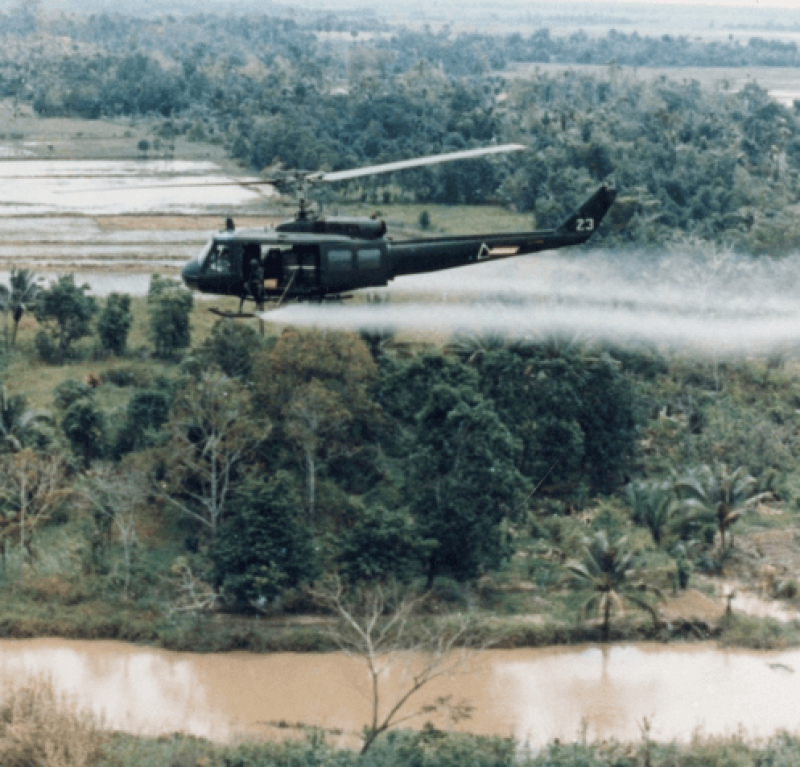
NRDC uses the time-tested strategy of equating 2,4-D with Agent Orange — the notorious herbicide that was used to defoliate swaths of Vietnam during the war. The name Agent Orange itself sounds scary, and the concerns about the health effects of one of its components — 2,3,7,8-TCDD, aka “dioxin” — are legitimate.

One of the components of Agent Orange was, in fact, 2,4-D. So was water. Neither had anything to do with dioxin. But, a second herbicide called 2,4,5-T certainly did. (During the production of Agent Orange, some dioxin was formed as an unwanted byproduct. This is what is responsible for the toxicity of the “brew.”) Yet, NRDC tosses around the names 2,4-D, dioxin, 2,4,5-T, and Agent Orange interchangeably as if to imply that they are all the same dangerous chemical. They are not.

. . . .

. . .the group has crafted its words in a way that strongly suggest that 2,4-D is highly toxic and carcinogenic, simply because it happened to part of the mixture that also contained 2,4,5-T and its impurity dioxin. It is not much of a stretch for the reader to also conclude that 2,4-D itself also contains dioxin. But it does not, and cannot. It is chemically impossible.


Read full, original post: NRDC Scientists Are Lying in the Weeds

{{ reviewsTotal }}{{ options.labels.singularReviewCountLabel }}
{{ reviewsTotal }}{{ options.labels.pluralReviewCountLabel }}
{{ options.labels.newReviewButton }}
{{ userData.canReview.message }}

Related Articles

Infographic: Global regulatory and health research agencies on whether glyphosate causes cancer

Infographic: Global regulatory and health research agencies on whether glyphosate causes cancer

Does glyphosate—the world's most heavily-used herbicide—pose serious harm to humans? Is it carcinogenic? Those issues are of both legal and ...

Most Popular

Screenshot-2026-04-13-at-1.39.26-PM
Viewpoint: ‘Safer for children?’ Stonyfield yogurt under fire for deceptive organic marketing
Screenshot-2026-04-22-at-10.46.29-AM
Viewpoint: How to counter science disinformation? Science journalist offers 12 practical tips
ChatGPT-Image-May-7-2026-12_16_37-PM-2
Viewpoint: Are cancer rates ‘skyrocketing’ as RFK, Jr. and MAHA claim? The evidence says mostly the opposite
Picture1-14
When superbugs threaten vulnerable children: Can AI help solve antibiotic resistance?
Screenshot-2026-04-23-at-11.00.36-AM
Regulators' dilemma: Thalidomide, Metformin, and the cost of getting drug approvals wrong
ChatGPT-Image-May-12-2026-08_39_41-PM
GLP podcast: Big Pharma, Big Ag, Big Food—health harming industries or life-saving innovators?
Picture1-1
Cooling the planet with balloons: Could a geoengineering gamble slow global warming?
png-pill-omega-Supp-fish-oil
Millions take omega-3 fish oil for brain health. New research suggests it may do the opposite.
glp menu logo outlined

Get news on human & agricultural genetics and biotechnology delivered to your inbox.