Can’t sleep first night in new place? Your brain might explain why

The GLP aggregated and excerpted this blog/article to reflect the diversity of news, opinion and analysis.

To most scientists, discarding data is like throwing money in the trash. But for sleep researchers, it’s routine to get rid of half of the findings from every experiment.

That’s because most people sleep badly their first night in a new place, whether it’s in the closely monitored hush of a sleep lab or a wind-whipped tent in the desert. And so researchers consistently discard their observations from someone’s first night in the lab, only paying attention to the second, when participants have fallen back into their usual nighttime rhythms.

Now, neuroscientist Masako Tamaki and her colleagues at Brown University have turned what was once considered scientific garbage into a goldmine.

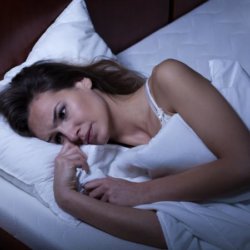
In a paper published in Current Biology, they revealed the brain science behind our restless shut-eye when we arrive in a new place, finding that certain circuits in the left side of our brains remain aroused while the rest of the brain slumbers more deeply.

“Sleeping for the first night in an alien environment puts us in a state of hypervigilance,” said Thomas Roth, a sleep researcher at the Henry Ford Hospital in Detroit, who was not involved in the study. “We did not know that until this paper.”

Read full, original post: Groggy after a night in a hotel? Blame the left side of your brain

Related Articles

Infographic: Global regulatory and health research agencies on whether glyphosate causes cancer

Infographic: Global regulatory and health research agencies on whether glyphosate causes cancer

Does glyphosate—the world's most heavily-used herbicide—pose serious harm to humans? Is it carcinogenic? Those issues are of both legal and ...

Most Popular

ChatGPT-Image-Mar-10-2026-01_39_01-PM
Viewpoint—“Miracle molecule” debunked: Why acemannan supplements don’t work
ChatGPT-Image-Sep-2-2026-02_03_32-PM
How much of a problem is AI’s water use?
ChatGPT-Image-Sep-22-2026-10_32_46-AM
There has been a slew of recent reports of food recalls and foodborne outbreaks. Do we face an escalating problem?
ChatGPT-Image-Aug-26-2026-12_46_16-PM
Viewpoint: The fake controversy over whether combining childhood vaccines is dangerous— a debate science resolved 25 years ago
Screenshot-2026-09-17-at-1.07.08-PM
'We are dangerously addicted to antidepressants': Should we heed RFK Jr.’s sobering warning?
ChatGPT-Image-Sep-23-2026-01_52_03-PM
Viewpoint: 4 very real AI doomsday scenarios
Screenshot-2026-09-03-at-10.51.20-AM
Viewpoint: Why do online health lies outlive the evidence that debunks them? Read "Everyone Else Is Lying to You"
Screenshot-2026-09-23-at-11.55.01-AM
How can we know if social media bans actually help teens?
Screenshot-2026-09-17-at-12.00.30-PM
Investigative group ProPublica finds links between ectopic pregnancy deaths and abortion bans
Screenshot-2026-09-23-at-3.15.09-PM
Anti-GMO activists in Pakistan rev up their campaign of dire warnings
Screenshot-2026-09-22-at-11.40.28-AM
After Idaho criminalized abortion providers in 2022, one-third of obstetricians fled. Health care advocates are making rural health the case for repealing the ban
Screenshot-2026-09-16-at-2.26.42-PM
Viewpoint: How to ecologically damage America’s forests: Ban glyphosate
ChatGPT-Image-Sep-23-2026-11_47_32-AM
Facing pressure from Trump administration, fewer hospitals offer medical treatment for transgender minors
glp menu logo outlined

Get news on human & agricultural genetics and biotechnology delivered to your inbox.