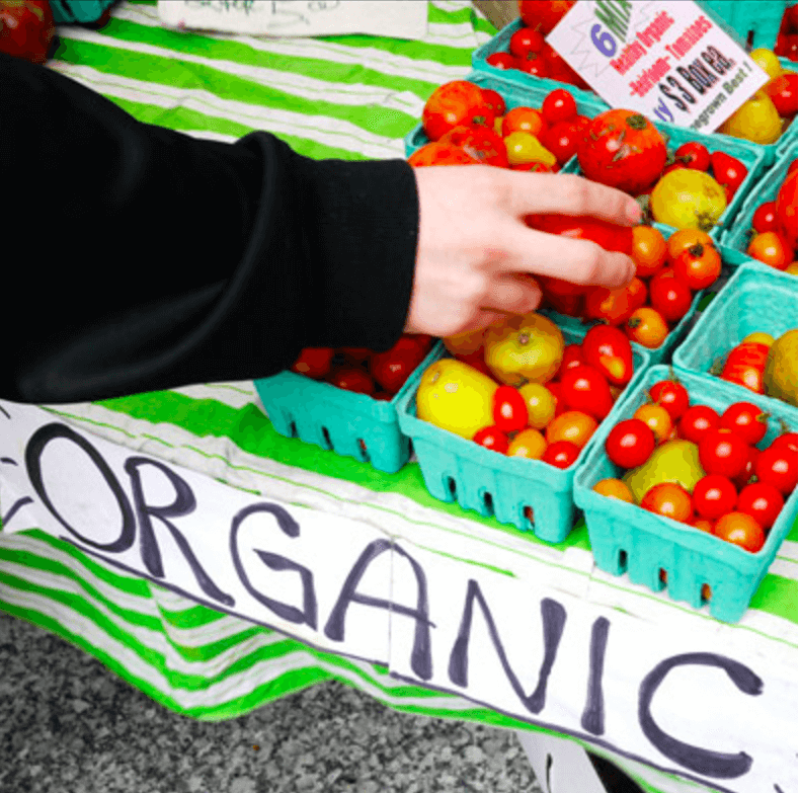
Is organic really more sustainable?

Screen Shot at AM

The GLP aggregated and excerpted this blog/article to reflect the diversity of news, opinion and analysis.

When you pony up the extra money to buy organic produce, are you supporting environmental benefits? I wanted to know, and it was probably one of the most difficult questions I’ve tried to answer.

. . . .

. . . .The USDA’s farm in Beltsville, Md., tests five kinds of agriculture: two conventional and three organic. (The differences involve crop rotations and types of tillage.)

Which one wins?

. . . .There’s never a clear-cut answer to a question like that when you’re talking about something as complicated as farming. The first thing [Michel Cavigelli of the USDA] told me is that “all conventional is not the same, and all organic is not the same,” . . .

Nevertheless, some important differences among those five systems have bubbled to the surface over the past 23 years.

The organic systems in the USDA test:

●Have more-fertile soil.

●Use less fertilizer and much less herbicide.

●Use less energy.

●Lock away more carbon in the soil.

●Are more profitable for farmers.

The conventional systems:

●Have higher yields.

●Are best at reducing erosion (when a no-till system is used).

. . . .

. . . [S]ome tools that mitigate environmental harm aren’t available to organic farmers; one of them is genetically modified crops. . . . [M]any scientists and farmers, says that both major types of GMOs — the kind that are resistant to the herbicide glyphosate and the kind that have a built-in organic insecticide — can help cut pesticide use.

Read full, original post: Is organic agriculture really better for the environment?

{{ reviewsTotal }}{{ options.labels.singularReviewCountLabel }}
{{ reviewsTotal }}{{ options.labels.pluralReviewCountLabel }}
{{ options.labels.newReviewButton }}
{{ userData.canReview.message }}

Related Articles

Infographic: Global regulatory and health research agencies on whether glyphosate causes cancer

Infographic: Global regulatory and health research agencies on whether glyphosate causes cancer

Does glyphosate—the world's most heavily-used herbicide—pose serious harm to humans? Is it carcinogenic? Those issues are of both legal and ...

Most Popular

Screenshot 2026-05-06 at 2.56
Singularity crisis ahead? Can super babies save us from rogue AI geniuses?
Screenshot-2026-03-13-at-12.14.04-PM
The FDA wants to make many popular prescription drugs OTC—a great idea. Here’s why it’s unlikely to happen
Screenshot-2026-04-20-at-2.26.27-PM
Viewpoint — Food-fear world: The latest activist scientists campaign: Cancer-causing additives
Screenshot-2026-05-01-at-11.56.24-AM
‘Science moves forward when people are willing to think differently’: Memories of DNA maverick Craig Venter
images
The never-ending GMO debate: Pros and cons
Screenshot-PM-24
Viewpoint: The herbicide glyphosate isn’t perfect. Banning it would be far worse.
Screenshot-2026-04-03-at-11.15.51-AM
Paraben panic: How a flawed study, media hype, and chemophobia convinced the public of the danger of one of the safest classes of preservatives
Screenshot-2026-04-30-at-2.19.37-PM
5 myths about summer dehydration that could damage your health — or even kill you
79d03212-2508-45d0-b427-8e9743ff6432
Viewpoint: The Casey Means hustle—Wellness woo opportunism dressed up as medical wisdom
Screenshot-2026-05-01-at-1.29.41-PM
Viewpoint: What happens when whole grains meet modern food manufacturing? Labels don’t tell the whole story.
Screenshot-2026-05-06-at-2.07.43-PM
Manufacturing a conspiracy: The timeline of how  the White House embraced the fringe claim that scientists are being mysteriously murdered
glp menu logo outlined

Get news on human & agricultural genetics and biotechnology delivered to your inbox.