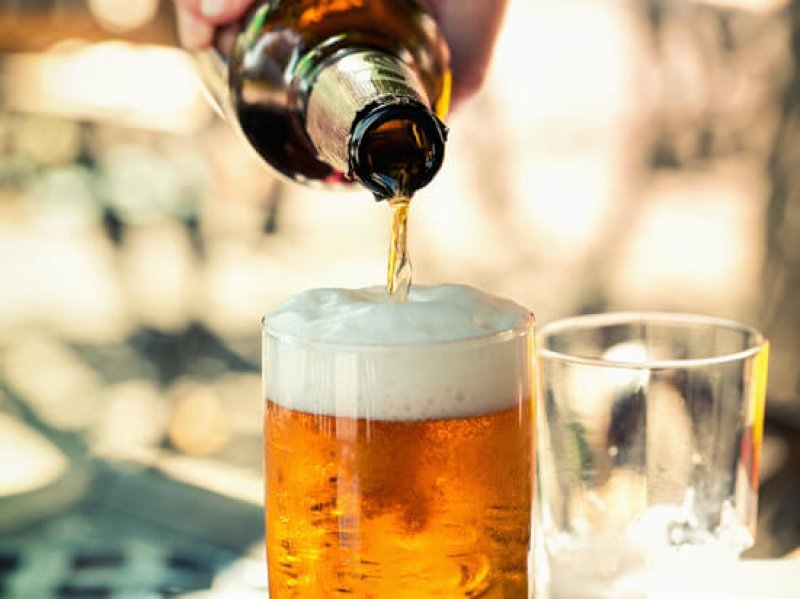
Belgian lab tapping genetics of yeast to brew better beer

how to pour

Kevin Verstrepen’s lab meetings can be pretty boozy affairs. Twice a week, several members of his group at Belgium’s University of Leuven and the Flanders Institute for Biotechnology gather around a table loaded with black, tulip-shaped beer glasses, together with spit buckets and crackers.

But Verstrepen has loftier ambitions than helping beer lovers to select their next bottle. He wants to build the perfect yeast. His lab is deploying what it is learning about the chemical and genetic basis of beer flavour to breed yeast strains that generate unique flavours and other qualities coveted by brewers and drinkers.

The beer geeks in his lab straddle the worlds of curiosity-driven science and industrial brewing. They study evolution, biochemistry, and even neuroscience through yeast. But they also have contracts with beer makers worldwide, from multinational conglomerates to small trend-setting craft breweries. In an upcoming Cell paper, the lab will report the genomes of some 150 yeast strains used to make beer, sake and other fermented products, a project done in collaboration with a leading supplier of yeast to brewers and a synthetic-biology firm.

The GLP aggregated and excerpted this blog/article to reflect the diversity of news, opinion and analysis. Read full, original post: Tapping genetics for better beer

{{ reviewsTotal }}{{ options.labels.singularReviewCountLabel }}
{{ reviewsTotal }}{{ options.labels.pluralReviewCountLabel }}
{{ options.labels.newReviewButton }}
{{ userData.canReview.message }}

Related Articles

Infographic: Global regulatory and health research agencies on whether glyphosate causes cancer

Infographic: Global regulatory and health research agencies on whether glyphosate causes cancer

Does glyphosate—the world's most heavily-used herbicide—pose serious harm to humans? Is it carcinogenic? Those issues are of both legal and ...

Most Popular

Screenshot-2026-04-20-at-2.26.27-PM
Viewpoint — Food-fear world: The latest activist scientists campaign: Cancer-causing additives
Screenshot-2026-03-13-at-12.14.04-PM
The FDA wants to make many popular prescription drugs OTC—a great idea. Here’s why it’s unlikely to happen
Screenshot-2026-05-04-at-12.54.32-PM
How Utah became the country’s supplement capital  — and a haven for unregulated, ineffective and fake products
Screenshot-2026-05-01-at-11.56.24-AM
‘Science moves forward when people are willing to think differently’: Memories of DNA maverick Craig Venter
ChatGPT-Image-May-1-2026-02_20_13-PM
How RFK, Jr.’s false vaccine claims are holding up $600 million to fight diseases in poor countries
Screenshot-2026-04-03-at-11.15.51-AM
Paraben panic: How a flawed study, media hype, and chemophobia convinced the public of the danger of one of the safest classes of preservatives
Screenshot-2026-04-30-at-2.19.37-PM
5 myths about summer dehydration that could damage your health — or even kill you
ChatGPT-Image-Mar-27-2026-11_27_05-AM
The myths of “process”: What science says about the “dangers’ of synthetic products and ultra-processed foods
viva-la-vida-watermelons
Misinformation and climate change are endangering summer watermelons
Drinking lots of water can help reduce the effects of aging
Nanoplastics in drinking water: MAHA activists forge science-based bipartisan coalition 
ChatGPT-Image-Mar-10-2026-01_39_01-PM
Viewpoint—“Miracle molecule” debunked: Why acemannan supplements don’t work
circular-bioeconomy-should-focus-on-sustainable-wellbeing
GLP podcast: What's wrong with 'doomsday' environmentalism? It's false.
glp menu logo outlined

Get news on human & agricultural genetics and biotechnology delivered to your inbox.