Monsanto reportedly agrees to sweetened Bayer takeover offer

Screen Shot at AM

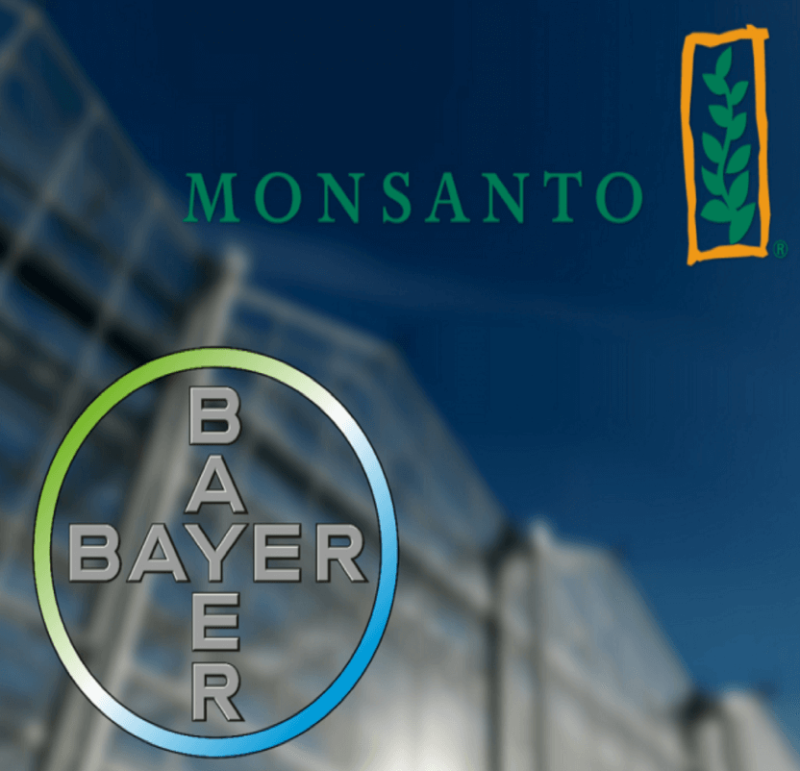
Bayer AG has reached an agreement to acquire Monsanto Co. for about $56 billion to create the world’s biggest maker of seeds and pesticides, according to people familiar with the matter.

The German company agreed to pay about $128 a share and an announcement is planned imminently, said the people, who asked not to be identified because talks are private. Bayer’s supervisory board supports the deal, they said. Bayer is also offering an antitrust break fee of about $2 billion, one of the people said. If successful, it would lead to the biggest deal this year and the largest ever by a German company.

Bayer’s wooing of St. Louis-based Monsanto has played out against a backdrop of a rapidly consolidating crop and seed industry as falling prices weighed on profits. A series of big deals may leave just a few global players.

Spokesmen for both companies declined to comment on the new proposal.
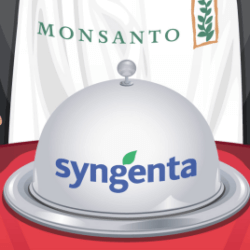
One impetus for Monsanto is the company’s ambition to become a one-stop shop for farmers, and to sell a comprehensive array of fertilizers and seeds to be used in conjunction with big data applications. That’s how farmers are going to increase productivity and yields to feed a growing world population, the company has said.

The GLP aggregated and excerpted this blog/article to reflect the diversity of news, opinion and analysis. Read full, original post: Bayer Said to Agree to Pay About $56 Billion for Monsanto

{{ reviewsTotal }}{{ options.labels.singularReviewCountLabel }}
{{ reviewsTotal }}{{ options.labels.pluralReviewCountLabel }}
{{ options.labels.newReviewButton }}
{{ userData.canReview.message }}

Related Articles

Infographic: Global regulatory and health research agencies on whether glyphosate causes cancer

Infographic: Global regulatory and health research agencies on whether glyphosate causes cancer

Does glyphosate—the world's most heavily-used herbicide—pose serious harm to humans? Is it carcinogenic? Those issues are of both legal and ...

Most Popular

Screen Shot at AM
Facts & Fallacies Podcast: Right-wing politics bad for your health? Separating speculation from science
ChatGPT-Image-Jun-15-2026-11_00_13-AM-2
Glucosamine alert: Alzheimer’s progresses faster among those taking the popular supplement
ChatGPT-Image-Jun-9-2026-01_11_37-PM
Turmeric supplements: More risks than benefits
ChatGPT-Image-Jun-3-2026-04_29_13-PM
Viewpoint: While unvaccinated children are dying overseas, Congress challenges Trump and Kennedy’s block on aid
ChatGPT-Image-Jun-15-2026-12_13_41-PM
Viewpoint: Behind the effort to re-purpose the tobacco attack strategy to fight ultra-processed foods
ChatGPT-Image-Mar-10-2026-01_39_01-PM
Viewpoint—“Miracle molecule” debunked: Why acemannan supplements don’t work
Screenshot-2026-06-12-at-2.10.55-PM
Physician warns online statin myths delay care and raise heart risk
ChatGPT Image Jun 3, 2026, 03_54_37 PM
Viewpoint: “Turn on, tune in, drop out”—Kennedy embraces the Timothy Leary psychedelic revolution
ChatGPT-Image-Jun-14-2026-09_41_44-AM-2
Viewpoint—‘The gleeful efficiency of an arsonist’: Administration’s health and science research cuts are ‘sabotaging’ America’s future
Screenshot-2026-06-14-at-9.14.26-AM
‘Humanitarian catastrophe’: Trump’s USAID shutdown could help drive nearly 23 million deaths — including 5.4 million children — by 2030, Lancet study warns
ChatGPT-Image-Jun-11-2026-01_15_03-PM
Selective Pressure, Selective Silence
Screenshot-2026-06-05-at-2.12.30-PM
Some plants can poison you. So how did humans figure out what is safe to eat?
glp menu logo outlined

Get news on human & agricultural genetics and biotechnology delivered to your inbox.