Looking back on gene editing’s thirty years of development

In the mid-1980s, Oliver Smithies, then at the University of Wisconsin–Madison, and Mario Capecchi of the University of Utah independently used homologous recombination—a molecular process to repair broken DNA—to change specific regions of the genome in cultured mouse cells.

…

But Capecchi and Smithies couldn’t introduce genetic changes into living animals until Martin Evans, now of Cardiff University in the U.K., established a method for culturing mouse embryonic stem cells (ESC).

…

In 1994, developmental biologist Maria Jasin…found a way to increase the rate of homologous recombination events 10- to several thousand-fold.

…
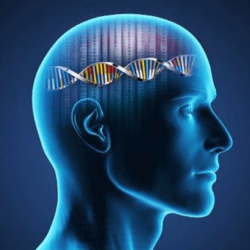
In 2001, researchers successfully combined an engineered zinc finger protein and a nuclease to make targeted cuts in the DNA of Xenopus oocytes…Combining this technique with Jasin’s work, researchers could not only make double-strand breaks, but make them anywhere in the genome. “Those two things together are what started gene editing,” says Charles Gersbach, a molecular biologist at Duke University.

…

CRISPR/Cas use has recently exploded…The new approach has spurred international discussion about the ethics of human gene editing…Above all, it has changed the game of genome tinkering….

The GLP aggregated and excerpted this blog/article to reflect the diversity of news, opinion, and analysis. Read full, original post: Gene Editing: From Roots to Riches

Related Articles

Infographic: Global regulatory and health research agencies on whether glyphosate causes cancer

Infographic: Global regulatory and health research agencies on whether glyphosate causes cancer

Does glyphosate—the world's most heavily-used herbicide—pose serious harm to humans? Is it carcinogenic? Those issues are of both legal and ...

Most Popular

Screenshot-2026-10-01-at-10.52.08-AM
Non-browning CRISPR gene-edited bananas move one step closer to British markets
AI-Force-Leadership-Portrait
Jay Clayton controversy: The divisive history of Trump’s newly-appointed AI czar
Screenshot-2026-09-22-at-10.54.12-AM
‘They misunderstand science’: Research attempting to tie autism to changes in the gut microbiome comes under fire
ChatGPT-Image-Mar-10-2026-01_39_01-PM
Viewpoint—“Miracle molecule” debunked: Why acemannan supplements don’t work
Elderly-Speaker-at-MAHA-Institute
At anti-vaccine MAHA conference, RFK Jr. pledges to unify federal health information and combat vaccine safety ‘misinformation’
ChatGPT-Image-Sep-21-2026-11_21_39-AM
Viewpoint: Food cults: Online ‘nutrition communities’ can pose unique dangers
Screenshot 2026-10-01 at 12.30
Combating ‘narrative distortion’: Will pharma companies step up to challenge health misinformation?
ChatGPT-Image-Sep-10-2026-10_36_07-AM
Viewpoint: Even lousy scientific articles can shield authors when they hype dubious health claims and products
ChatGPT-Image-Sep-21-2026-03_15_09-PM
Viewpoint: Chipotle-inspired lesson: 10,000 sick customers suggest that processed foods can be safer than fresh ones
generated-1790707585414
Facts & Fallacies podcast: America's health care system is broken. A doctor explains how to fix it
glp menu logo outlined

Get news on human & agricultural genetics and biotechnology delivered to your inbox.