Bioerrorism: US military initiates Safe Genes program in case gene drives run amok

CRISOR

Over the next four years a new program in the Pentagon’s Defense Advanced Research Projects Agency (DARPA) plans to cultivate…a kind of cleanup crew for engineered genes deemed harmful to or undesirable in an ecosystem. The initiative, called Safe Genes, comes at a time when so-called “gene drive” systems, which override the standard rules of gene inheritance and natural selection, are raising hopes among some scientists that the technology could alter or suppress populations of disease-carrying insects or other pests in as few as 20 generations.

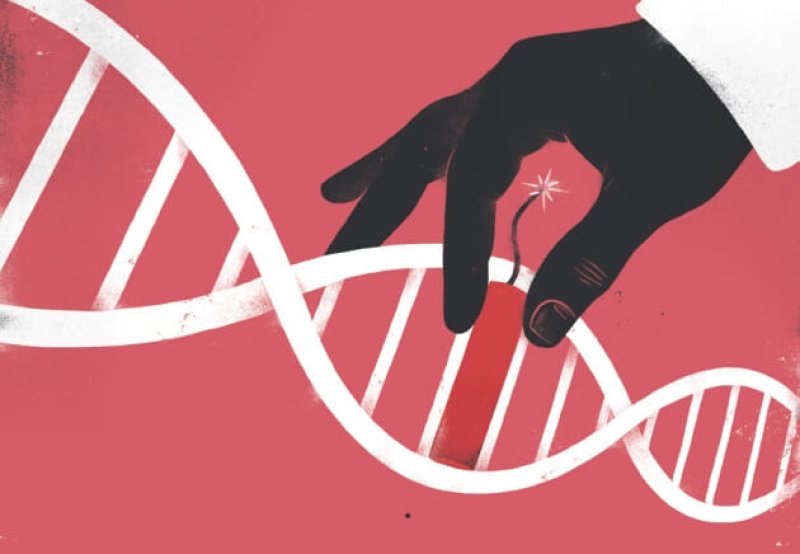
[W]ithout careful precautions, a gene drive released into the wild could spread or change in unexpected ways. Kevin Esvelt, head of the Sculpting Evolution lab at MIT Media Lab,…predicts that eventually, perhaps around 15 years from now, an accident will allow a drive with potential to spread globally to escape laboratory controls. “It’s not going to be bioterror,” he says, “it’s going to be ‘bioerror.’”

The agency announced its Safe Genes program in September 2016 and plans to award funding to multiple research teams by the first half of 2017. “If we’re going to be really bullish about genome engineering,” says DARPA program manager Renee Wegrzyn, “we need to be just as aggressive with tools to reverse those changes.”

The GLP aggregated and excerpted this blog/article to reflect the diversity of news, opinion, and analysis. Read full, original post: U.S. Military Preps for Gene Drives Run Amok

{{ reviewsTotal }}{{ options.labels.singularReviewCountLabel }}
{{ reviewsTotal }}{{ options.labels.pluralReviewCountLabel }}
{{ options.labels.newReviewButton }}
{{ userData.canReview.message }}

Related Articles

Infographic: Global regulatory and health research agencies on whether glyphosate causes cancer

Infographic: Global regulatory and health research agencies on whether glyphosate causes cancer

Does glyphosate—the world's most heavily-used herbicide—pose serious harm to humans? Is it carcinogenic? Those issues are of both legal and ...

Most Popular

Screenshot-2026-04-20-at-2.26.27-PM
Viewpoint — Food-fear world: The latest activist scientists campaign: Cancer-causing additives
Screenshot-2026-03-13-at-12.14.04-PM
The FDA wants to make many popular prescription drugs OTC—a great idea. Here’s why it’s unlikely to happen
Screenshot-2026-05-04-at-12.54.32-PM
How Utah became the country’s supplement capital  — and a haven for unregulated, ineffective and fake products
Screenshot-2026-05-01-at-11.56.24-AM
‘Science moves forward when people are willing to think differently’: Memories of DNA maverick Craig Venter
ChatGPT-Image-May-1-2026-02_20_13-PM
How RFK, Jr.’s false vaccine claims are holding up $600 million to fight diseases in poor countries
Screenshot-2026-04-03-at-11.15.51-AM
Paraben panic: How a flawed study, media hype, and chemophobia convinced the public of the danger of one of the safest classes of preservatives
Screenshot-2026-04-30-at-2.19.37-PM
5 myths about summer dehydration that could damage your health — or even kill you
ChatGPT-Image-Mar-27-2026-11_27_05-AM
The myths of “process”: What science says about the “dangers’ of synthetic products and ultra-processed foods
viva-la-vida-watermelons
Misinformation and climate change are endangering summer watermelons
Drinking lots of water can help reduce the effects of aging
Nanoplastics in drinking water: MAHA activists forge science-based bipartisan coalition 
ChatGPT-Image-Mar-10-2026-01_39_01-PM
Viewpoint—“Miracle molecule” debunked: Why acemannan supplements don’t work
circular-bioeconomy-should-focus-on-sustainable-wellbeing
GLP podcast: What's wrong with 'doomsday' environmentalism? It's false.
glp menu logo outlined

Get news on human & agricultural genetics and biotechnology delivered to your inbox.