Bacterial evolutionary origins of human organs and tissues

Screen Shot at PM

New research led by scientists at The Scripps Research Institute (TSRI) reveals that a human enzyme has changed little from its days as a bacterial enzyme. In fact, the enzyme appears to be unique in its ability to change its shape–and its job in cells — without overhauling its basic architecture.

Schimmel and his colleagues focused on a member of a family of enzymes called aminoacyl tRNA synthetases….

“Aminoacyl tRNA synthetases are associated with–and we believe needed for — the building of organismal complexity, such as making tissues and organs in humans,” Schimmel explained.

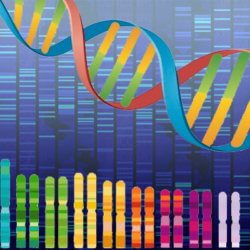
These new functions are controlled by “decorations,” or additions to the aminoacyl tRNA synthetase architecture, which are generally lacking in bacteria; however, there is one aminoacyl tRNA synthetase, called AlaRS, that lacks any new decorations. AlaRS somehow carries out new roles in humans using a preexisting bacterial domain in its structure….

The scientists…showed that a domain of AlaRS’s structure, called C-Ala, had been reshaped to take on a new role in humans. The end result is the same as if AlaRS had gained a new decoration….

The GLP aggregated and excerpted this blog/article to reflect the diversity of news, opinion, and analysis. Read full, original post: Ancient enzyme morphed shape to carry out new functions in humans


Related Articles

Infographic: Global regulatory and health research agencies on whether glyphosate causes cancer

Infographic: Global regulatory and health research agencies on whether glyphosate causes cancer

Does glyphosate—the world's most heavily-used herbicide—pose serious harm to humans? Is it carcinogenic? Those issues are of both legal and ...

Most Popular

ChatGPT-Image-Sep-17-2026-12_28_43-PM
Vitamin D, omega-3 fish oil and glucosamine supplements could cause brain damage 
ChatGPT-Image-Mar-10-2026-01_39_01-PM
Viewpoint—“Miracle molecule” debunked: Why acemannan supplements don’t work
ChatGPT-Image-Sep-17-2026-10_17_15-AM
Viewpoint: Why are the less intelligent more likely to be conservative—and smarter people more socially liberal?
Screenshot-2026-09-10-at-12.20.19-PM
'Jet fuel didn't melt the steel': 9/11 conspiracy theories debunked
Screenshot-2026-08-12-at-11.31.46-AM
AI is helping develop new vaccines
Screenshot-2026-09-16-at-12.07.47-PM
The heated debate over trans athletes in the WNBA
ChatGPT-Image-Sep-9-2026-02_48_24-PM
Viewpoint: Trump-RFK Jr. report on “Gender Ideology & Left-wing Ideology’ targets LGBTQ community—and science
ChatGPT-Image-Sep-15-2026-12_15_00-PM
Viewpoint: Women, depression and empathy: Explaining the gender gap in views about child-murderer Lindsay Clancy
Screenshot-2026-09-17-at-10.24.54-AM
Viewpoint: Dubious environmental fears: Why the AI buildout is critical to America’s ecological future
Screenshot-2026-09-11-at-2.26.23-PM
Newly approved GMO chestnut trees planted across from the White House are stirring debate
Screenshot 2026-09-11 at 12.39
Child-monitoring apps: When the cure is worse than the harm—and how the technology could be tweaked
ChatGPT-Image-Sep-15-2026-11_36_23-AM
Doomsday cult? Why we should be suspicious of end-of-the-world claims
glp menu logo outlined

Get news on human & agricultural genetics and biotechnology delivered to your inbox.