What can Iranian scientists teach the West about stem cell research?

web
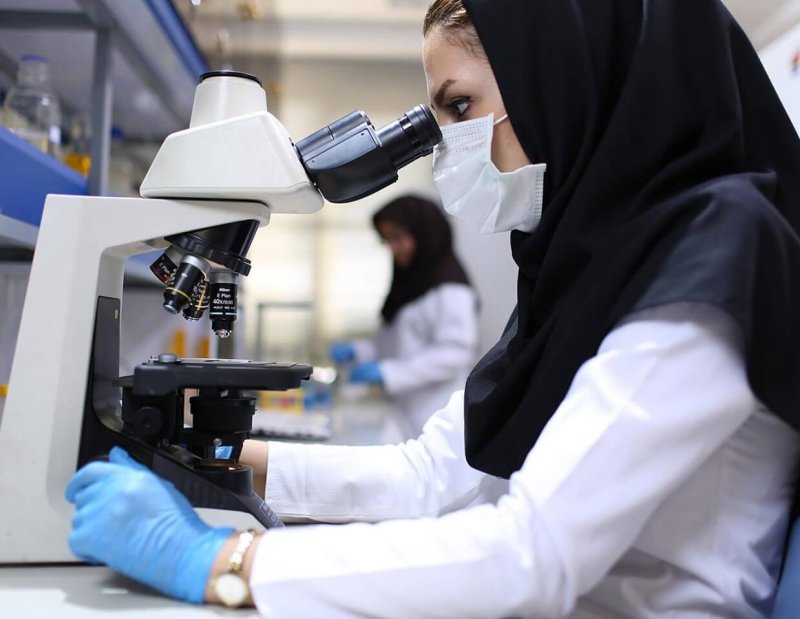
[In the past 14 years, Iran has] made great strides in stem cell research. And now that Iran is losing its pariah-state status after sanctions were lifted, there are opportunities for collaborations with non-Iranian scientists….

Iran didn’t view stem cell research as problematic because under Islamic law life is defined not at conception, but when one can distinguish a heartbeat…While the world scrutinized Iranian nuclear advances, the country’s stem cell embryonic research had risen to the scientific forefront.

Partnering with Iranian colleagues offers many advantages, said [Ali Brivanlou, who leads the Stem Cell Biology and Molecular Embryology lab at The Rockefeller University]…Their technologies can help countries neighboring Iran, which face similar medical and environmental challenges but aren’t as advanced.

Richard Stone, who oversees international coverage at the journal Science, said that because Iranian scientists had to play by tougher rules, they learned to think about every little detail of a study or experiment.

Joining forces in research would unlock the untapped potential the Iranian stem cell scientists hold, Brivanlou said. It would also allow Western and Iranian scientists to share and exchange research materials, allowing for greater genetic diversity in experiments.

The GLP aggregated and excerpted this blog/article to reflect the diversity of news, opinion, and analysis. Read full, original post: What Iran May Be Able to Teach Us About Stem Cells

{{ reviewsTotal }}{{ options.labels.singularReviewCountLabel }}
{{ reviewsTotal }}{{ options.labels.pluralReviewCountLabel }}
{{ options.labels.newReviewButton }}
{{ userData.canReview.message }}

Related Articles

Infographic: Global regulatory and health research agencies on whether glyphosate causes cancer

Infographic: Global regulatory and health research agencies on whether glyphosate causes cancer

Does glyphosate—the world's most heavily-used herbicide—pose serious harm to humans? Is it carcinogenic? Those issues are of both legal and ...

Most Popular

Screen Shot at AM
Facts & Fallacies Podcast: Right-wing politics bad for your health? Separating speculation from science
ChatGPT-Image-Jun-13-2026-11_51_39-AM
Viewpoint: COVID lab leak? Misguided backers of the lab leak theory refuse to give up
ChatGPT Image Jun 3, 2026, 03_54_37 PM
Viewpoint: “Turn on, tune in, drop out”—Kennedy embraces the Timothy Leary psychedelic revolution
drug look like ozempic
Six key health insights from taking weight-loss drugs
ChatGPT-Image-Jun-11-2026-01_15_03-PM
Selective Pressure, Selective Silence
Screenshot-2026-06-14-at-9.14.26-AM
‘Humanitarian catastrophe’: Trump’s USAID shutdown could help drive nearly 23 million deaths — including 5.4 million children — by 2030, Lancet study warns
ChatGPT Image Jun 3, 2026, 03_14_43 PM
Viewpoint: How Earthjustice became the poster child for the abuse of special interest activist funding
ChatGPT-Image-Jun-14-2026-09_41_44-AM-2
Viewpoint—‘The gleeful efficiency of an arsonist’: Administration’s health and science research cuts are ‘sabotaging’ America’s future
ChatGPT-Image-Mar-10-2026-01_39_01-PM
Viewpoint—“Miracle molecule” debunked: Why acemannan supplements don’t work
Screenshot-2026-06-14-at-9.53.54-AM
Is the World Cup a perfect storm for the spread of infectious diseases?
ChatGPT Image Jun 12, 2026, 02_32_14 PM
‘Have you asked your doctor?’: AMA launches campaign to counter health misinformation
Screenshot-2026-06-05-at-2.12.30-PM
Some plants can poison you. So how did humans figure out what is safe to eat?
glp menu logo outlined

Get news on human & agricultural genetics and biotechnology delivered to your inbox.