20 percent of cancer patients resistant to chemotherapy — tweaking gene expression could help

Screen Shot at PM

Approximately 20 percent of all cancers have a mutation that makes them incredibly resistant to chemotherapy – a gene called KRAS. KRAS-mutant cancers also have very low survival rates because they are much harder to treat. Given this, researchers have focused their efforts on ways to inhibit KRAS activity. But scientists…have taken a unique approach that may prove to be more effective.

“Instead of trying to deter KRAS itself, we took the approach of looking for other molecules that, when inhibited, are lethal to cells only when KRAS is also mutated,” said Tariq Rana, PhD, professor of pediatrics at the University of California San Diego School of Medicine….

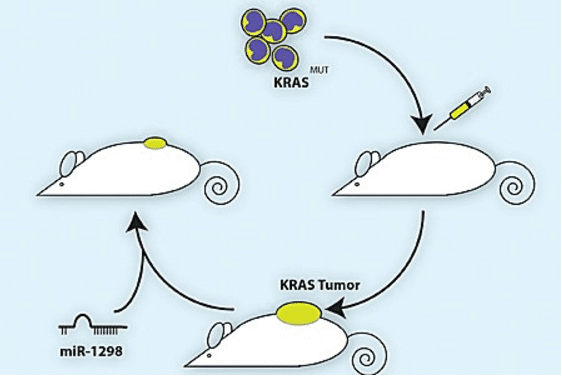
The new study…focuses on inhibiting other genes to create combinations lethal to cancer cells driven by a KRAS mutation. For the study, researchers used microRNAs – which normal cells use to control what genes are turned on or off, and are less active in cancer cells.

Screen Shot at PM
The researchers found that one microRNA, miR-1298, could effectively suppress KRAS-dependent cell growth in colorectal and lung cancer cells. Credit: UC San Diego Health.

Their findings revealed microRNAs as relevant tools for possibly identifying therapeutic methods of treating cancer in the future.

[The study can be found here.]

The GLP aggregated and excerpted this blog/article to reflect the diversity of news, opinion, and analysis. Read full, original post: Genetics Breakthrough Could Give Us a Way to Target and Kill Cancer

{{ reviewsTotal }}{{ options.labels.singularReviewCountLabel }}
{{ reviewsTotal }}{{ options.labels.pluralReviewCountLabel }}
{{ options.labels.newReviewButton }}
{{ userData.canReview.message }}

Related Articles

Infographic: Global regulatory and health research agencies on whether glyphosate causes cancer

Infographic: Global regulatory and health research agencies on whether glyphosate causes cancer

Does glyphosate—the world's most heavily-used herbicide—pose serious harm to humans? Is it carcinogenic? Those issues are of both legal and ...

Most Popular

Screenshot-2026-05-04-at-12.54.32-PM
How Utah became the country’s supplement capital  — and a haven for unregulated, ineffective and fake products
Screenshot-2026-03-13-at-12.14.04-PM
The FDA wants to make many popular prescription drugs OTC—a great idea. Here’s why it’s unlikely to happen
Screenshot-2026-04-20-at-2.26.27-PM
Viewpoint — Food-fear world: The latest activist scientists campaign: Cancer-causing additives
Screenshot-PM-24
Viewpoint: The herbicide glyphosate isn’t perfect. Banning it would be far worse.
images
The never-ending GMO debate: Pros and cons
Screenshot-2026-04-03-at-11.15.51-AM
Paraben panic: How a flawed study, media hype, and chemophobia convinced the public of the danger of one of the safest classes of preservatives
Screenshot-2026-05-01-at-11.56.24-AM
‘Science moves forward when people are willing to think differently’: Memories of DNA maverick Craig Venter
Screenshot-2026-04-30-at-2.19.37-PM
5 myths about summer dehydration that could damage your health — or even kill you
ChatGPT-Image-May-1-2026-02_20_13-PM
How RFK, Jr.’s false vaccine claims are holding up $600 million to fight diseases in poor countries
bigstock opioids on chalkboard with rol
GLP podcast: 'Safe injection sites': enabling drug addiction or saving lives?
glp menu logo outlined

Get news on human & agricultural genetics and biotechnology delivered to your inbox.